The classroom revolution: Turning lessons into living experiences

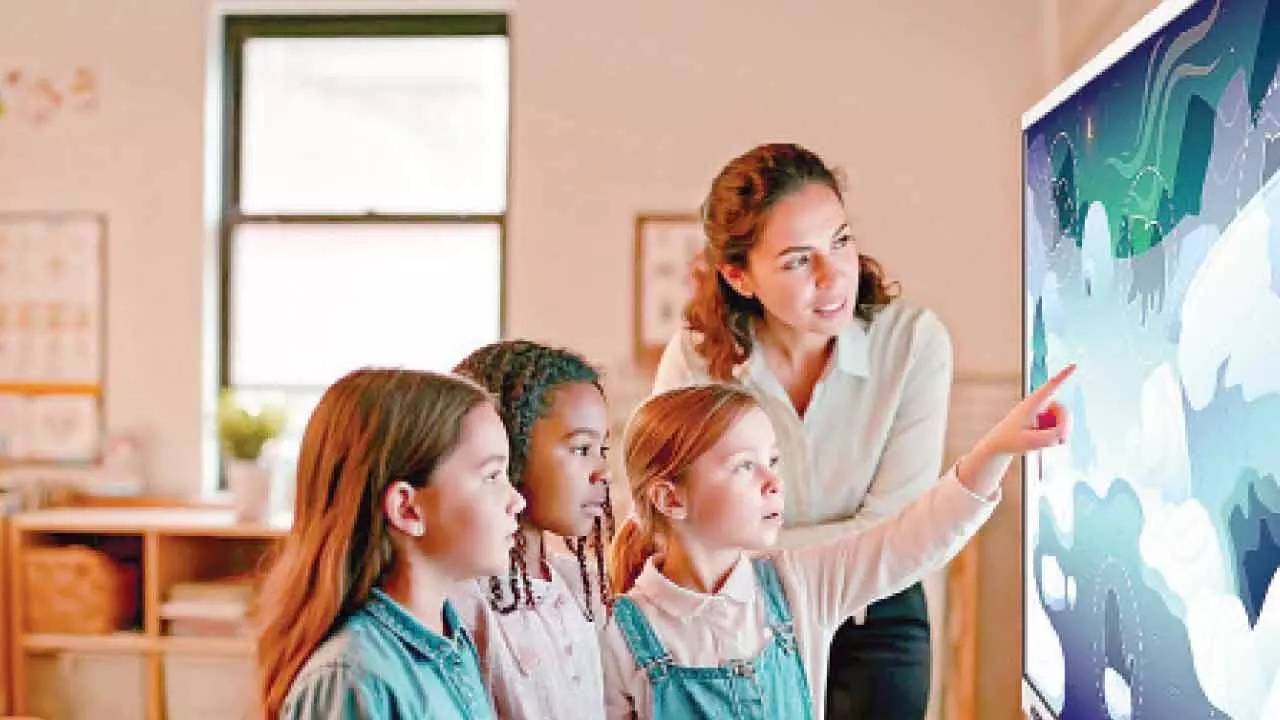
What if classrooms looked less like rows of desks and more like laboratories of life—places where students built, explored, failed, and tried again? That’s the promise of experiential learning, a philosophy that’s quietly redefining education. It moves beyond textbooks and tests to focus on what truly matters: curiosity, creativity, and connection. It’s about learning by doing—constructing models, running experiments, solving real problems—and in the process, discovering how knowledge works in the real world.
For generations, education was measured by how much one could memorize. But in a rapidly changing world, the real measure is how well one can think, apply, and adapt. The future belongs to learners who can turn theory into action and ideas into innovation. Experiential learning bridges that gap—it transforms classrooms from spaces of instruction into spaces of exploration, where knowledge is not just received but created.
In traditional Indian education, the focus was on content and recall—reading, repeating, reproducing. Yet knowledge without context fades quickly. Experiential learning changes that by grounding theory in experience. It gives lessons meaning and memory—students don’t just study science, they do science; they don’t just learn history, they recreate it through storytelling or role play. The results are deeper understanding, critical thinking, and lasting curiosity.
This approach is part of a global movement. In countries like Finland, Singapore, and Canada, learning is increasingly experience-driven—built around projects, problems, and reflection. India, too, is embracing this transformation. The National Education Policy (NEP) 2020 and the CBSE competency-based learning framework encourage teachers to replace rote memorization with inquiry, experimentation, and teamwork. Schools are introducing project-based modules, design thinking workshops, and hands-on assessments, bringing real-world relevance into every subject.
At its core, experiential learning follows a simple yet profound cycle: Experience – Reflect – Conceptualise – Experiment. Students engage with a situation, think critically about what happened, connect it to concepts, and test new ideas. For instance, a lesson on environmental sustainability may involve designing a waste segregation model for the school or calculating their household’s carbon footprint. Learning becomes an active loop, transforming knowledge into skill and skill into confidence.
And the benefits stretch far beyond academics. Experiential learning nurtures empathy, leadership, and problem-solving. It teaches collaboration and resilience—the ability to adapt, pivot, and persevere. In a world where industries evolve overnight and jobs of the future are yet to be invented, these traits are not optional; they are essential.
However, this educational shift demands more than a curriculum overhaul—it requires a mindset revolution. Schools must move from “marks” to “mastery,” teachers from “instructors” to “facilitators,” and parents from “results” to “reflection.” When children’s learning journeys are measured not by grades but by growth, education becomes more meaningful.
Ultimately, experiential learning makes education come alive. It turns lessons into experiences, information into imagination, and learners into creators. As India stands at the threshold of an educational renaissance, one truth shines clear—the classrooms of the future will not just teach; they will inspire, engage, and empower. The author is Managing Director, Birla Open Minds.