Students build real-time crowd risk prediction system

Public safety in crowded spaces is often reactive — dependent on human surveillance or delayed interventions. Five students of Mohan Babu University — Medupally Dileep Reddy, Neelapu Herambudu, Badugulla Mohammad Sameer, Tumbali Jyotsna, and Ambati Rupa Sridevi — decided to tackle this challenge head-on with an innovative AI-Based Crowded Area Risk Prediction System.
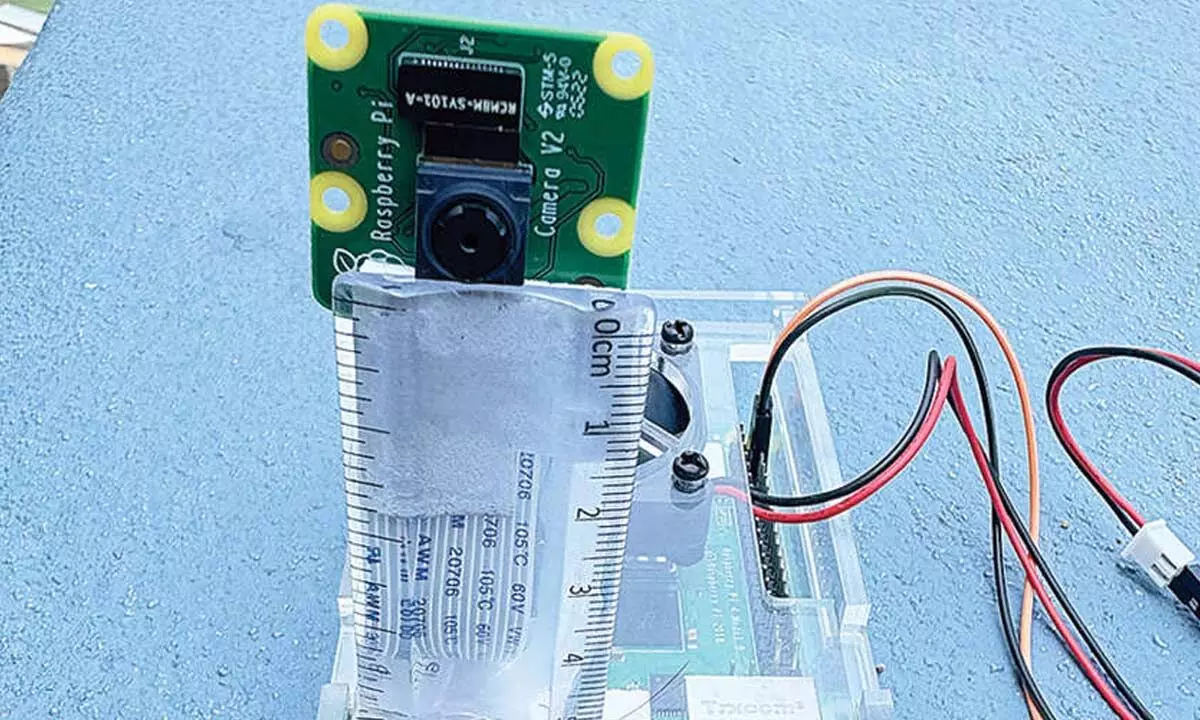
Their system uses the YOLOv5s AI model and a Raspberry Pi camera to detect crowd density, instantly classify risk levels, and send automated alerts when overcrowding is detected. What makes it unique is that it sends alerts via WhatsApp, Telegram, or SMS to help prevent dangerous situations in spaces like malls, stadiums, or transit hubs. Running entirely on the edge with no cloud dependency, it ensures both speed and cost-efficiency.
A companion mobile app, built using Flutter, enables real-time monitoring, heatmap visualisation, and live video feeds, making it practical for on-the-go security teams. With a working model already developed and mentored by Dr. N. Padmaja and Dr. T.V.S. Gowtham Prasad from the AICTE IDEA Lab, this project is a scalable, smart-city-ready solution for proactive crowd management.
Excerpts from an interview
How did the project take shape, and what were some key turning points during its development?
The idea emerged from a shared observation: overcrowding is a persistent safety risk in public spaces. Manual monitoring is slow, prone to error, and resource-intensive. The team envisioned an automated, AI-driven alternative.
A critical decision was selecting the Raspberry Pi 4 for processing, enabling real-time edge computing without cloud reliance — improving both response speed and privacy. Integrating YOLOv5s allowed accurate people detection and counting from live video feeds.
Key turning points included:
• Creating a Low, Medium, High risk classification system based on density thresholds.
• Adding Telegram API alerts for instant notifications.
• Developing a Flask-based dashboard for visualisation.
• Introducing QR codes so the public could check live crowd status.
These additions turned the concept into a deployable safety tool aligned with smart city goals.
How did the idea evolve into a functional working model?
Initially, the concept was a basic detection system for malls and transport hubs. Research revealed that offline, low-cost, and scalable were essential design goals. Raspberry Pi became the hardware backbone, and the YOLOv5s model was fine-tuned to run efficiently on limited hardware without sacrificing accuracy.
Once detection was achieved, the team built a risk classification algorithm linked to instant alerts via Telegram. The model grew into a complete platform by:
• Adding Flask-based dashboards for live visuals and heatmaps.
• Integrating QR codes for citizen access to crowd data.
• Designing modularity for deployment in varied environments, from stadiums to rural gatherings.
How does the system help local authorities or citizens respond faster in high-risk situations?
The system continuously processes live footage, counting individuals and assessing risk in real time. When a high-risk threshold is reached, automatic alerts are sent to designated security personnel, including images and location data.
For citizens, scanning a QR code at an entry point provides immediate updates on current crowd density, helping them make informed choices.
Key features enabling rapid response include:
• Edge-based processing for minimal delay.
• Heatmap visualisation for quick situational awareness.
• Automated alerts to reduce reliance on human monitoring.
What role can this system play in smart cities and densely populated rural areas?
In smart cities, it can integrate into existing safety frameworks — linking with emergency services, public display boards, and IoT infrastructure. In semi-urban or rural areas, where surveillance resources may be scarce, the system’s low cost and offline capability make it valuable for managing crowds at festivals, markets, or public meetings.
Potential applications include:
• Early warnings to prevent stampedes.
• Data to support urban planning and traffic management.
• Integration with local emergency protocols.
Why was delivering real public value as important as technical success?
The team aimed for impact over demonstration. Overcrowding can lead to tragic consequences, especially in under-monitored areas. The system was built to be accessible, affordable, and practical, ensuring use beyond well-funded urban centres.
Public value was prioritised by:
• Designing for offline use, avoiding reliance on high-speed internet.
• Using open-source tools to keep costs low.
• Including citizen-facing features like QR code updates.
By focusing on safety, inclusivity, and adaptability, the project ensures its benefits extend beyond technical achievement.
Key features of the project
•Core Technology:YOLOv5s AI model on Raspberry Pi 4 for real-time crowd detection.
•Risk Classification:Automatic categorisation into Low, Medium, or High risk.
•Alerts: Instant notifications via WhatsApp, Telegram, or SMS to security teams.
•Public Access:QR codes for citizens to check live crowd status.
•Offline Capability: No cloud dependency for faster response and better privacy.
•Visualisation Tools:Mobile app and Flask dashboard with heatmaps, video feeds, and risk levels.
• Application Areas:Malls, stadiums, railway stations, markets, religious gatherings, and festivals.
• Scalability:Adaptable to urban, semi-urban, and rural environments with minimal setup costs.
This student-led innovation shows how practical, human-centred design can transform a technical concept into a life-saving tool. By combining real-time AI detection, instant alerts, and public accessibility, the AI-Based Crowded Area Risk Prediction System stands as an example of technology designed for community safety in the realworld.