IIMA hosts leadership programme for visually challenged professionals

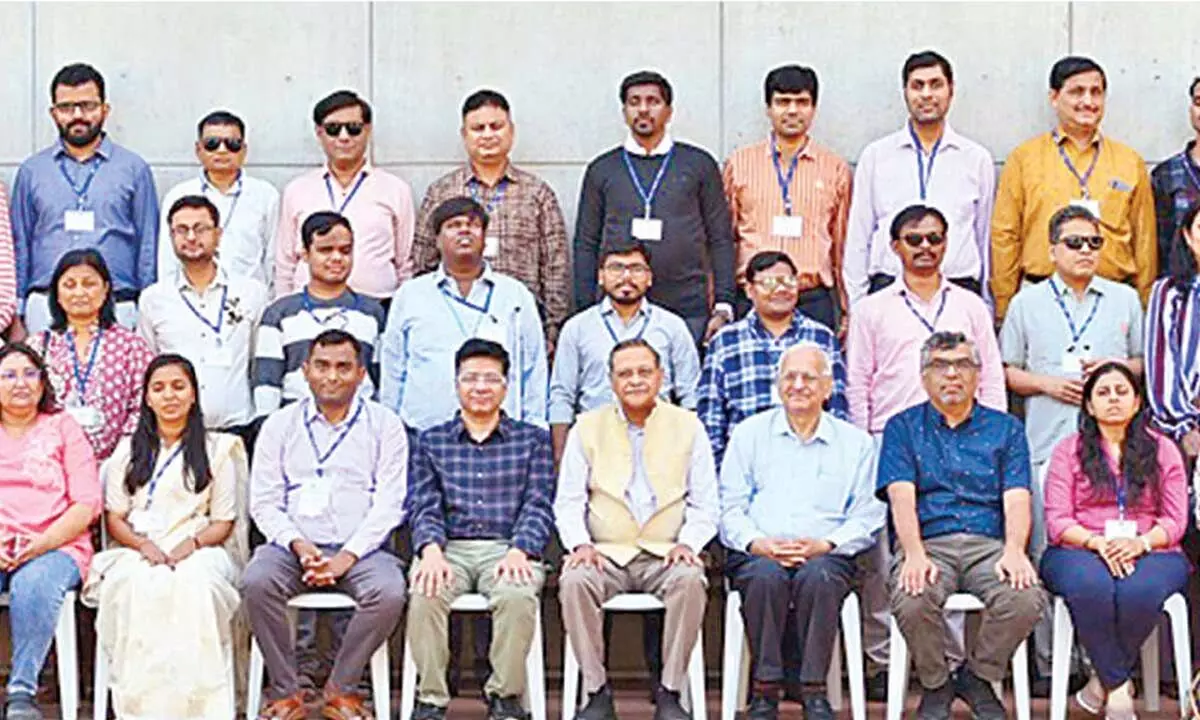
The Indian Institute of Management Ahmedabad (IIMA) has welcomed 28 participants for the fourth edition of its ‘Leadership and Strategic Thinking’ programme designed for visually challenged professionals. The three-day immersive programme was inaugurated by Prof. Bharat Bhasker, Director of IIMA, along with Prof. Rajesh Chandwani, Faculty Chair for the programme, Bhushan Punani, General Secretary of the Blind People’s Association (BPA) Ahmedabad, and Kinnari Desai, Deputy Director at BPA.
Conducted in collaboration with the Blind People’s Association, Ahmedabad, the programme aims to equip participants with skills in leadership, strategic thinking, and management. It brings together working professionals from across the country representing diverse sectors such as education, government services, information technology, and banking and financial services.
During the programme, participants attend specially curated sessions led by IIMA faculty members. These sessions focus on building leadership capabilities and understanding the dynamics of management in both personal and professional contexts.
The curriculum includes topics such as strategic leadership, artificial intelligence for managerial decision-making, macroeconomic concepts and the Indian economy, and technology designed to support visually challenged individuals. The aim is to provide participants with a broader perspective on leadership and organisational management.
Speaking at the inauguration, Prof. Bharat Bhasker noted that the programme has expanded significantly over the past four years, now attracting participants from different parts of the country.
He highlighted that initiatives like this help strengthen leadership capacity and strategic thinking while also encouraging participants to apply these skills in real-world situations.
Bhushan Punani of the Blind People’s Association said previous editions of the programme had helped several participants move into senior professional roles.
He emphasised the importance of technology, access to education, supportive policies, and inclusive initiatives in empowering persons with disabilities.
Programme Faculty Chair Prof. Rajesh Chandwani added that the sessions aim to build confidence among participants and encourage them to pursue leadership opportunities in their respective fields.