Experts call for global push for Unani at 8th UDMA Day

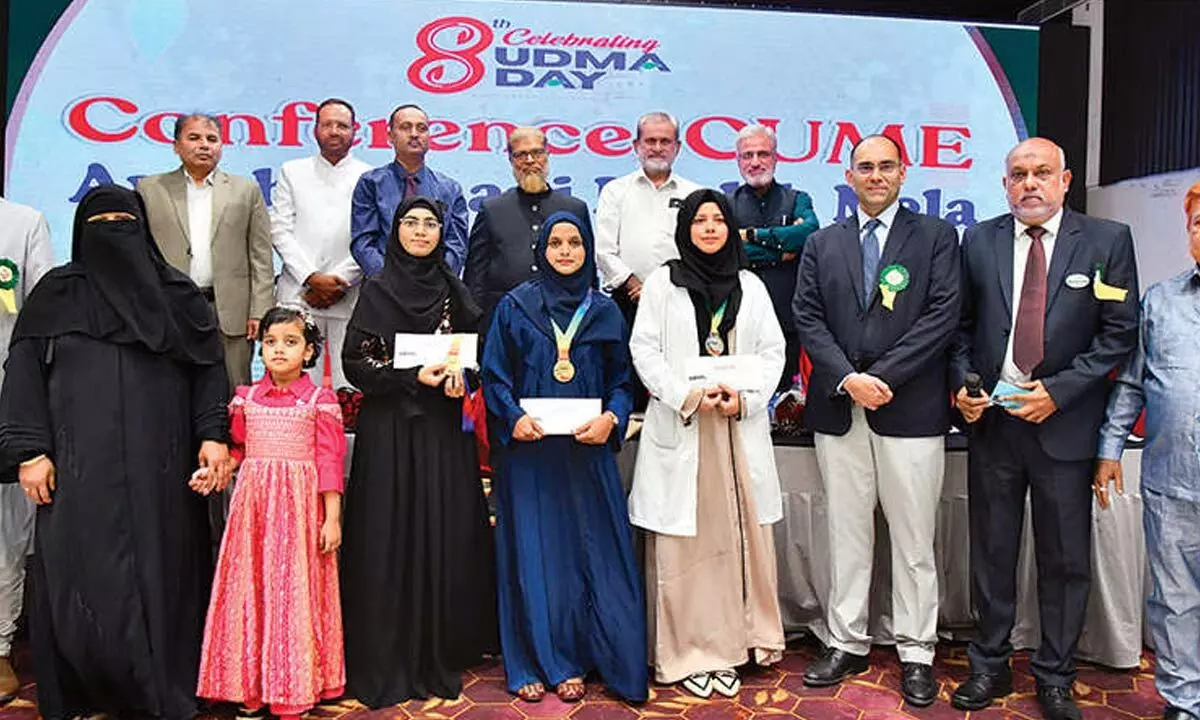
Hyderabad:The 8th UDMA Day celebrations, accompanied by a Unani Health Mela that brought together manufacturers from across the country, were held in Hyderabad drawing leading figures from the Unani industry, research institutions and regulatory bodies. The event underscored the growing need to modernise the traditional system while strengthening research, safety frameworks and global outreach.
Delivering the keynote address, Dr. Hamed Ahmed, President of the Unani Drugs Manufacturers Association (UDMA) and CEO of Hamdard Laboratories, called for a sharper strategic focus on scientific integration, regulatory clarity and international visibility for Unani medicine. Ahmed, who is also the grandson of Hamdard’s founder Hakeem Abdul Hameed, said the industry was at a critical juncture where traditional heritage must meet contemporary expectations. He referred to the significant representations made by UDMA over the past year, including the acceptance of the proposal allowing BUMS graduates to be considered for Food Inspector posts, which was later notified in the official Gazette. He also noted the detailed submission made to the Ministry of AYUSH on the latest GMP guidelines and the association’s meeting with the Central Council for Research in Unani Medicine (CCRUM) to explore clinical trials and long-term research collaborations. In his welcome address, Organising Chairman Hakeem Ghulam Mohiuddin, a senior Unani leader who played a pivotal role in forming the AP Unani Association and the GOP Unani Association, said Hyderabad was proud to host the UDMA Day, describing the city as the longstanding hub and epicentre of Unani medicine. He said that “between 600 and 700 Unani-registered companies operate in Hyderabad alone, making the city one of the most active centres for Unani manufacturing in the country”.
Mohiuddin said the purpose of UDMA Day was not merely ceremonial but intended to give both local and non-local manufacturers a platform to showcase their strengths, innovations and offerings. Drawing an analogy, he said the selective use of allopathic medicine by Unani practitioners should be akin to adding a little “achar or namak” to food, sparingly and only when absolutely necessary. He stressed that Unani medicine remains complete and self-sufficient when practised in its true classical and philosophical form. One of the strengths of the system, he added, was its transparency.