Engineering students gain industry exposure through real-world tech projects

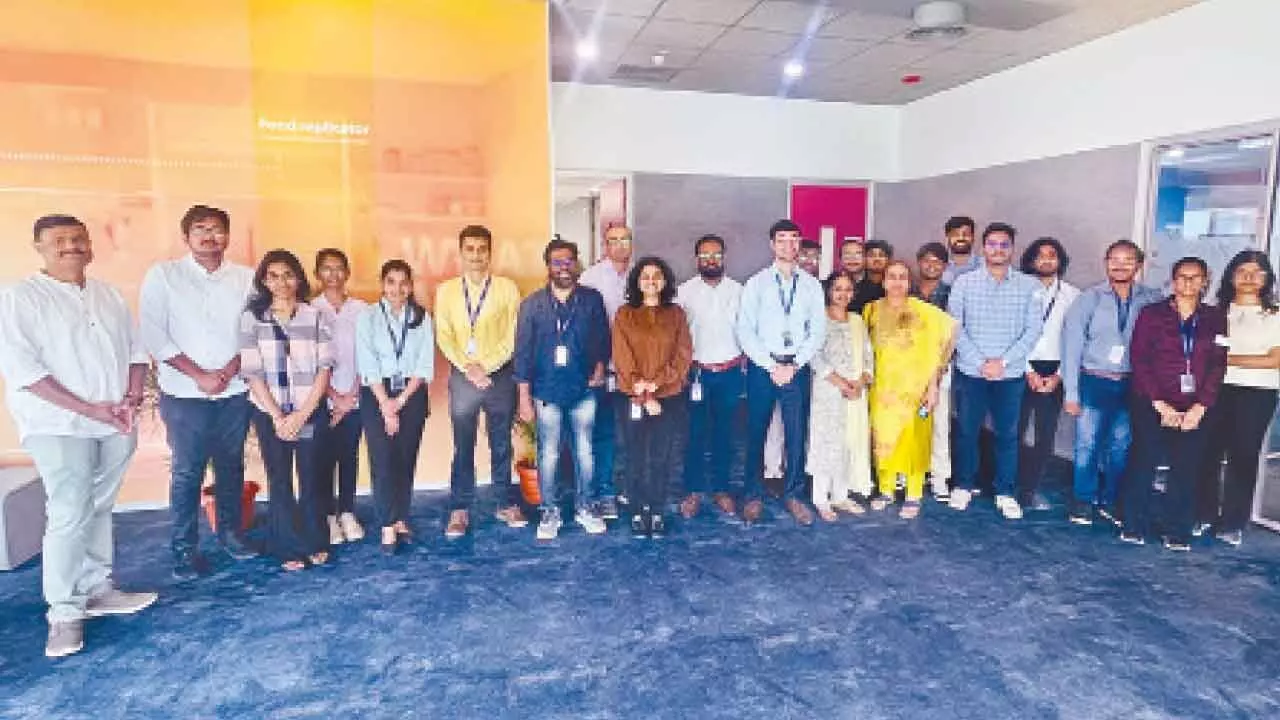
Bengaluru: Two student teams from RV College of Engineering spent the last few months working on industry-defined technology projects that offered them hands-on exposure to real-world problem-solving. The initiative, conducted in collaboration with Epsilon India, aimed to bridge the gap between academic learning and practical application by involving students directly in live project environments.
As part of the program, final-year engineering students worked alongside industry mentors while tackling challenges in two emerging areas: AI-based email marketing workflows and modernizing high-level language (HLL) code through migration from C to Python 3.
Over a period of two to three months, both teams designed, refined, and tested functional prototypes.
The projects focused on solving practical engineering problems—one exploring automation in marketing systems through machine learning models, and the other examining how legacy software written in C could be translated and optimized in Python 3 for improved efficiency and maintainability.
Students received structured guidance from technical experts and faculty members, enabling them to understand real-world constraints such as performance optimization, data processing, version control, code translation accuracy, and end-to-end validation.
At the end of the project cycle, the teams presented their work and demonstrated the outcomes of their research and development efforts.
Faculty members noted that such collaborations offer students a clearer view of workplace expectations, while students shared that the experience improved their confidence in applying engineering concepts beyond the classroom. Many described the project as their first opportunity to work with production-level tools and real datasets, helping them strengthen both technical and problem-solving skills. The initiative underscores the growing emphasis on industry–academia cooperation to prepare engineering students for the evolving demands of the technology sector.