Coding for inclusion: How a teen innovator is transforming learning for students

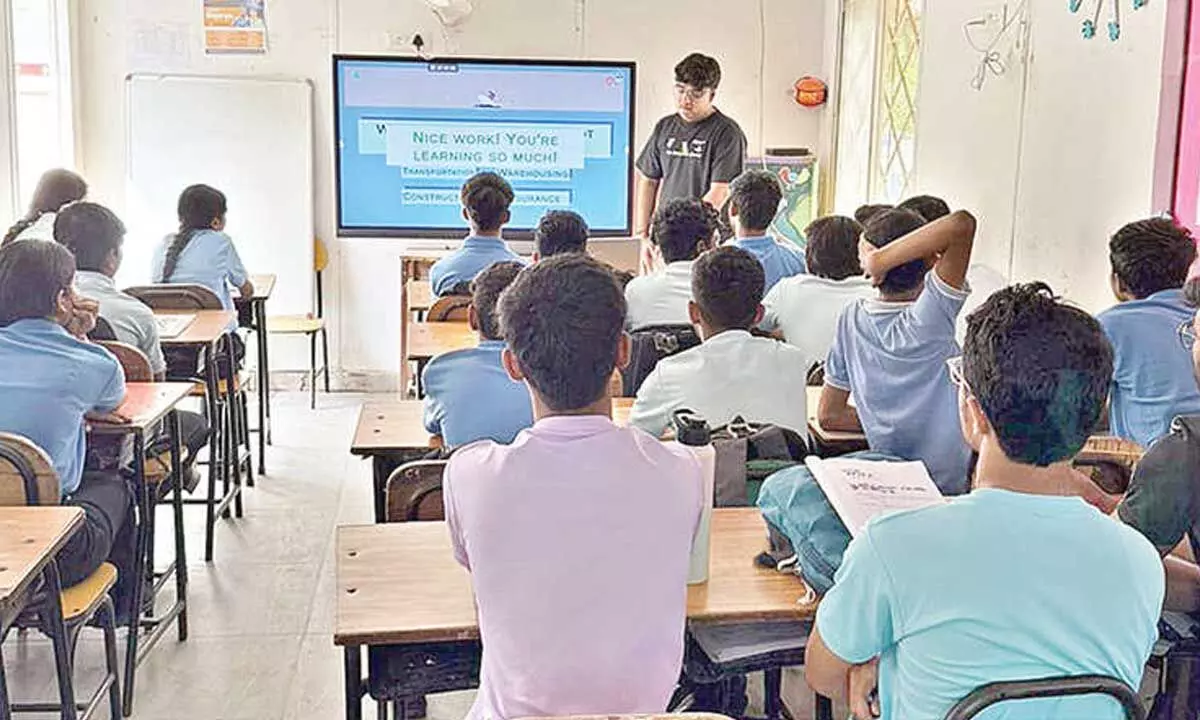
Meet the 17yrs innovator Arv Jakhodia, a Grade 12 student at The Shri Ram School – Aravali, is proving that innovation in education doesn’t have to wait for adulthood. Driven by empathy and curiosity, Arv has developed Samanta, an educational app that reimagines how students—particularly those who are neurodiverse—learn business studies.
Samanta simplifies complex business concepts through interactive games, short videos, and visual aids, creating an experience that’s intuitive, playful, and accessible. Already piloted in classrooms, the app has made a tangible difference—impacting over 30 students, logging 50+ browser plays and 150+ site visits, and earning partnerships with the National Institute of Open Schooling (NIOS) and Pallavanjali School.
His innovation has also earned him the CREST Gold Award from the British Science Association and a nomination for the Inspire-Manak Award 2025 by India’s Department of Science & Technology. In this exclusive conversation, Arv discusses his inspiration, challenges, and hopes for making learning more inclusive for all.
Excerpts from an interview with Young Hans featuring Arv Jakhodia
What inspired you to create Samanta and focus on neurodiverse learners?
I always disliked the rote-learning culture in classrooms. Especially in business studies—students often memorized answers without understanding them. I saw how many of my peers, particularly neurodiverse learners, struggled not because they lacked intelligence but because the system didn’t meet them where they were. I wanted to change that by making learning visual, interactive, and joyful.
How does the app’s use of games and videos differ from traditional teaching?
Traditional classrooms are fast-paced and noisy. Samanta breaks lessons down into short, manageable segments—through videos, quizzes, and games—so students can learn at their own pace. It caters to visual, auditory, and kinesthetic learners, ensuring that everyone—regardless of learning style—can grasp complex ideas easily.
How do you balance schoolwork with app development?
It’s not easy, I dedicate 1–2 hours daily to coding and extra time on weekends. Working with teachers and peers helps me refine the app while keeping up with academics. Once people saw what Samanta could do, it started to grow organically—its quality spoke for itself.
How have awards influenced your motivation?
The recognition from the British Science Association and INSPIRE-MANAK has been incredible. It validated my belief in Samanta’s purpose and inspired me to expand it. My goal is to make Samanta the go-to platform for inclusive learning everywhere neurodivergent students are supported.
What role should technology play in inclusive education?
In today’s world, everything adapts to technology—except education. When used thoughtfully, technology can personalize lessons and remove barriers of pace or style. It allows students to learn for understanding, not memorization. It’s the bridge to make learning truly equal for everyone.
What feedback made you realize Samanta’s impact?
A visit to Pallavanjali School, I asked students if they preferred rote learning or learning through games. They all said, ‘Games are more fun!’ Their excitement during the session—the smiles, the eagerness to answer—was my real reward. Even the teachers, who were initially unsure, later praised how Samanta simplified learning and reduced their workload. That moment assured me this project mattered.
What’s next for Samanta?
Business studies is just the start, I plan to expand Samanta beyond NIOS subjects, offering skill-based learning that schools often overlook—like financial literacy or communication. I want Samanta to grow from an app into a movement that changes how teaching happens across classrooms in India and beyond.
What are your future plans?
After school, I plan to study AI integration, information systems, or UX design. I want to keep building Samanta—adding more features, games, and accessibility tools to make neurodivergent learning more powerful. My goal is to merge human-centered design with computer science to create education technology that truly transforms lives.