Will Devendra Fadnavis shape BJP’s next destiny?

The RSS has long advocated for generational renewal to ensure strategic continuity and ideological vigour. Modi, who will have served as Prime Minister for 15 uninterrupted years by 2029—a rare feat in India’s post-independence history—may choose to step down at the zenith of his career. This decision would align with his carefully curated legacy, avoiding the risks of anti-incumbency that surfaced in the 2024 Lok Sabha elections, where the BJP fell short of a standalone majority and relied on coalition partners to form the government
As India approaches the 2029 general elections, the Bharatiya Janata Party (BJP) stands at a pivotal juncture. With Prime Minister Narendra Modi turning 78 by then and Union Home Minister Amit Shah announcing his retirement from active politics post-2029, the party is poised for a significant leadership transition. The Rashtriya Swayamsevak Sangh (RSS), the ideological backbone of the BJP, appears to be revisiting its 2014 strategy: identifying a younger, dynamic leader capable of sustaining the party’s dominance while appealing to India’s evolving demographic and political landscape. Among the potential frontrunners, Devendra Fadnavis, the current Chief Minister of Maharashtra, emerges as a compelling candidate to carry forward Modi’s legacy.
The BJP’s leadership has historically progressed through distinct generations. The first generation, comprising stalwarts like Atal Bihari Vajpayee, L.K. Advani, and Murli Manohar Joshi, laid the foundation for the party’s rise. The second generation, including Modi, Shah, Rajnath Singh, Nitin Gadkari, and Shivraj Singh Chouhan, propelled the BJP to unprecedented electoral success. However, with most of these leaders approaching or exceeding 70 years—a threshold often associated with political “vanaprastha” (retirement) in RSS tradition—the stage is set for a new cohort to take charge.
The RSS has long advocated for generational renewal to ensure strategic continuity and ideological vigour. Modi, who will have served as Prime Minister for 15 uninterrupted years by 2029—a rare feat in India’s post-independence history—may choose to step down at the zenith of his career. This decision would align with his carefully curated legacy, avoiding the risks of anti-incumbency that surfaced in the 2024 Lok Sabha elections, where the BJP fell short of a standalone majority and relied on coalition partners to form the government.
Modi remains the BJP’s most formidable electoral asset, with unmatched mass appeal and a global statesmanship stature. However, prolonged tenures often invite diminishing returns. The 2024 elections highlighted pockets of voter fatigue, particularly in urban and semi-urban constituencies, where economic concerns and coalition dynamics diluted the BJP’s narrative of invincibility. A graceful exit in 2029, before facing a potential electoral setback, would allow Modi to preserve his legacy as a transformative leader while enabling the RSS to orchestrate a smooth transition.
The RSS’s 2014 playbook—when it boldly sidelined veteran L.K. Advani to project Modi as the Prime Ministerial candidate—offers a precedent. That decision prioritised youth, charisma, and administrative competence over seniority. As 2029 approaches, the RSS appears inclined to replicate this strategy, seeking a leader who can balance ideological fidelity with modern governance and coalition management.
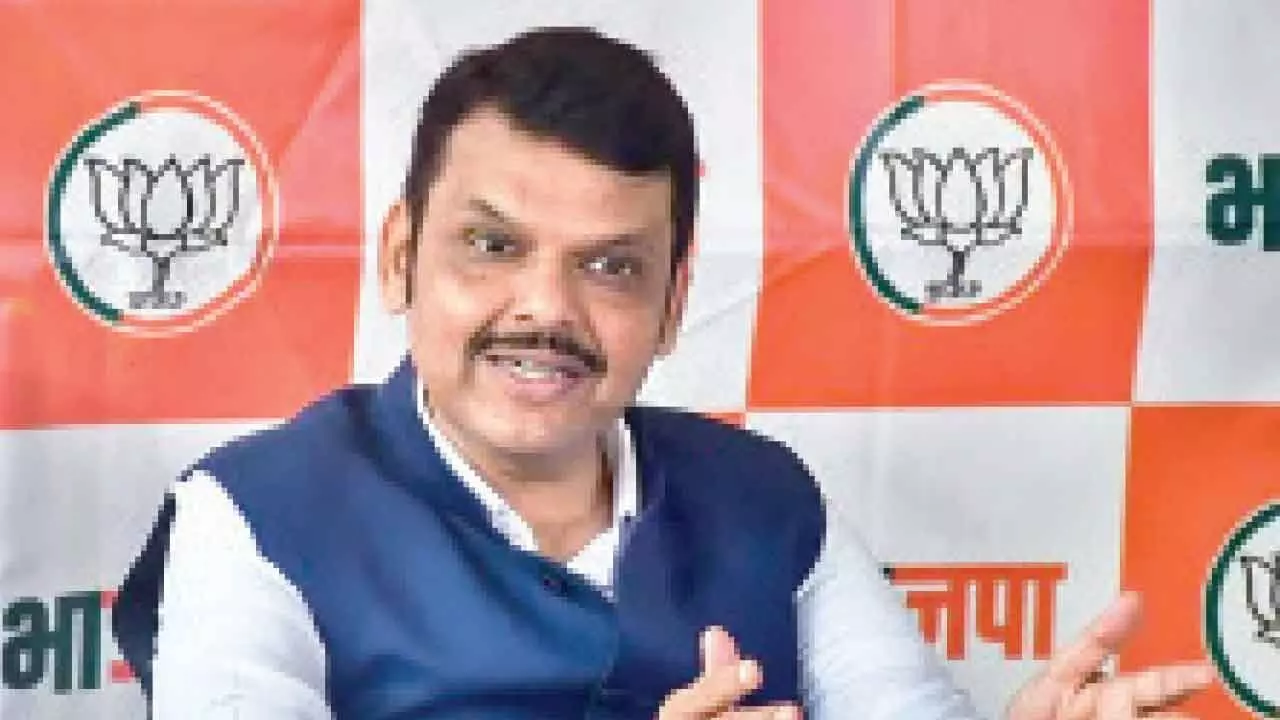
The BJP’s tradition of announcing its Prime Ministerial candidate ahead of elections underscores the importance of a clear leadership face. Three names stand out in the current landscape: Devendra Fadnavis, Yogi Adityanath, and Dharmendra Pradhan. At 54, Devendra Fadnavis, a Maharashtra Chief Minister , is a standout candidate. Hailing from Nagpur—the RSS’s ideological headquarters—Fadnavis enjoys deep trust within the Sangh.
His tenure as Maharashtra’s Chief Minister (2014–2019) showcased his administrative acumen, navigating the state’s complex political and economic landscape. Known for his tech-savvy, corporate-style governance, Fadnavis mirrors the qualities that made Modi a national icon in 2014: a blend of modernity, decisiveness, and grassroots connect.
Fadnavis’s appeal extends to India’s burgeoning middle class, urban youth, and corporate sector—key constituencies for the BJP’s future. Unlike Modi, whose polarising image has occasionally strained coalition dynamics, Fadnavis projects a more inclusive persona, making him a viable candidate for a coalition-dependent mandate. By 2029, at 58, he will be at a politically optimal age—experienced yet youthful, capable of leading for a decade or more.
Uttar Pradesh Chief Minister Yogi Adityanath, a towering figure in the BJP, commands immense grassroots support, particularly in northern India. As the head priest of the Gorakhnath Mutt, his Hindutva credentials resonate strongly with the party’s core base. However, his overtly religious image and uncompromising style may alienate urban voters, corporate stakeholders, and coalition partners—critical components in an era of fragmented mandates. While Yogi’s influence in Uttar Pradesh, India’s most populous state, makes him a potential kingmaker, his national viability as a consensus Prime Ministerial candidate remains constrained.
Union Minister Dharmendra Pradhan, an RSS loyalist from Odisha, brings administrative experience and ideological alignment. His role in expanding the BJP’s footprint in Odisha, culminating in the party’s first state government in 2024, underscores his organizational skills. However, Pradhan lacks the mass appeal of Fadnavis or the charisma of Yogi. His exclusion from the Odisha Chief Minister’s post suggests that the BJP views him as a capable administrator rather than a national electoral face. He is more likely to assume a senior cabinet role or the BJP presidency than the Prime Minister’s chair.
The RSS’s criteria for its 2029 Prime Ministerial candidate are clear: the leader must be under 60, charismatic yet not divisive, experienced in governance, acceptable to both party cadre and allies, and capable of long-term leadership. Fadnavis ticks nearly all these boxes. His administrative track record in Maharashtra, coupled with his RSS roots, positions him as a natural successor to Modi. His ability to manage coalition dynamics, as demonstrated in Maharashtra’s complex political alliances, enhances his appeal in a coalition-heavy political landscape.
Moreover, Fadnavis’s urban, reformist image aligns with India’s demographic shift. By 2029, over 50 per cent of India’s population will be under 35, with urban voters playing a decisive role. Fadnavis’s focus on infrastructure, digital governance, and economic reforms resonates with this cohort, while his RSS backing ensures ideological continuity. Unlike Yogi, whose Hindutva-centric approach may limit broader appeal, Fadnavis offers a balanced profile that bridges tradition and modernity.
The RSS’s influence in shaping the BJP’s leadership cannot be overstated. Its centenary in 2025—a landmark moment—provides an opportune platform to signal a new political face. Speculation suggests that the RSS may begin grooming its chosen leader during this milestone, with a formal announcement likely by 2027. Fadnavis’s Nagpur roots and RSS connections position him favourably in this process. The Sangh’s preference for a leader who can sustain the BJP’s ideological mission while adapting to India’s changing aspirations points strongly toward Fadnavis.
The transition to a post-Modi era will not be without challenges. The BJP’s reliance on Modi’s charisma has been a double-edged sword, creating a leadership vacuum that will test the party’s organizational depth. Anti-incumbency, coalition pressures, and opposition resurgence—evident in 2024—will demand a leader who can unify diverse stakeholders. Fadnavis’s experience in managing coalitions and his relatively uncontroversial image make him well-suited to navigate these complexities.
Additionally, India’s economic and social landscape is evolving rapidly. Issues like unemployment, climate change, and digital transformation will dominate the 2029 discourse. Fadnavis’s track record in promoting initiatives like “Make in Maharashtra” and his focus on urban development align with these priorities, offering a vision of continuity with progress.
As the BJP prepares for 2029, the contours of a strategic leadership transition are becoming clear. While Modi’s legacy as a transformative leader is secure, the RSS’s focus on long-term continuity signals the rise of a new generation. DevendraFadnavis, with his administrative prowess, ideological grounding, and modern appeal, appears poised to lead the BJP into this new era. In Nagpur’s corridors of influence, where the BJP’s future is often scripted, Fadnavis’s name resonates as the heir to Modi’s mantle—and potentially, India’s next Prime Minister.
(The writer is a Political Analyst and Director, Peoples’ Pulse)