Which way will Bihar poll dangal swing?

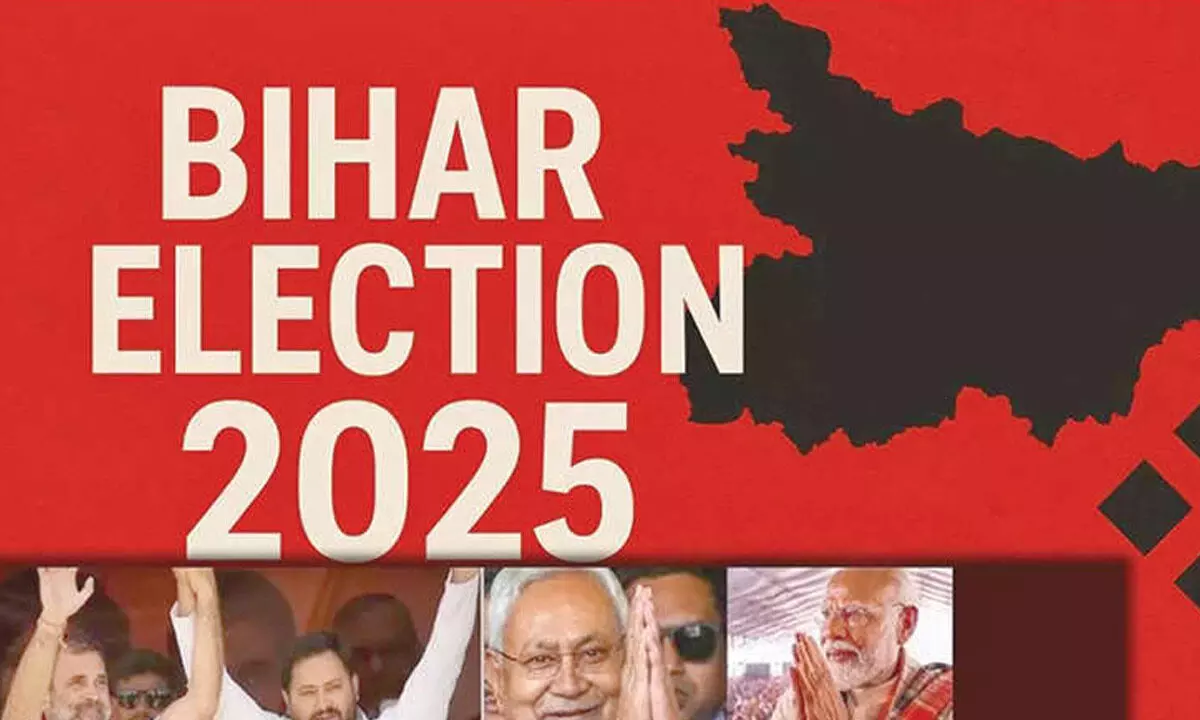
We are into election season yet again. This time, Bihar is going to Assembly polls in two phases on November 6 and 11 with results scheduled for November 14, the birth anniversary of Pandit Jawaharlal Nehru, the country’s first Prime Minister. Is it a coincidence or a calculated move? In 2024, Narendra Modi won his third consecutive General Elections as Prime Minister, the second one to do so after Nehru. That way, Modi equaled one of Nehru’s long-held records as the political head of the country. But Nehru still holds the record of India’s longest-serving Prime Minister with an uninterrupted tenure of 16 years and 286 days. If Narendra Modi wins in the 2029 General Elections and continues as Prime Minister for two years into his fourth term, he will take away the longest-serving PM tag from Nehru.
The outcome of this year’s Bihar election dangal will give a glimpse of whether that will happen or not though a lot will change between now and the 2029 polls.
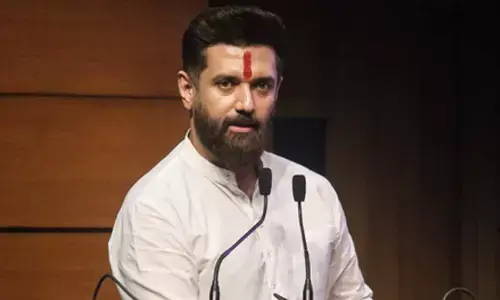
But will the National Democratic Alliance (NDA) comprising Modi-led Bharatiya Janata Party (BJP), Chief Minister Nitish Kumar-led Janata Dal (United), the Lok Janshakti Party-led by Dalit face Chirag Paswan and others, retain power in the country’s second largest state by population?
To begin with, the NDA represents a broad-based alliance in these polls when compared to its rival grouping Mahagathbandhan, which consists of Tejashwi Yadav-led Rashtriya Janata Dal (RJD), Congress and others. While BJP brings upper castes and the aspirational middle class to the ruling alliance’s table, the JD (U) counts as its base a large section of backward classes and a section of Muslims and more importantly women, a constituency Nitish Kumar has nurtured for over two decades. LJP brings in the support of the crucial Dalit community.
Surprisingly, Nitish Kumar, despite being in power for 20 years, doesn’t face voter fatigue or severe anti-incumbency. That’s what a majority of surveys indicate. That kind of endurance, despite the presence of a strong RJD as the rival, deserves accolades.
Being in power, NDA is obviously in pole position. Both Modi and Nitish have a long history of keeping rivals at bay while in power. The former, who started his innings at the top as the Chief Minister of Gujarat in 2001, went on to become the Prime Minister in 2014 after serving as CM in his home state four times. As mentioned earlier, he is now into his third successive term as PM. Nitish, who started his long-stint as the Bihar CM in 2005 - four years after Modi’s, and earned the sobriquet of Sushasan Babu (Mr Good Governance), is yet to yield to rivals despite switching sides several times and vacating the position to a confidante for a brief period. So, it is not easy to defeat the Modi-Nitish combination given their long history of electoral victories. Only severe anti-incumbency or stunning strategies from the Opposition can unseat the ruling alliance. In the absence of any anti-incumbency, Mahagathbandhan’s strategies will hold the key to whether the NDA wins Bihar or not. But as of now, it seems to be lacking the aggression that is required to outsmart a formidable opponent like NDA. Will this change as polls progress? Unlike NDA, seat sharing among alliance partners has also not been smooth. As the leading player in the political grouping, RJD will obviously contest the highest number of seats though deadlock over seat-sharing with partners exposes chinks in its armour.
Further, the alliance is not as broad-based as the NDA because RJD banks on MY (Muslim-Yadav) combination with other small caste groups chipping in. Besides, Congress has been a weak link given the fact that it does not have majority support from any major castes. That’s the reason why it continues to be the junior partner to RJD.
Congress’ heir apparent and Leader of Opposition in Lok Sabha Rahul Gandhi’s recent Vote Adhikar Yatra put the party in spotlight in Bihar. However, as several surveys revealed, it may not fetch any additional votes. Further, Congress must improve its strike rate steeply.
In the 2020 Assembly polls, it contested in 70 seats but won just 19 seats for a strike rate of a mere 27 per cent. On its part, RJD, with its 75 wins from 144 seats, had a strike rate of an impressive 52 per cent. But Congress can’t afford to be a weak link this time. For that to happen, it must get its act together. Otherwise, it will put the prospects of the entire alliance in danger.
Tejashwi should also be careful about making unviable promises, lest his rivals convert them into an advantage.
In the 2009 Assembly polls in the undivided Andhra Pradesh, TDP chief Nara Chandrababu Naidu announced a host of welfare schemes, including a cash transfer scheme of up to Rs 2,000 per month. The then Congress Chief Minister Dr Y S Rajasekara Reddy countered that with ‘all free Babu’ narrative and won the elections. Tejashwi will face a similar situation if he makes unviable promises and NDA counters it effectively. A government job to every family is one such vague promise.
Further, Bihar’s electoral landscape has a new entrant this time in Prashant Kishor, a noted political strategist, who launched Jan Suraaj Party a year ago. Surveys suggest that his political party has gained decent traction. But this will be short-lived as he has pulled out of the direct contest. Instead, he prefers to focus on other candidates and his nascent party’s strategy. But that itself is a wrong strategy and nothing short of a suicidal move akin to a general giving up arms. Also, it shows lack of seriousness on his part. Or is he fearing defeat if he is inthe direct poll fray? His absence from the battleground should please both BJP and RJD as his party might have dented the prospects of BJP and RJD as regards the aspirational class and youth.
Of course, other parties are also in the fray. The Jharkhand Mukti Morcha (JMM), which wanted to be part of Mahagathbandhan, has parted ways and is now fielding candidates in a few seats. The Hyderabad-based AIMIM has announced its candidates in many places, so also has the Aam Aadmi Party (AAP). They may spoil the chances of Mahagathbandhan candidates.
Frankly speaking, NDA has a formidable leadership in Nitish and Modi. While Nitish lends a strong local political flavour, Modi brings in the much-needed national perspective of a similar scale. But that’s not the case with Mahagathbandhan. No doubt, Rahul Gandhi is emerging as the only challenger to Modi at national level due to several reasons. But he is unlikely to tilt the scales in the bloc’s favour the way Modi can swing it for the NDA in Bihar. That way, Tejaswi, the lone warrior pitted against these formidable foes, has his task cut out. But a Mahagathbandhan victory in Bihar will add zing to Rahul’s national ambitions.
For NDA, a victory in Bihar is an imperative. The Modi-led NDA government at the Centre relies on the support of JD(U). Hence, things may turn a little fluid if something goes wrong in the Bihar polls. That may be the reason why NDA is walking the extra mile to seal the win. The Nitish Kumar government recently rolled out Bihar Mukymantri Mahila Rojgar Yojana under which it paid Rs 10,000 each to 1.21 crore women.
For the time being, NDA seems to have a slight edge, but the dynamics may change if the Opposition bloc adopts a killer instinct. The last couple of weeks ahead of any election will be crucial.
Anyway, the outcome of the electoral dangal in Bihar will give a clear indication of what is in store for Indian politics in 2025. That’s beyond doubt.