What impinges on our new nuclear power policy

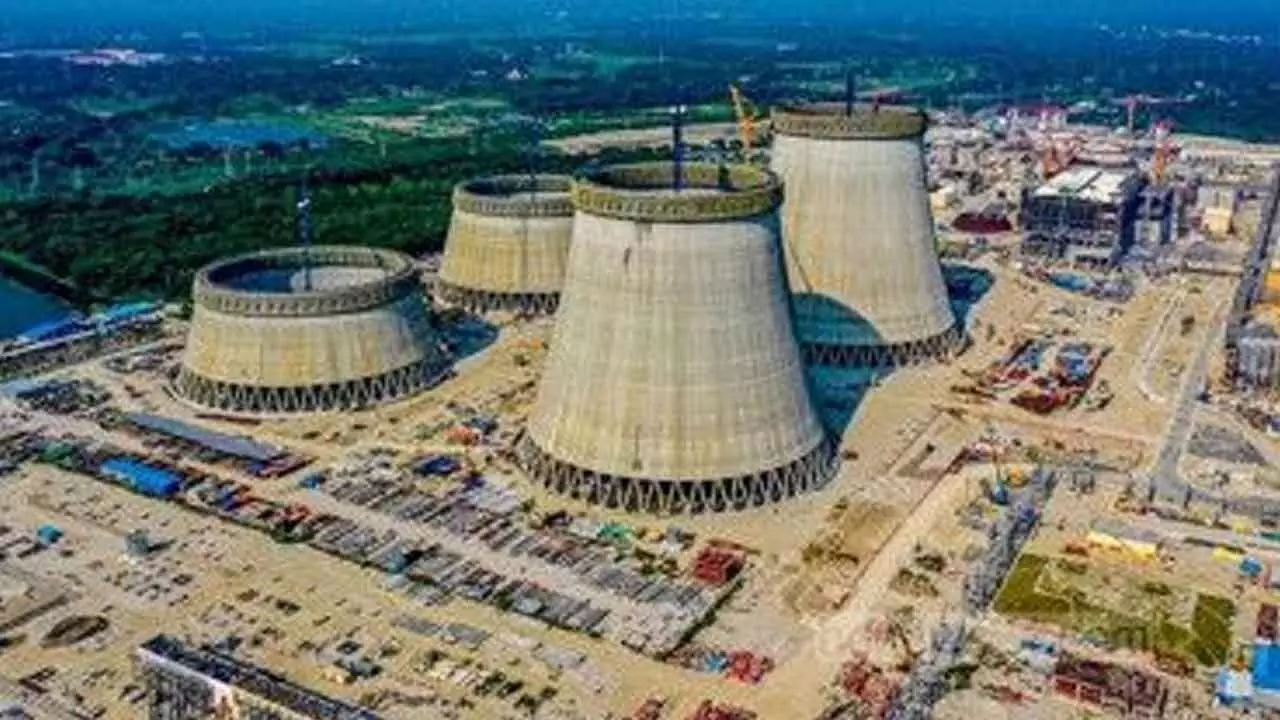
The amendment to the Atomic Energy Act, 1962, aims to facilitate private sector involvement, bringing much-needed investments, technological expertise, and faster execution of projects. By removing these bottlenecks, India can accelerate nuclear expansion in line with global best practices
The recent Union Budget has set an ambitious target for India’s clean energy transition by proposing the installation of 100,000 MW of nuclear power capacity by 2047. This would constitute approximately 14 % of the nation’s projected power requirement of 7lakh Mw on business as usual scenario, marking a significant shift in India’s energy mix. The government’s decision to establish the Indian Nuclear Mission and amend the Atomic Energy Act, 1962, to allow private participation in nuclear energy development is a bold and necessary move.
Need for Nuclear Energy Expansion
India’s current installed power capacity stands at approximately 500,000 MW for a consumption of 250,000 MW, with nuclear energy contributing around 8,000 MW—a mere 1.6% of the total. Given India’s growing energy demands, driven by an estimated population increase to 1.8 billion by 2047 and a projected per capita electricity consumption of 3,000 kWh, a diversified energy portfolio is imperative. Despite an early start in nuclear energy in the 1960s, India faced major hurdles in aggressive nuclear expansion. The primary constraints were the restrictions imposed by the Nuclear Non-Proliferation Treaty (NPT), limiting the import and use of nuclear fuel, and the high capital costs associated with nuclear power plants. However, the advent of Small Modular Reactors (SMRs), which have a capacity of around 300 MW, presents an opportunity for decentralized deployment at industrial hubs and like railway load centers. The proposed legislative amendments are expected to attract investment from global players such as the United States, Canada, France, and Russia, making nuclear energy more accessible and cost-effective over time.
Policy Reforms
One of the key barriers to nuclear power development has been its capital-intensive nature, with long gestation periods and stringent regulatory constraints. The amendment to the Atomic Energy Act, 1962, aims to facilitate private sector involvement, bringing much-needed investments, technological expertise, and faster execution of projects. By removing these bottlenecks, India can accelerate nuclear expansion in line with global best practices, ensuring a more efficient and competitive power sector.
Future Prospects
India’s nuclear power journey began with the Tarapur Atomic Power Station, and today, the country operates at five places . To meet the ambitious 100,000 MW target, India needs to explore innovative nuclear technologies, including SMRs. The compact design of SMRs allows for installation closer to load centers, reducing transmission losses and enhancing grid reliability. This technological shift aligns with India’s decarbonization goals while providing a stable and scalable energy source.
Challenges and the Road Ahead
While nuclear energy offers a reliable and clean power source, several challenges must be addressed:
Fuel Supply and Waste Management: Ensuring a steady supply of nuclear fuel and developing efficient waste disposal mechanisms; Regulatory and Safety Compliance: Strengthening safety protocols and regulatory frameworks to align with international standards; and, Public Perception and Acceptance: Addressing concerns about nuclear safety through transparent communication and community engagement.
Conclusion
India’s push for nuclear power expansion is a step in the right direction for achieving long-term energy security and sustainability. By leveraging policy reforms, encouraging private participation, and investing in advanced nuclear technologies, India can emerge as a global leader in clean energy. However, swift action is required to overcome existing bottlenecks and ensure the timely implementation of nuclear projects. With the right approach, nuclear energy can play a pivotal role in India’s journey toward a cleaner, more resilient power sector.
(The writer is Former Chairman of Tripura Electricity Regulatory Commission and State RERA Tribunal views are his own)