The intelligence failure that reshaped the Middle East

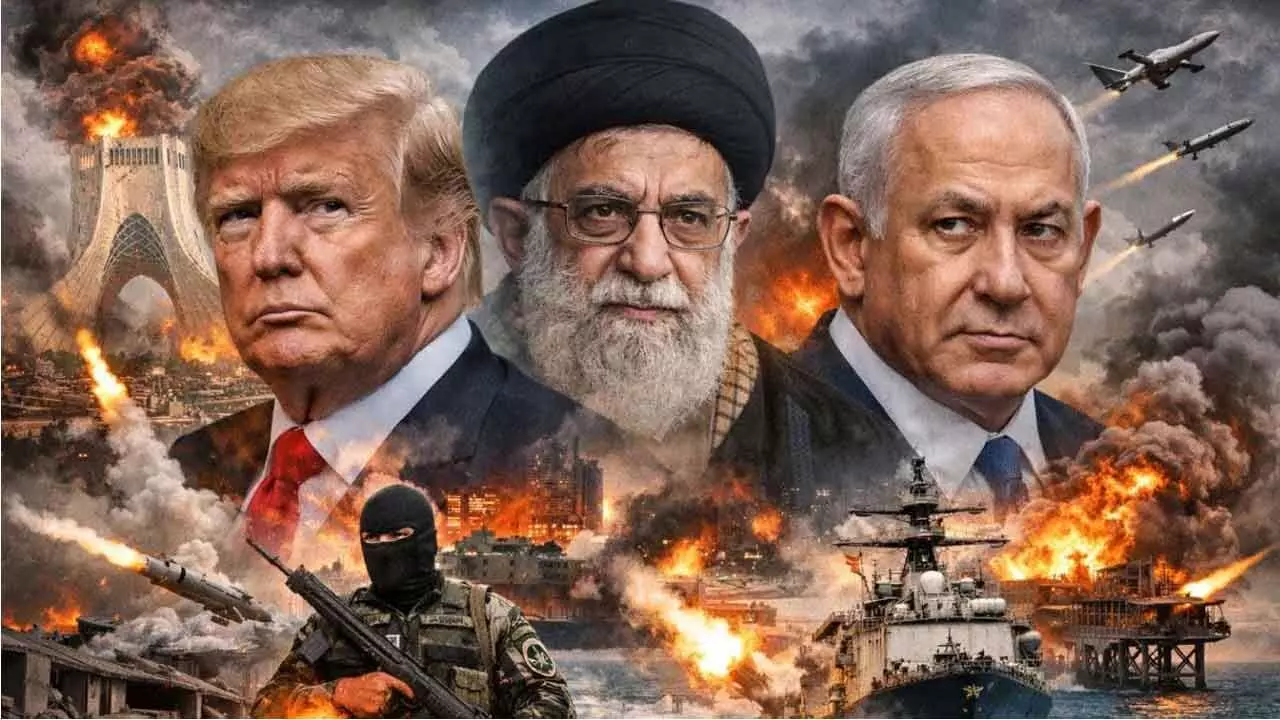
The targeted assassination of Iran’s Supreme Leader, Ayatollah Ali Khamenei, appears to have been conceived in Washington and Tel Aviv as the ultimate “decapitation strike” — a move expected to cripple the ideological and political core of the Islamic Republic and force a rapid strategic retreat. Such calculations assumed that Iran’s highly centralized leadership structure would collapse into confusion once its most powerful figure was removed.
Yet the emerging reality suggests that this assumption may have been a profound miscalculation. Instead of descending into paralysis or internal power struggles, Iran’s military establishment appears to have quickly consolidated authority and activated what analysts increasingly describe as a prepared contingency framework — a “Plan B.” The speed and coherence of the response have raised serious questions about whether Western intelligence agencies, particularly the Central Intelligence Agency (CIA) and Israel’s Mossad, fully understood the depth and resilience of Iran’s strategic doctrine.
At the heart of the intelligence failure lies a familiar strategic blind spot: the persistent underestimation of asymmetric warfare. Western intelligence models may have predicted that the death of the Supreme Leader would produce a vacuum of power within the Iranian system, potentially paralyzing the Islamic Revolutionary Guard Corps (IRGC). However, the Islamic Republic’s governance structure — built over decades — was designed precisely to withstand such shocks. Authority within the IRGC, the clerical establishment, and the broader security apparatus appears to have transitioned smoothly into a collective command structure.
Iran’s military doctrine has long acknowledged its inability to defeat the United States or Israel in a conventional military confrontation. Instead, Tehran has invested heavily in asymmetric capabilities — drones, ballistic missiles, proxy militias, cyber operations, and distributed command networks. These tools allow Iran to wage a form of strategic harassment that imposes continuous costs on its adversaries while avoiding full-scale conventional war.
Recent developments indicate that this doctrine is now being executed with remarkable intensity. Drone swarms, missile strikes, and proxy operations across the region have demonstrated that Iran’s capacity for retaliation was never dependent on a single leader. Rather, it is embedded within a decentralised and layered security architecture.
The expansion of hostilities across multiple theatres underscores the scale of the miscalculation. Attacks targeting American installations and regional infrastructure signal a deliberate strategy to widen the strategic battlefield. The most alarming dimension of the escalation is the willingness to target states that were previously considered peripheral to the conflict. By extending the theatre of confrontation beyond its immediate adversaries, Iran appears to be signalling that any country facilitating military operations against it may become a potential target.
Such moves introduce an additional layer of geopolitical risk. Strikes affecting NATO-aligned territories or European-adjacent airspace would significantly alter the international dimension of the conflict, potentially drawing additional actors into an already volatile situation.
Another factor complicating the situation is the divergence in long-term objectives between the United States and Israel. For Israel, Iran represents an existential security challenge. Israeli strategic thinking has therefore leaned toward the possibility of regime change, with the belief that dismantling the ideological foundations of the Islamic Republic may ultimately remove the threat posed by Iran’s regional networks and missile programmes.
The United States, by contrast, has historically framed the Iranian challenge primarily through the lens of nuclear non-proliferation. While Washington has supported measures aimed at weakening Iran’s military capabilities, successive American administrations have been wary of the unpredictable consequences of regime change and the prospect of prolonged regional conflict.
This difference in priorities creates a strategic gap. While Israel prioritises dismantling the Iranian regime, the United States seeks containment and deterrence. Such divergence can produce fragmented strategies — precise strikes and targeted operations without a coherent long-term political roadmap. Iran appears to have capitalised on this ambiguity, expanding its low-intensity conflict strategy through networks of drones, proxies, and irregular forces that operate below the threshold of conventional warfare.
Modern Western military strategy has placed enormous faith in precision warfare — the belief that high-value targets can be eliminated with surgical accuracy to achieve decisive outcomes. However, precision strikes often struggle against decentralized adversaries. Destroying command centres or eliminating senior leaders does not necessarily neutralize networks designed to function autonomously. Mobile drone platforms, dispersed missile units, and proxy militias embedded within civilian environments are difficult to eradicate through conventional targeting.
Iran’s continued ability to launch attacks suggests that the strategic ecosystem sustaining its military operations remains largely intact. The persistence of these operations indicates that intelligence assessments may have focused excessively on hardware and leadership hierarchies while underestimating the ideological cohesion and institutional resilience of the Iranian system.
If current trends continue, the assassination of Iran’s Supreme Leader may ultimately be remembered as a tactical success but a strategic miscalculation. Decapitation strategies have historically produced mixed outcomes. While they can disrupt leadership structures in the short term, they can also provoke consolidation, radicalization, and escalation — particularly when the targeted state possesses robust ideological institutions and a deeply entrenched security apparatus.
For policymakers in Washington and Tel Aviv, the unfolding situation raises difficult questions about the reliability of intelligence assessments and the risks of assuming that adversaries will respond in predictable ways. The central lesson is clear: removing a leader does not necessarily dismantle a system. In Iran’s case, the Islamic Republic appears to have anticipated precisely such a scenario — and prepared for it.
What was intended as a decisive strike may instead have opened the door to a prolonged regional confrontation, one that underscores the enduring complexity of Middle Eastern geopolitics and the limits of military solutions in deeply ideological conflicts.
(The writer is a senior advocate)