




Silent auction of innocence
In Short
Inside India’s missing children and sex trafficking pipeline

Share :
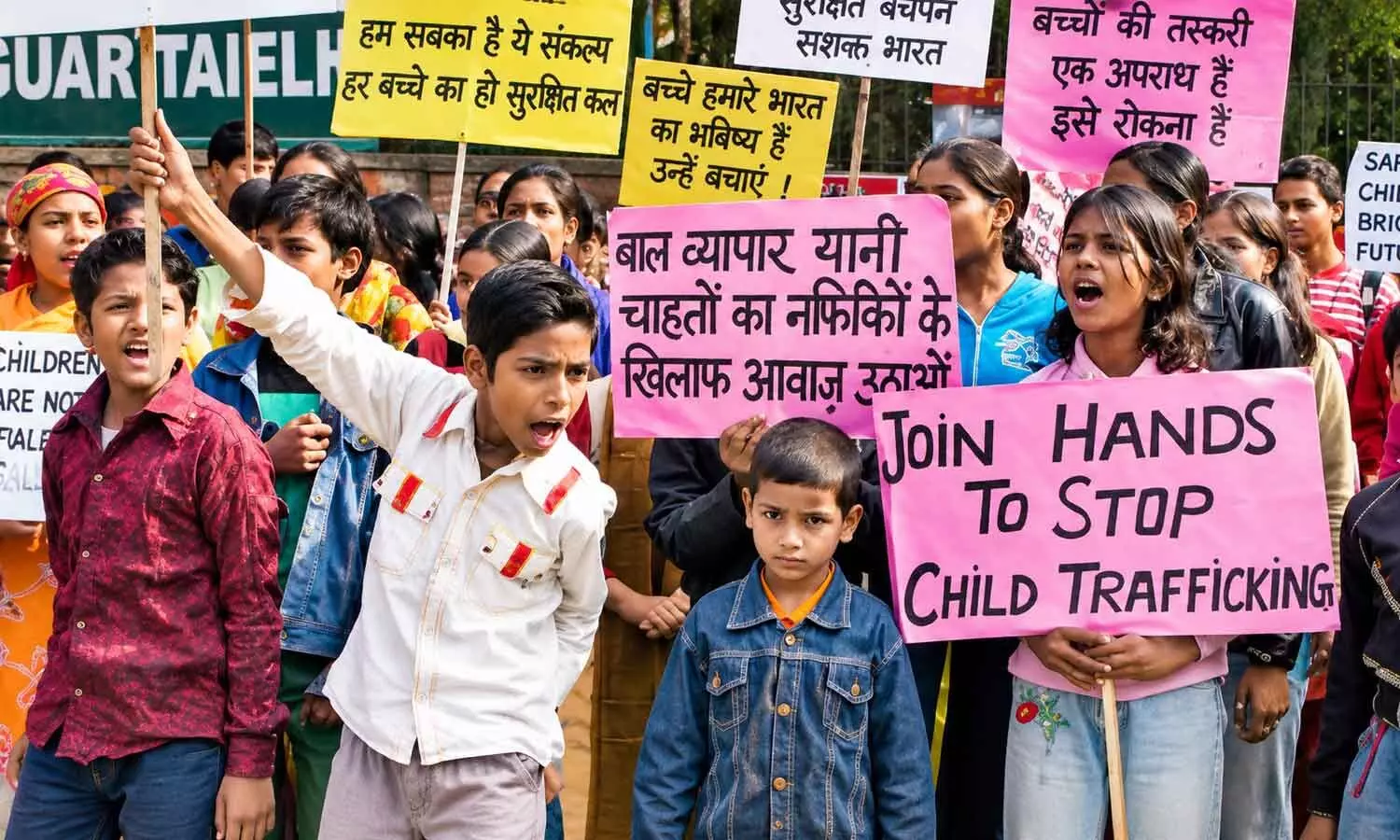
Silent auction of innocence
The transition from a missing child to a victim of commercial sexual exploitation moves with industrial efficiency. Well-established supply belts in economically distressed rural regions—particularly across parts of West Bengal, Odisha, Jharkhand, and the Northeastern states—feed the continuous demand generated in major metropolitan hubs like Delhi, Mumbai, Kolkata, and Pune, as well as cross-border networks extending into Nepal and Bangladesh
“There is no tragedy like the loss of a child, and no greater crime than turning that loss into a business.”
In cinematic thrillers like Gandhari, a child’s sudden disappearance triggers an adrenaline-fueled crusade where a fierce mother uncovers a hidden network, confronts armed criminals, and single-handedly delivers swift justice. Cinema demands a hero, a clear antagonist, and a finite resolution within two hours. But in the real world across India, the narrative does not follow a dramatic script. Child abduction is rarely an isolated act of individual villainy resolved by maternal fury; it is an organized, cold, highly lucrative, and deeply entrenched multi-million-dollar industry. Long after the end credits roll on screen, tens of thousands of real families remain trapped in an endless nightmare, searching for children who vanish without a trace into the terrifying underworld of commercial sex work.
The staggering scale-Stats beyond the screen:
Data compiled annually by the National Crime Records Bureau (NCRB) reveals a horrifying reality: tens of thousands of children are reported missing across Indian states each year, with young girls consistently comprising a massive majority of these cases. Yet, these staggering numbers represent only the visible tip of a far deeper iceberg.
The gap between official statistics and ground reality remains immense. Countless cases never reach official police ledgers due to deep-seated social stigma, fear of retaliation from local syndicates, distrust of law enforcement, or systemic reluctance by local authorities to register First Information Reports (FIRs) for marginalized families. For every child whose name is entered into a national missing persons database, others disappear in total silence from informal settlements, migrant encampments, and remote rural hamlets where state presence is thin.
How they disappear-The modus operandi:
While dramatic physical abductions from crowded railway platforms and market stalls do occur, modern traffickers rely far more on exploiting pre-existing socio-economic vulnerabilities than on outright force. Acute poverty, systemic neglect, domestic instability, and climate-induced displacement in disaster-prone coastal or riverine belts create fertile ground for predatory recruiters.
The primary mechanism of the trafficking pipeline is calculated deception. Operating through local agents—often trusted acquaintances, distant relatives, or neighbors within the village—traffickers weave persuasive promises of well-paying domestic jobs, vocational training, or lucrative marriages in prosperous distant cities. Vulnerable adolescents and desperate parents, searching for any viable escape from extreme poverty, willingly hand over their children to these handlers. Once the victim steps onto an inter-state train or long-distance bus, the deception ends and the trap snaps shut.
Commercial sex exploitation:
The transition from a missing child to a victim of commercial sexual exploitation moves with industrial efficiency. Well-established supply belts in economically distressed rural regions—particularly across parts of West Bengal, Odisha, Jharkhand, and the Northeastern states—feed the continuous demand generated in major metropolitan hubs like Delhi, Mumbai, Kolkata, and Pune, as well as cross-border networks extending into Nepal and Bangladesh.
Upon arrival at their destination, the network systematically erases the child’s identity. Original documents are destroyed, names are altered, and victims are deliberately moved across multiple state lines to locations where they cannot speak the local language. Cut off from their families, geographically disoriented, and subjected to severe physical violence, psychological trauma, and debt bondage, victims are rendered incapable of seeking help. They are absorbed into clandestine brothels, hidden massage parlors, private apartments, and digital networks operating beneath the surface of urban life.
Systemic failures; structural bottlenecks:
Jurisdictional fragmentation: Traffickers move across state borders seamlessly within hours. Conversely, police investigations remain severely hampered by jurisdictional limits, cumbersome paperwork, and a lack of real-time, inter-state data sharing between regional stations.
Abysmal conviction rates: Despite existing anti-trafficking provisions in the Indian Penal Code and specialized laws, conviction rates for human traffickers remain dismal. Prosecutions routinely crumble due to witness intimidation, delayed trials, and a systemic tendency to treat trafficking as simple kidnapping rather than organized transnational crime. Inadequate victim support: Rescue operations often fail at the rehabilitation stage. Without long-term mental health support, secure shelter facilities, educational continuity, and economic re-integration, rescued victims face severe social rejection and remain at high risk of re-trafficking.
Path forward - Closing the gaps:
Comprehensive legislation: Enacting and enforcing comprehensive anti-trafficking legislation that establishes specialized financial intelligence units to trace, freeze, and seize the financial assets of organized trafficking syndicates.
Transit-hub surveillance: Strengthening real-time surveillance, child-friendly helpdesks, and specialized anti-trafficking units at major railway junctions, inter-state bus terminals, and highway check posts where early interception is most feasible.
Technological integration: Fully deploying inter-operable national databases utilizing facial recognition technology to automatically match missing child reports with images from shelter homes, police stations, and transit hubs across all states.
Grassroots defense networks: Empowering local Village Child Protection Committees (VCPCs), panchayats, and community groups to track out-migration patterns, verify job recruiters, and flag suspicious individuals before a child ever leaves the community.
“Until we dismantle the economic and institutional structures that allow children to be bought and sold, their silence will remain our national failure.”
(The writer is a former OSD to Union Civil Aviation Minister)


