Salute to Comrade Stalin Babu — A man of integrity, discipline and dedication

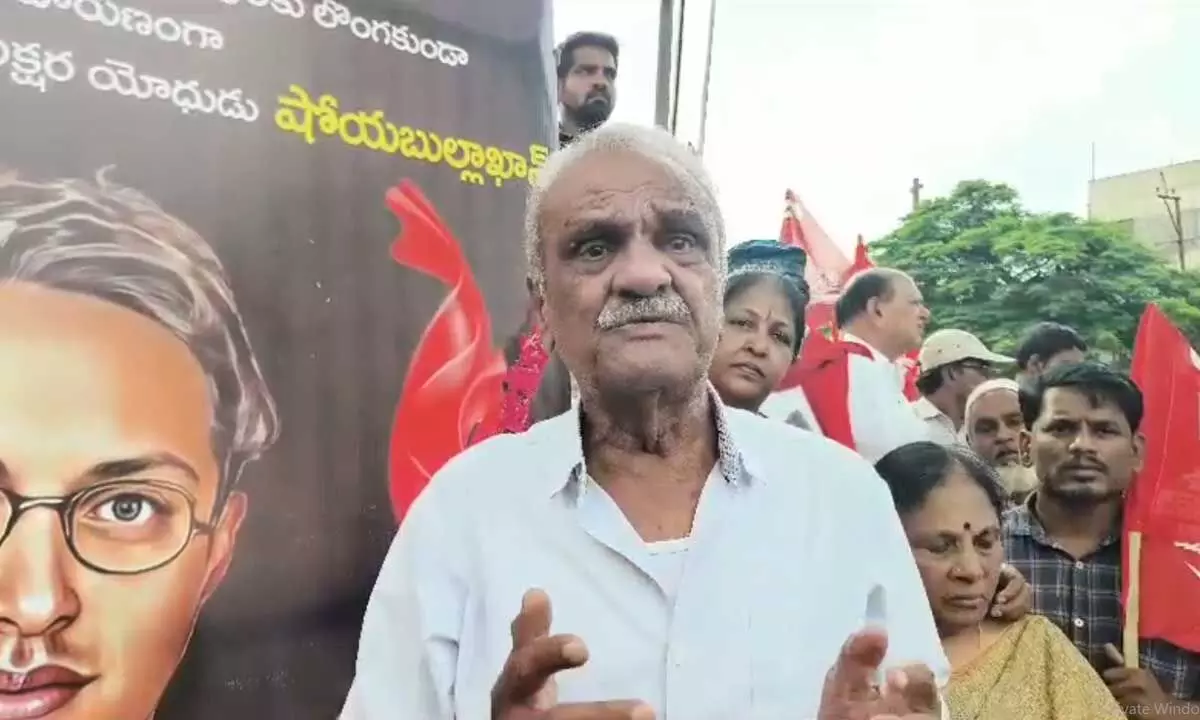
CPI Narayana
The demise of Comrade Stalin Babu is deeply painful. In his personal life, he was untouched by any disrepute — a man of fine habits and strong moral fibre. He remains an ideal for the younger generation; a person whose lifestyle itself was a message. He was not just an activist in movements — he was a strategic thinker who constantly asked: How can a movement serve the larger purpose of the party? What is the true nature of a movement, and who are the people behind it? What are their social and family backgrounds? What personal weaknesses exist, and how can they be corrected? He always examined these layers before making a decision. In many ways, he was his own equal — unmatched in intellect and insight.
A mentor and a sculptor of cadre:
For activists with good qualities, he would go to any length. He would study each comrade’s personal life, offer guidance, and instil confidence in them. I still remember how, during our student struggles in Guntur, we often faced violent opposition from rowdy gangs. While we, as young students, were ready to fight head-on, Stalin Babu designed brilliant strategies — a calm and effective planner who knew how to turn a confrontation into a collective victory.
He worked tirelessly to build cadres and nurture leadership, transforming ordinary students into committed organizers.
How I came into the movement:
Frankly, politics was never my original calling. I hail from Ayanambakkam village near Nagari, close to the Tamil Nadu border. Having grown up amid Telugu and Tamil influences, I joined the Ayurvedic College in Guntur, following the advice of a reputed Ayurvedic doctor and family friend, Dr Ramachandra Raju, who had hospitals in Nagari, Puttur, and Thiruthani.
Most students in the college were Brahmins. During the student elections, our group won, and only later did I realize the opposing group supported the AISF (All India Students’ Federation). I had no experience, not even about speaking on stage. Among the AISF supporters was Rally Prasad from Godavari district — already an active worker.
One day, after a student meeting, I confronted him:
“Who are your leaders? Do they give you these ideas?”
He smiled and said, “Would you like to meet them?”
I agreed — and that decision changed my life.
The first meeting with Stalin Babu:
We went to the AISF office on Brodipet 4th Lane. There I first saw a tall, graceful man — Stalin Babu, and beside him, cultural activist Nalluri Venkateswara Rao, a handsome, creative person.
In my Chittoor dialect, I bluntly asked, “Do you train people like this?”
Instead of being offended, Stalin Babu smiled and said, “Sit down, brother.”
He spoke calmly, even mildly rebuked Prasad, and with that one conversation, he won me over with his humility and warmth.
From that day on, he often visited my room in Koritepadu, sometimes bringing butterballs from the Marwari sweet shop near Arundelpet ISCUS office. Gradually, the friendship blossomed into mentorship.
He patiently shaped my political consciousness, brought me into the AISF fold, and helped me understand the power of collective struggle. My room became a meeting point for many and marked the beginning of a strong team of comrades who would later become the backbone of movements across the state.
I often say this with pride: “I came to Guntur as raw clay, and Stalin Babu shaped me into a sculpture ready for the movement.”
He was the sculptor; I was his creation.
A legacy of dedication:
Together with comrades like Marudwathi, Stalin Babu trained dozens like me. Under his influence, a battle-hardened, ideologically firm team emerged across Andhra Pradesh.
Later, as per the party directions, I was sent to my home region — Tirupati area — to build the party and its mass organisations.
The bitter truth:
In bourgeois parties, people come and go. But in the communist movement, when a seasoned cadre or leader withdraws due to personal or circumstantial reasons, the loss is irreparable — to the society, the ideology, and the individual themselves.
Once you dedicate yourself to a movement, it must remain the ultimate purpose of life. Distractions or self-centred detours should never become obstacles.
The essence of his life:
If we analyse his life in its totality, we see the reflection of commitment, determination, and moral discipline. He combined conviction with compassion, intellect with humility, and leadership with service. His life teaches us that no one is infallible, and self-judgment (self-certainty) can never replace collective reasoning.
A final note:
At the memorial meeting for Comrade Stalin Babu on November 1 in Guntur, I share these few words — not as a formal tribute, but as a heartfelt remembrance from one comrade to another.
There may be those who disagree with some views but that’s fine.
Let us agree to disagree — in the true spirit of comradeship.
(The writer is Chairman, Control Commission-CPI)