RSS at 100: The custodian of India’s civilisational soul


The Sangh is not limited to India. Its diaspora affiliates in the United States, United Kingdom, Africa, and Southeast Asia have given cultural anchors to Indians living abroad
RSS was founded in Nagpur in 1925 by Dr. Keshav Baliram Hedgewar, a doctor by training, but more importantly a nationalist by conviction. Hedgewar had witnessed firsthand the cultural disintegration under colonial rule and the loss of confidence among Indians. He understood that political freedom alone would not make India strong. True independence required a cultural renaissance and an inner strength that came from a collective identity rooted in heritage
Few organizations in the world can claim to have silently and steadily influenced the destiny of a nation for a hundred years. Rastriya Swayamsevak Sangh (RSS) is one such phenomenon. It is not merely an organization; it is a movement that has become inseparable from the story of modern India. I have observed and engaged with numerous institutions across the globe in my professional life, yet I struggle to find a parallel to what RSS has achieved within a century.
The Sangh has shaped individuals, permeated every social front, influenced national politics without claiming it, and above all safeguarded the civilisational soul of India. As RSS completes a hundred years in 2025, I find it important to not only celebrate its journey but also to recognize its quiet power, its ideological foundations, and its continuing relevance to the future of this country.
The birth of a national movement
RSS was founded in Nagpur in 1925 by Dr. Keshav Baliram Hedgewar, a doctor by training, but more importantly a nationalist by conviction. Hedgewar had witnessed firsthand the cultural disintegration under colonial rule and the loss of confidence among Indians. He understood that political freedom alone would not make India strong. True independence required a cultural renaissance and an inner strength that came from a collective identity rooted in heritage.
Dr. Hedgewar conceived RSS not as a political party but as a cultural force. His vision was straightforward: build strong, disciplined individuals, and they will in turn build a strong nation. He believed national regeneration was possible only through character-building at the grassroots. What started with a handful of young boys gathering for physical training and cultural education in Nagpur’s by lanes has today become the world’s largest socio-cultural movement.
The intellectual foundations
Every enduring movement requires thinkers who can articulate its core. RSS has been fortunate to be nurtured by ideologues whose intellectual depth matched their organizational skills. Dr. Hedgewar gave the Sangh its foundation, but it was M. S. Golwalkar, lovingly called Guruji, who gave it ideological clarity and philosophical expansion.
Golwalkar’s writings, particularly ‘Bunch of Thoughts’, explained nationalism not as a political slogan but as a living cultural consciousness. For him, the nation was not just geography, it was the spirit of the people, their dharmic ethos, and their civilizational continuity.
Subsequent leaders like Balasaheb Deoras, Rajendra Singh, and K. S. Sudarshan brought their own intellectual capacities to sharpen the movement. Each leader interpreted India’s challenges in their time and adapted the Sangh’s direction accordingly, yet without losing the core vision. This adaptability while remaining rooted in cultural fundamentals has been the Sangh’s intellectual strength.
The core agenda: Building individuals, building the nation
RSS is often misunderstood as a political pressure group or a militant nationalist outfit by its critics. That description misses the essence. The Sangh has always believed that individual character is the true building block of national character. Its daily ‘shakha’ is the most original model of social and personal transformation.
At the shakha, swayamsevaks engage in physical discipline, collective games, cultural storytelling, patriotic songs, and discussions on national issues. These are not random activities. They are a structured way of instilling discipline, unity, cultural pride, and intellectual awareness. For nearly a century, shakhas across the country have quietly shaped millions of Indians, teaching them to live beyond themselves, to serve society before self, and to see national interest as inseparable from personal growth. The Sangh’s mantra has been consistent, if you shape the individual and the individual will shape the society.
RSS in nation-building
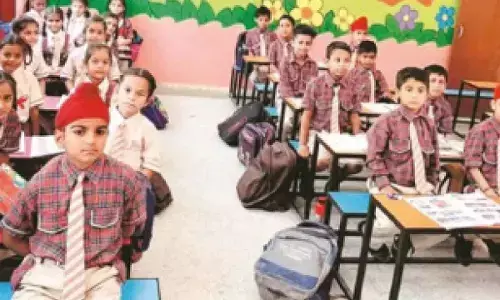
While the shakha builds individuals, the Sangh’s broader mission is evident in its service to society. In times of crisis, RSS has always been the first to mobilize. During wars, famines, floods, earthquakes, and now even pandemics, swayamsevaks have entered affected regions without hesitation. Relief camps, food distribution, medical aid, and rebuilding homes have been part of their service ethos. This is not occasional charity but a sustained commitment to national solidarity. Equally important is the network of organizations that emerged under the umbrella of Sangh. Vidya Bharati schools have brought quality education to millions of children across India, often in areas where the state failed. Seva Bharati has worked in urban slums and tribal regions, uplifting marginalized communities. Vanavasi Kalyan Ashram has given dignity and empowerment to tribal populations long neglected by mainstream governance.
Bharatiya Mazdoor Sangh has represented workers with a sense of cultural belonging, avoiding the class-war rhetoric of imported ideologies. The Akhil Bharatiya Vidyarthi Parishad (ABVP) has groomed generations of student leaders. The sheer spread of these organisations demonstrates the RSS philosophy in practice, transform society from within by creating parallel institutions rooted in dharmic values.
RSS and BJP: The political dimension
The most visible influence of RSS is, of course, its role in nurturing political leadership through Bharatiya Jana Sangh and later the Bharatiya Janata Party. But it is important to emphasize that RSS itself is not political. It neither contests elections nor seeks power. Its role is paternal, not managerial.
The Jana Sangh was created by swayamsevaks to provide political expression to the larger cultural nationalism of RSS. Over time, this grew into the BJP, now the world’s largest political party. Leaders like Atal Bihari Vajpayee, L. K. Advani, Narendra Modi, Rajnath Singh, Nitin Gadkari are all deeply influenced by RSS ethos. Yet, RSS has carefully maintained a distinction. It does not dictate BJP’s daily politics. Rather, it ensures that the political expression of nationalism remains aligned to cultural roots. This delicate balance is perhaps the most remarkable feature of RSS. It has created a massive political offshoot without becoming a political party itself.
Protecting India’s civilisational soul
Every civilization is vulnerable to erosion. Empires and dynasties may collapse from external attacks, but civilizations perish when they lose their cultural confidence. India faced such a crisis under centuries of colonial domination. The RSS, in many ways, became the firewall that prevented complete erosion of India’s civilizational ethos.
The Sangh does not define nationalism as aggression or exclusion. For RSS, nationalism is cultural confidence. It is rooted in language, family, festivals, traditions, and dharmic values. The Sangh has consistently said that India is not a political construct of 1947 but a civilizational entity that has existed for millennia. By keeping this consciousness alive, RSS has ensured that India remains India, not a pale imitation of the West.
Permeation across social fronts
Today, it is impossible to map Indian society without encountering the Sangh’s influence. In education, Vidya Bharati runs the largest chain of private schools in India. In rural and tribal areas, the Sangh has inspired hundreds of grassroots organizations that empower communities in health, agriculture, and self-reliance. In urban slums, swayamsevaks run night schools, health camps, and vocational training.
In culture, organizations like Vishwa Hindu Parishad have revived temple traditions, pilgrimages, and pride in dharmic rituals. In the economic sector, Bharatiya Mazdoor Sangh and Bharatiya Kisan Sangh represent workers and farmers without surrendering to the divisive language of class struggle.
The political influence is evident in BJP’s rise, but that is only one dimension. The Sangh’s presence is equally strong in neighborhoods, schools, labor unions, rural cooperatives, tribal hamlets, and cultural associations. This is why RSS is the world’s largest social organization. Its strength is not in one vertical, but in its permeation across the entire horizontal fabric of society.
Global expansion
RSS is not limited to India. Its diaspora affiliates in the United States, United Kingdom, Africa, and Southeast Asia have given cultural anchors to Indians living abroad. These organizations help second and third-generation Indians balance their global identity with their civilizational roots. In multicultural societies where assimilation often means losing one’s heritage, RSS-inspired institutions have kept Indian identity intact. This global presence has also helped project India’s civilizational values to the world.
The leadership today
Leadership in RSS has always been understated. Unlike political leaders who thrive on visibility, Sangh chiefs often remain away from limelight. Yet, their role is critical. Dr. Mohan Bhagwat, the current Sarsanghchalak, deserves credit for steering the Sangh in the 21st century. He has engaged in dialogue with contemporary issues, spoken about social harmony, inclusiveness, and modernisation, while retaining civilisational anchors. His ability to balance continuity with change has kept the Sangh relevant to today’s generation. General Secretary Dattatreya Hosabale and other senior leaders have strengthened the organizational depth of RSS. Together, they carry forward a monumental legacy without losing its humility.
Addressing criticism
Any institution of this scale naturally attracts criticism. RSS has been accused of militant nationalism, political bias, or cultural exclusivism. These accusations often come from a lack of understanding.
RSS is not anti-anyone. It is pro-India, pro-civilisation, and pro-national unity. Its commitment is not to exclusion but to integration, not to uniformity but to unity in diversity. It has never sought power for itself, only to build confidence in society. The fact that millions of swayamsevaks work without salary, recognition, or personal gain is the best rebuttal to such criticism.
Hundred years of contribution
What has RSS achieved in a century?
•It has built millions of swayamsevaks who embody discipline, service, and cultural confidence.
•It has created hundreds of social organisations that touch every dimension of Indian life.
•It has provided the ideological grounding for India’s most successful political party.
•It has given India a cultural shield that has prevented erosion of its civilisational identity.
•Most importantly, it has kept nationalism alive as a lived experience, not as a mere slogan.
Few organisations can claim such a legacy.
The next 100 years
The challenges ahead are formidable. Globalization, consumerism, digital distractions, and ideological battles will test India’s cultural confidence. The Sangh will need to continue its role as the custodian of civilizational continuity. It must prepare India not just to resist erosion but to lead the world with its values.
RSS’s future lies in further empowering individuals, expanding seva projects, strengthening harmony, and deepening cultural education. If the past century was about survival and consolidation, the next must be about leadership and global civilizational contribution.
The torchbearer of a civilisation
A hundred years of RSS is not merely a milestone; it is a reminder. It reminds us that civilizations survive not by accident but by conscious effort. It reminds us that politics alone cannot safeguard culture. It reminds us that the most powerful organization is the one that works silently, steadily, and selflessly.
For me, RSS stands as the conscience keeper of India. It has protected the soul of this nation when it was vulnerable, it has instilled confidence when it was uncertain, and it has prepared it to lead when the world looks for direction.
As the torch passes from one generation of swayamsevaks to another, the flame of the Sangh continues to burn bright. A century later, the RSS is not an old organization, it is a timeless one. It remains, and will remain, the custodian of India’s civilizational soul.
(The Author is a BJP Leader, Chairman of Nation Building Foundation and a Harvard Business School certified Strategist.)