Revisiting the raid on Burma Bazaar

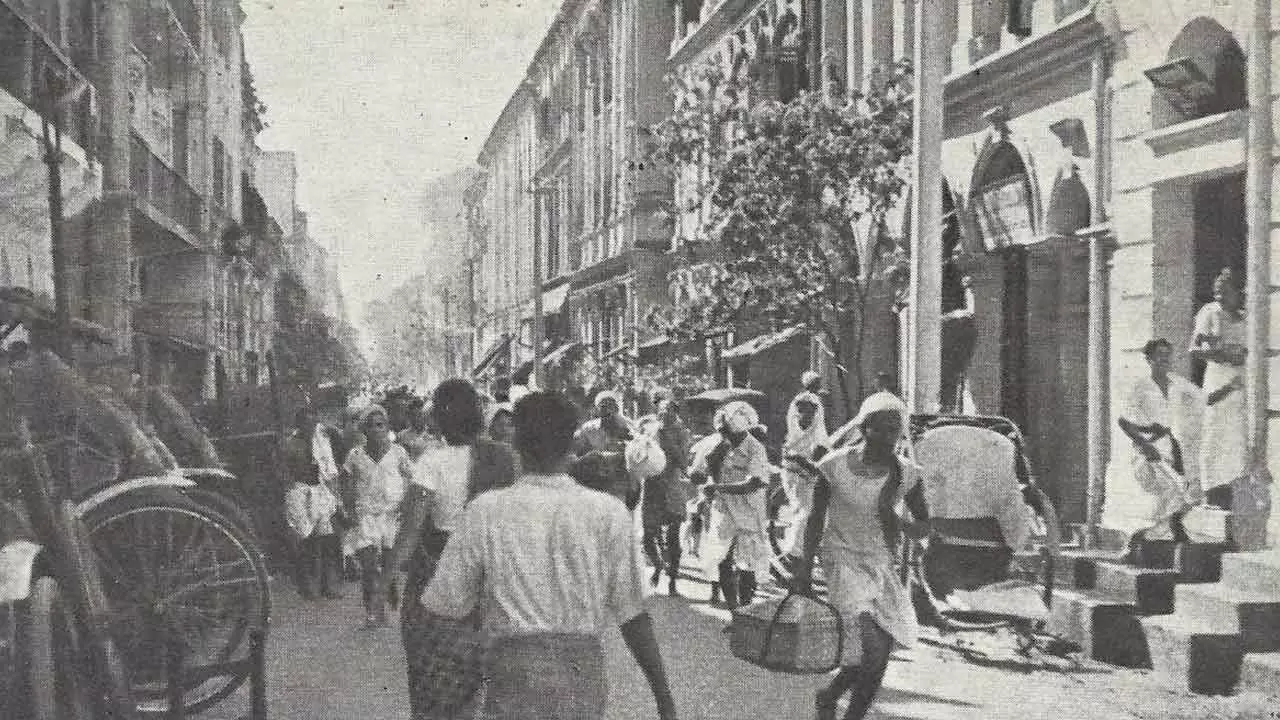
During my tenure as DG Revenue Intelligence between 1985 and 1987, I was called by the then Finance Secretary S Venkitaramanan, (subsequently Governor of the RBI), who questioned me as to how Burma Bazaar with over 500 shops and located just opposite the Custom House in Chennai are selling imported goods with impunity.
I informed him that if there is a political will and if I am given a week’s time without interference, the situation can be brought under control. I also requested that I need a large contingent of CRPF personnel located in Avadi to be at my disposal to control any untoward incidents which may result in a law and order situation. He readily agreed an urged me to go ahead with the operation.
Established in 1969, Burma Bazaar is a historic market around Beach Station on North Beach Road, George Town, and extended up to the RBI building. It became notorious for selling imported goods, electronics, and perfumes. The shopkeepers would often sell counterfeit products. The main sources of supply of imported goods for this market are the ‘kuruvis’(carriers), who regularly travel between Singapore and Chennai by air.
Burma Bazaar thrived since there were restrictions on the import of goods of conspicuous consumption and for conserving foreign exchange needed for the import of essential inputs required for industrial production. No action was taken against this market for several reasons, and seemingly they enjoyed the patronage of the powers that be.
I tried to ascertain as to how the functioning of the Burma Bazaar came to the attention of the Government and the need for acting against the sale of smuggled goods. I contacted R Jayaraman, the then Commissioner of Customs (who later became a member of the Customs, Excise and Service Tax Appellate Tribunal, Mumbai) as to what triggered the attention of the government of India for initiating action against Burma Bazaar.
Jayaraman mentioned that almost every day 15-20 kuruvis travel between Chennai and Singapore and bring with them packages containing electronic goods such as VCRs, music systems and perfumes, among others, which were in demand. One day when he was returning from Delhi a contingent of kuruvis was returning from Singapore and he directed the preventive officers on duty to get their baggage checked, Instead, they ignored his instructions and a stage reached where the kuruvis were trying to rough him up.
When all this was happening no preventive officer on duty came to his rescue. He broke down while narrating the incident. Upset as he was at the sordid episode, he brought the incident to the notice of the Finance Secretary.
Taking these facts into account, I made a visit to Chennai to meet the then DGP Ravindran, and a former deputy director of Intelligence Bureau (IB). I informed him of the proposed operation, and he assured me that my request would be kept confidential. He said that he would provide a police inspector within North Beach Road jurisdiction that covered almost all the shops housed in Burma Bazaar.
A day prior to the launch of the operation, at my request, a contingent of more than 500 CRPF personnel was moved from Avadi to Chennai. At about 5 am on the appointed day, the CRPF personnel took position atop each shop with their rifles. A control room was set up in the Custom House. I and my DRI staff were waiting in the commissioner’s room to watch the developments. Surprisingly, none of the shops were open the whole day. However, in the evening a gang of rowdies equipped with stones positioned themselves in the terrace of the district collector’s building, which was in a dilapidated state and needed reconstruction. They started throwing stones at the CRPF personnel, who retaliated by charging the perpetrators with their lathis. The antisocial elements took to their heels.
Around that time the then Commissioner of Police came and met me and said, “If you had asked me, I would have kept 100 shops open for you to search”. I replied, “if I had informed you nothing would have been found by the DRI officers during the search operations as the shopkeepers would have removed all the incriminating evidence”.
On the second day also, the shops were not open. A day later, a delegation of shopkeepers approached me and Jayaraman in the Custom House and requested that they may be permitted to open the shops. We responded by informing them that 25 shops should be opened in the presence of the DRI officers. On the completion of a thorough search, they would take up the search operation of 25 other shops.
During the search operations, incriminating evidence was seized in the form of accounts showing hawala transactions for financing the import of goods of conspicuous consumption from Singapore through the kuruvis. Goods that were not legally imported were also seized. Cases were registered for violating provisions of the Customs Act, 1962 and the Foreign Exchange Regulation Act, 1973. The whole operation lasted for a week and in deference to my request no questions were asked till I submitted a report on the outcome of the raid. From then onwards the traffic of the kuruvis thinned out.
Fortunately, when the policy of liberalisation was introduced on July 24, 1991, most of the goods were legally imported into India and the craving to purchase such goods in Burma Bazaar was almost negligible, thereafter.
(The writer is a former member of CBIC and DG, DRI)