Prioritise security across public transport modes

Leveraging AI dovetailing human vigilance is desirable and important. AI-driven mobile response teams must replace the outdated physical policing. Such systems save lives, build public trust, and reduce economic losses due to panic, disruption, and rescue operations. All it takes is the government’s will, wisdom, and a willingness to let intelligence, whether artificial or human, work together before it is too late.
In an era where threats can emerge unexpectedly, a vital aspect of ‘Appropriate preventive safety measures’ for ‘public transport’ call for a systemic action, especially in the light of recent Air India flight crash in Ahmedabad, killing 260 people. Likewise, due to a bomb threat, the Hyderabad-bound Lufthansa flight made a U-turn, back to Frankfurt airport. In both cases, passengers who are not just travellers, were held hostage by inadequate safeguards, reactive systems, and a lack of anticipatory intelligence. And hence, even the most ‘regulated modes of transport’ are vulnerable.
It is precisely this loss of help, this captivity under crisis, that modern transport systems must counter through smart design and AI-backed security infrastructure, and protocols. In an era where security threats are likely to disrupt not only peace but lives, paradoxically, in public carriages, rigorous, proactive safety screening is conspicuously abandoned despite the compelling preventive needs.
It is time to introspect as to why mandatory, advance-level security clearance and screening for every public transport vehicle, which is not just a means of movement, but is a moving microcosm of society, carrying lives, valuables, and luggage is absent.
Multi-layered pre-boarding checks at all concerned places, AI-powered surveillance, and predictive threat assessments at terminals, randomized inspection protocols, cybersecurity audits of communication and control systems etc. without waiting for the tragedy to take place must be made compulsory.
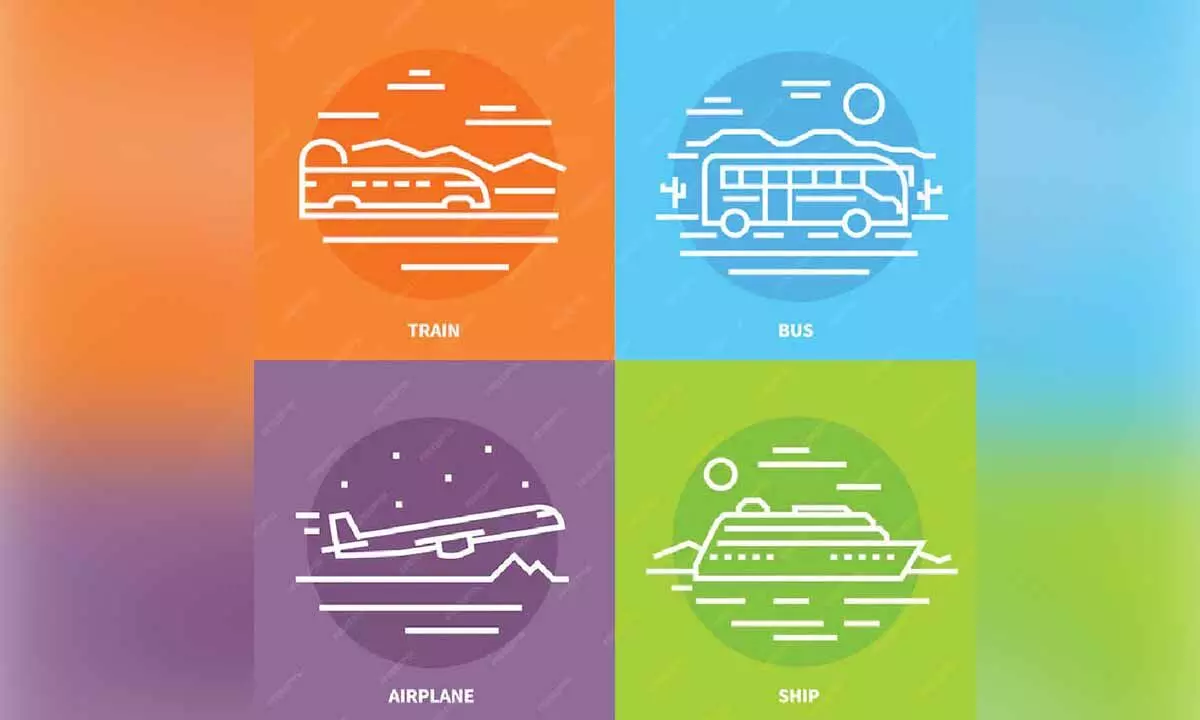
Strangely, vehicles that carry the largest number of anonymous citizens every single day, such as public transport buses, trains, and even certain flights, often remain dangerously vulnerable to silent threats, both human and systemic. For instance, as a curious contradiction, seldom a systematic and scientific check is done, to prevent a miscreant boarding with a concealed weapon or inflammable substance in a fully occupied state-run road transport bus plying on an interstate route at midnight, or into a sleeper coach train. The scenario is not hypothetical.
Every tragedy in public transport leads to inquiry, outrage, and compensation. The time has come to shift from reaction to prevention, not just in rhetoric but in process, design, and policy. Every public and private transport vehicle must be subject to an intelligent and evolving security grid carefully without excessive militarization or harassment.
Leveraging AI dovetailing human vigilance is desirable and important. AI-driven mobile response teams must replace the outdated physical policing. This model, preferably in PPP mode, is to be designed as ‘security must travel with passengers but need not stay static at entry points. Such systems save lives, build public trust, and reduce economic losses due to panic, disruption, and rescue operations. All it takes is the government’s will, wisdom, and a willingness to let intelligence, whether artificial or human, work together before it is too late.
A ‘normalized helplessness’ as part of public transport has been, once a passenger boards, he or she is by and large, essentially captive to the system. There is no functional or scientific exit strategy when it encounters a malfunction, fire breaks out, mechanical failure occurs and some threat onboard, among others.
Most post-incident inquiries evade or dilute through collective accountability or unaccountability. For every public safety system, clear prioritization of responsibility is essential. To ‘prevent tragedies and not just mourn them’ establishing a chain of accountability mechanisms that work both preemptively and retrospectively is what is required. Vision, regulation and resource allocation by policymakers and regulatory authorities make all the difference.
Law should mandate AI screening, real-time monitoring, functional emergency exits, or passenger drills. If AI-based protocols are not followed, transport operators; terminal level security and operations heads; onboard crew and drivers or pilots; security and maintenance vendors; auditing and safety certification bodies shall all be held responsible. Accountability must flow from the top down, not the bottom up. Fixing responsibility must begin before the tragedy and not after.
However, India can still credibly claim superiority in many aspects of public transport safety and crisis management, particularly in how it responds to threats, handles complexity, and manages sheer scale. Millions of passengers by Indian Railways, by air, on state-run buses, metros, and regional services, travel frequently, which is unmatched by any standards. Catastrophic incidents are rare, and when they occur, rescue and mitigation mechanisms are rapidly deployed. This itself is a testament to a deeply embedded resilience.
And yet, there remains a realm beyond comprehension, a zone where science stares into silence and logic yields to mystery. From unexplained tragedies over the Bermuda Triangle, to perfectly functional machines vanishing without trace, the human experience of transport is not just about movement, but about vulnerability before the unknown.
It is here that Indian civilizational wisdom gently reminds us of Karma Siddhanta, the cosmic principle that every event, joy or sorrow, accident, or escape, is somehow tethered to a greater arc of causality beyond immediate visibility. This does not mean surrender to fate or withdrawal from responsibility. Quite the opposite. It means doing our utmost in dharma, designing safety, demanding accountability, embracing technology, and then, whatever comes, receiving it with the steadiness of inner trust.
Well, when all systems are in place, and still, something slips through, we turn not to blame, but to balance, accepting that predetermination is not helplessness, but a form of harmony between action and acceptance.