Operation Sindoor was focused, measured and non-escalatory


Vanam Jwala Narasimha RaoWhile Prime Minister Narendra Modi constantly monitored the ground situation on May 7, the Indian Armed Forces launched the Operation Sindoor post-midnight, by hitting terrorist infrastructure in Pakistan and in PoJK from where terrorist attacks against India were planned and directed. Shortly afterward, the Ministry of Defence, in a statement, disclosed the news and confirmed the strikes. Before the launch, the Indian Army posted a message that read ‘Ready to Strike, Trained to Win.’ Minutes later, ADGPI of the Indian Army tweeted: ‘Justice is served-Jai Hind!’
Hours later, two distinguished female officers, Colonel Sofiya Qureshi, the first woman to command an Indian Army contingent and Wing Commander Vyomika Singh, an exemplary officer, joined by Foreign Secretary, a Kashmiri Pandit and veteran diplomat Vikram Misri, addressed the media with poise and authority. They revealed that, ‘Targets chosen by the Indian Armed Forces were based on strong intelligence inputs and their involvement in terror activities. No military infrastructure of Pakistan was struck during the operation. Probe into the Pahalgam terror attack has clearly established Pakistan links.’
Misri described the Operation as ‘Focused, Measured, and Non-Escalatory.’ Next day in an evidence-based discloser, Misri established the links of Pakistan with Terrorist Groups including those who claimed responsibility for the Pahalgam attack.
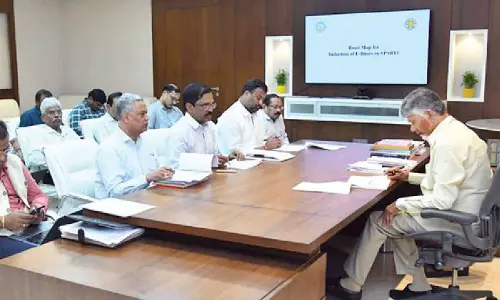
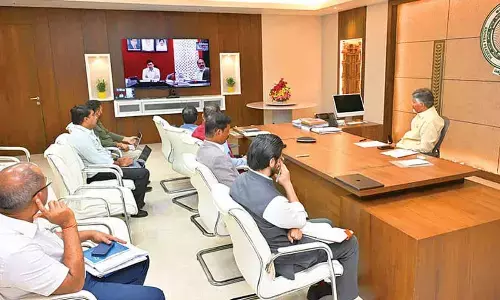
Modi had a meeting with Defence Minister Rajnath Singh, National Security Advisor Ajit Doval, Chief of Defence Staff General Anil Chauhan, Chief Admiral Dinesh K Tripathi, Air Chief Marshal Amar Preet Singh and Army Chief General Upendra Dwivedi on April 29. Saying that the Armed Forces have his full confidence and ‘Complete Operational Freedom’ to decide on the ‘Mode, Targets, and Timing’ to accomplish the ‘National Resolve to deal a Crushing Blow to Terrorism’ Modi gave them a ‘free hand’ to respond to the April 22 Pahalgam terror attack that killed 26 persons. After the successful launch, the Prime Minister stressed the need for ‘Continued Alertness, Institutional Synergy, and Clear Communication Mechanisms, as the nation navigated a sensitive period.’ The all-party meeting unanimously lauded Operation Sindoor and reiterated support to the Government.
The history of Indo-Pak wars is a ‘Saga of India’s Resolute Triumphs;’ success after success, victory after victory, proving time and again that nothing succeeds like success. In 1965, under Lal Bahadur Shastri, India responded with valor and strategic brilliance, repelling Pakistan’s aggression, and imprinting ‘Jai Jawan, Jai Kisan’ into the national conscience.
In 1971, Indira Gandhi led India to a historic and humanitarian triumph, breaking the back of Pakistan’s oppressive regime in the East and birthing an independent Bangladesh, with support from the USSR. In 1999, during the Kargil War, India stood firm, evicting infiltrators from its territory.
As Operation Sindoor inflicted a crushing and irreversible defeat on ‘Pakistan sponsored terrorists,’ India stands at a point of no return. This is not just another operation towards an eventual victory; it is the finality of decades of provocation and hostility. The world watches and responds with growing unity against terrorism. Russia stands firmly beside India, as in the past, reinforcing India’s strategic depth and moral high ground.
A new era of ‘Security, sovereignty, and unwavering national resolve,’ steered by Modi has commenced.
When the demand for ‘separate nation for Muslims’ gained momentum during the freedom struggle, the British authorities conceded to Pakistan. Since its formation, Pakistan indulged in attacks on India and, unable to win even a single war, shifted to ghastly terror incidents like the Pahalgam attack, killing innocent civilians.
Earlier Uri, Nagrota, and Pampore in 2016, Sunjuwan in 2018, Pulwama in 2019 saw CRPF men, soldiers, and civilians killed. India hit back at these Pakistan-sponsored attacks and terror incidents with notable military and diplomatic retaliations.
After the Uri attack, India launched ‘surgical strikes’ deep inside Pakistan, which was a bold move that demonstrated India’s willingness to take preemptive action against terror operations, signaling a departure from its previous doctrine of restraint. Indian Air Force carried out airstrikes deep inside Pakistan, targeting a Jaish-e-Mohammed camp in Balakot, consequent to horrific suicide bombing in Pulwama, which became a turning point in Indo-Pakistani relations. India also retorted with targeted military actions along the LoC in response to multiple terror attacks, including those at Nagrota, Pampore, and Sunjuwan.
(Part-2 will be published in May 13 edition)