One Nation - One Election

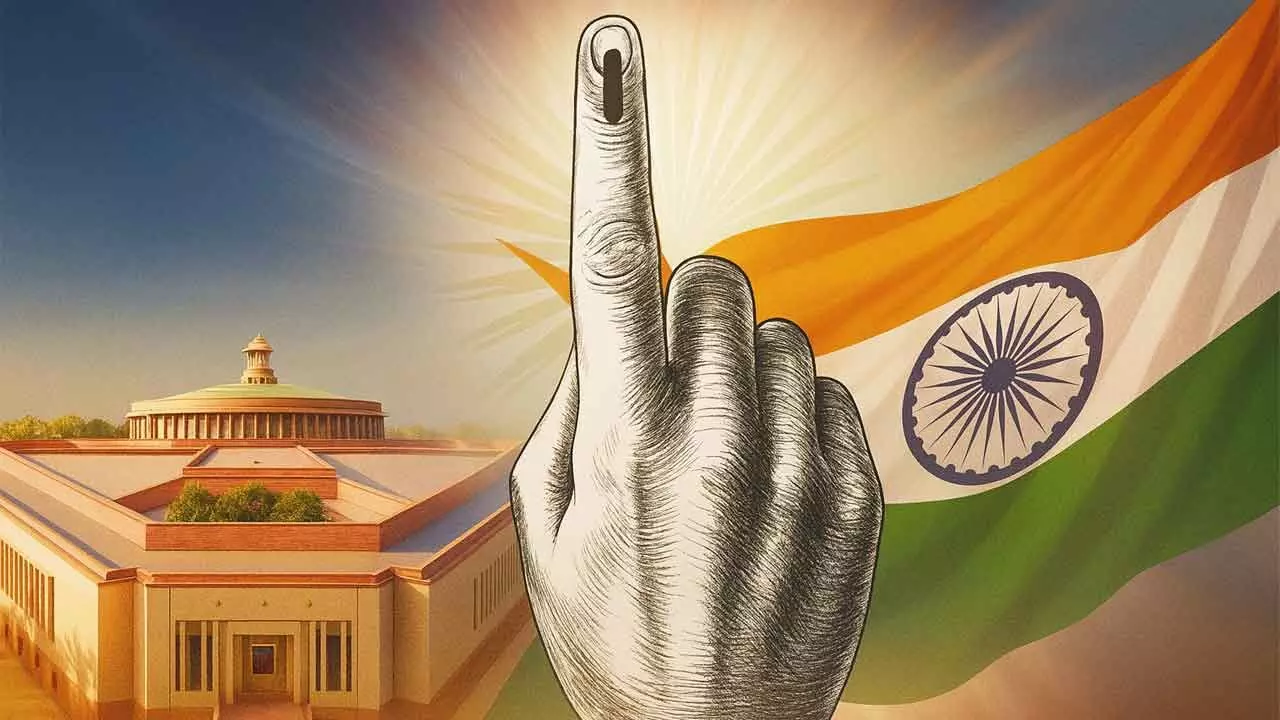
I’m baffled by how little we realise the toll intermittent elections take on governance. Think of a central government elected with a clear five-year mandate. But within that term, every year or so, there’s a state election, somewhere in the country. That becomes a ‘referendum’ on the Centre, even if it shouldn’t be. Media hypes it up. Opposition builds narratives. And suddenly, governance takes a back seat to campaigning
I’ve been closely watching India’s democratic journey for decades. As someone deeply immersed in politics, public policy, and the larger strategy of nation-building, I say this with absolute conviction, India is long overdue for a massive course correction in the way it conducts elections. And that correction must come in the form of ‘One Nation - One Election’.
This is not just a slogan, not a party pitch, and certainly not a shortcut to power. It’s a profound political, social, and economic reform that can redefine how this nation moves forward, decisively, efficiently, and ethically.
Let me take you through why I believe this change is not only essential but also inevitable. This isn’t theory. This is the voice of experience, observation, and reflection over years of engaging with India’s electoral, political and governance systems.
The electoral rot we refuse to address
Let me begin with a fundamental truth, our current electoral system is broken. It may appear to function, but like an old clock that ticks without accuracy, it’s out of sync with the aspirations of a New India. We’ve carried forward a system from our post-colonial past and continued it without questioning its relevance. Why? Because we got used to it. Repetition over generations gave it the illusion of permanence.
But ask yourself, has the system evolved with the times? Has it adapted to India’s burgeoning population, our expanding economy, the complexity of governance, and the ever-growing expectations of our citizens? The answer is a resounding ‘No’.
In a country of 1.4 billion people, we have elections happening almost every few months, somewhere or the other. This constant electoral churn paralyses governance, distorts policy priorities, and fuels corruption like no other democratic exercise in the world.
Why do we accept this chaos as normal? Why do we not challenge the logic behind this endless cycle?
The vicious cycle of corruption begins with elections
Let’s be brutally honest. In India, elections are not a celebration of democracy anymore, they’re a triggering event for mass-scale corruption. Not just in politics, but in the ecosystem surrounding it. I’ve seen it up close. Candidature is increasingly based not on competence or integrity, but on one simple qualifier, how much money can you spend?
From village panchayats to parliamentary constituencies, there’s an invisible auction happening before every election. Tickets go to those with the deepest pockets, not the cleanest hands. Honest, capable, service-minded individuals don’t even stand a chance in most political parties. They’re told to wait, to prove their ‘spending capability’, to raise money, to ‘invest’ in their political careers.
There is no reward for ideological loyalty in political parties anymore, the ‘electoral ticket winners’ are who jumps the most parties. As long as you have lot of money to spend, you have total immunity from not possessing party or ideological loyalty.
And what happens if they win? That ‘investment’ is recovered, with interest. Public office becomes a tool for personal ROI. Corruption becomes institutionalized, expected, even celebrated. And then, we wonder why governance fails!
If we want to attack corruption at its root, we must begin by reforming the electoral process itself. And that’s precisely where ‘One Nation - One Election’ comes in.
The corrupt voter, a new tragedy of democracy
Here’s another uncomfortable truth. The rot has spread to the voter too. Especially in rural and semi-urban India, a disturbing trend is emerging, and I’ve personally encountered it across several states, particularly in the South.
There’s a new kind of voter, not someone demanding better roads, healthcare, or clean water, but someone demanding cash for their vote. And not discreetly. This is open, audacious, and shockingly being normalized.
‘Note for Vote’ has become a reality. Entire caste groups, social clubs, community associations, and apartment welfare bodies negotiate ‘rates’ per vote. I’ve heard credible accounts of ₹1,500 to ₹3,000 being paid per voter in some constituencies. A by-election in Chennai was abuzz with rumours of an independent candidate ‘winning’ at ₹6,000 per vote. Just think about that.
What does it say about a democracy when even the vote is for sale? When votes are auctioned, only the highest bidder wins, not the most deserving candidate. And naturally, the highest bidder enters office not to serve, but to loot. The cycle continues.
Now imagine this happening five to six times in a span of just five years, state assembly elections, local body elections, by-elections, Lok Sabha elections. The frequency itself breeds corruption. Reduce the frequency, and you reduce the opportunity for corruption.
With ‘One Nation - One Election’, we can clean up the system, perhaps not entirely, but enough to begin a new culture of integrity.
Un-governance, a constant distraction from development
I’m baffled by how little we realise the toll intermittent elections take on governance. Think of a central government elected with a clear five-year mandate. But within that term, every year or so, there’s a state election, somewhere in the country. That becomes a ‘referendum’ on the Centre, even if it shouldn’t be. Media hypes it up. Opposition builds narratives. And suddenly, governance takes a back seat to campaigning.
Bureaucrats go into a freeze. Politicians start strategizing, not for public policy, but for vote swings. Implementation stalls. Governance momentum dies. Why should any elected government, be it at the Centre or in a state, be in a perpetual election mode? Let’s realign our electoral calendar. Let governance breathe. Let policymaking take centre stage for once.
The astronomical cost of dysfunction
Conducting elections is not cheap. It’s a massive logistical exercise involving thousands of crores of taxpayer money, deployment of government staff, law enforcement, and public infrastructure. And when we do this every few months somewhere in India, the cumulative cost becomes mind-numbing.
Do we have any idea how many man-hours of government work are lost? Do we calculate the policy stagnation caused by the model code of conduct? Do we account for the opportunity cost of lost reforms?
On the flip side, electoral costs for candidates have ballooned beyond comprehension. In many constituencies, an MP candidate may end up spending ₹15 to 20 crores unofficially. An MLA might shell out ₹5 to 8 crores. These are not exaggerated numbers, they’re ‘market realities’.
Tell me, how can an honest schoolteacher, a passionate social worker, an inspired professional or an idealistic youth ever hope to contest under such circumstances? They’re priced out of democracy. And that, right there, is the slow death of real representation.
A crisis of political quality
I often say this at public forums, the destiny of a democratic nation is directly linked to its ‘quality of its politics’. And sadly, in India, that quality has degraded severely. We’ve created an unwritten rule, to enter politics, you must either be rich or willing to become corrupt. Neither should be a requirement for public service.
Every time I see a bright young citizen hesitate to enter politics because of ‘dirty money’, I know we’ve lost a potential reformer. The cost of that loss is immense. We don’t just lose a candidate, we lose new blood, ideological loyal, valuable ideas, robust energy, and a reformed political future.
‘One Nation - One Election’ can reverse this trend. It reduces the financial burden on candidates, streamlines their campaign efforts, and levels the playing field for those with limited means but limitless integrity.
Let’s make politics about public service again, not about spending power. For over 70 years, we’ve carried on without a single substantial electoral reform, except moving from paper ballots to electronic voting. Have our voters not changed? Has our economy not evolved? Has the complexity of governance remained the same? Of course not.
And yet, the electoral machinery remains stuck in the 1950s mindset. We’ve spent decades building airports, expressways, digital governance platforms, but we still elect governments with a system designed for another century.
It took the leadership of Prime Minister Narendra Modi to finally break the silence and challenge the status quo. While there’s no formal policy declaration yet, the groundwork is being laid. The intellectual churn has begun. And I, for one, welcome it.
Because this is not just about synchronizing election dates. This is about transforming the way India governs itself.
The path forward, not just reform, but reinvention
Now, let me be clear. ‘One Nation - One Election’ will not magically solve every problem. Corruption will not vanish overnight. Voter awareness will not rise instantly. Political funding will still need reform. But this single structural change can create the conditions necessary for deeper transformations.
♦ Fewer elections mean fewer disruptions
♦ Fewer disruptions mean better governance
♦ Better governance means stronger institutions
♦ And stronger institutions lead to a stronger democracy
It’s a domino effect, start with electoral reform, and watch the ripple effects across policy, politics, and public life.
The social transformation
What we often fail to acknowledge is that political reform is the foundation of social transformation. And in a democracy as large and layered as India’s, every structural improvement in the political process has ripple effects far beyond Parliament and Assemblies. ‘One Nation - One Election’ is about reshaping the moral, cultural, and civic consciousness of over a billion people.
When corruption becomes the norm in elections, society begins to accept it in every other sphere of life. When political tickets are distributed to those with muscle and money, it signals to youth that ideals, values are irrelevant, and that influence is everything. When voters openly trade their vote for cash, it validates transactional thinking over principles.
This is the psychological cost of our broken electoral system. It feeds cynicism, normalizes the unethical, and desensitizes the public to wrongdoing.
Now, imagine what can change if we overhaul this structure. If elections are fewer, cleaner, and more accountable, it sets a new benchmark for integrity in public life. It elevates the expectations of the voter. It forces political parties to shift their pitch from populism to performance, from manipulation to merit.
One synchronized election cycles every five years will reset the rhythm of civic engagement. It gives people time to judge governance not in fragmented spurts but over meaningful periods. It encourages long-term thinking. It gives the voter the time and space to reflect, deliberate, and decide, rather than being constantly whipped into emotion by nonstop campaigns.
Most importantly, this reform has the potential to decentralize public awareness. When elections happen simultaneously, there is a convergence of national dialogue. Issues like education, health, employment, infrastructure, and national security get discussed across the board, irrespective of whether the voter lives in Bihar or Telangana. There is less room for parochial identity politics and more scope for development-driven discourse.
Over time, this creates a more aware citizenry, a more responsible media, and a more performance-focused polity. It creates pressure on politicians to be seen working, not just campaigning. It elevates the very quality of democracy we practice.
So yes, ‘One Nation - One Election’ is also a social reform. It may begin with ballots and booths, but its real victory will be written in the minds and behaviours of our people.
A call to rise above partisan politics
This is my appeal, not as a spokesperson of a political party, but as a citizen who believes deeply in India’s potential. Let us rise above partisan lines. Let us stop viewing every proposal through the lens of political gain or loss. Let us instead ask, is this good for India? And if the answer is yes, and I believe it unequivocally is, then we must support it. Our children deserve a better democratic framework than the one we inherited. Our nation deserves an electoral system that empowers governance, not hampers it. The time to act is now. The time to transform is now.
‘One Nation - One Election’ can be the single most impactful reform of our time. Because, if we fix the foundation, we can finally build the future India deserves.
(Author is the Chief Spokesperson of BJP, Chairman for Nation Building Foundation and a Harvard Business School certified Strategist)