No relationship is permanent in global diplomacy!

When it was USSR, Russia could not have imagined that it could be so close to the United States at any given time. After all, the Soviet Union was not a single country but a union of 15 republics, which is why it could stand as a superpower.
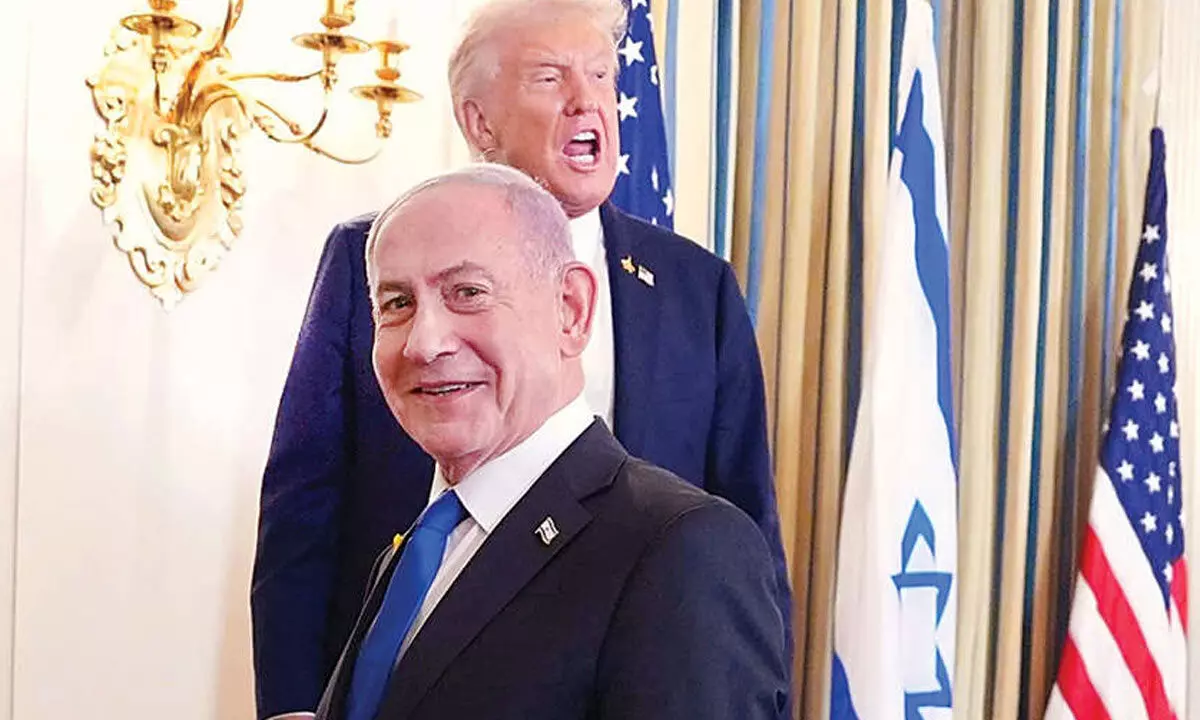
US President Donald Trump proudly announced that he has resolved yet another thorny problem. Along with the leaders of Egypt, Qatar and Turkey, he presented to the media a signed agreement on a ceasefire between Gaza and Israel, giving the world a sense of relief that the fighting has stopped. It is encouraging that these leaders signed as guarantors of the Gaza agreement!
By releasing 20 detainees held in Gaza and 1,968 held in Israel, one phase of the conflict in West Asia has ended. This agreement seems to draw curtains on the clashes that have raged for the past two years.
The deal was struck at a moment when Israeli leader and Prime Minister Benjamin Netanyahu, acting as a tough leader, had almost cornered Hamas and was on the verge of occupying Gaza. Although Trump called this a permanent solution, international experts see it differently. Trump managed only to rein in Israel temporarily; many in Israel feel that Trump put the brakes on Netanyahu, preventing him from emptying all positions in Gaza.
The world noticed when two Israeli MPs stood up in protest while Trump was speaking—raising doubts about the durability of the agreement. Even if Netanyahu hoped to not only control Hamas but to completely dismantle the Islamic militant infrastructure, Trump’s deal has restricted Israel, either temporarily or permanently.
As soon as Trump was re-elected, he took on an attitude that he alone had the solution to every unresolved problem, inserting himself into the Russia-Ukraine, Israel-Palestine, and India-Pakistan disputes as if he were personally resolving everything. How much success he can achieve remains doubtful. Even before the agreement had fully taken hold on paper, Israeli forces killed five Palestinians in the Shujaya area next to Gaza City. To what extent Israel is committed to this accord is quite debatable. The big question now is whether lasting peace can ever come to Gaza.
The agreement’s main directives are to demilitarize Hamas, place Gaza under an international governing authority, and deploy international stabilization forces for security. Trump is brazenly giving Pakistan a special status both on the ground and internationally. He seems to be influencing Pakistan’s leadership so strongly that even the army chief appears to stand with Trump as if he were the country’s prime minister. Likewise, Trump routinely boasts that Modi is a good friend, while simultaneously heaping criticism and increasing tariffs on India. This double standard is applied not only to India but to other countries as well. It must be noted that US diplomacy and policy have never sunk to such low depths. There have been difficult presidents before, but it is rare for leaders of democratic nations to display such crude, transactional diplomacy. There are reports that Ukraine President Zelensky, Israeli prime minister and Pakistan’s leaders all find dealing with Trump very difficult. But nations form diplomatic ties based on their needs. If friendships don’t serve those needs, no country hesitates to change the course.
When it was USSR, Russia could not have imagined that it could be so close to the United States at any given time. After all, the Soviet Union was not a single country but a union of 15 republics, which is why it could stand as a superpower. Once it broke up and became just Russia, remaining a superpower became difficult. So, over a period and in response to changing circumstances, countries inevitably change.
The same is true of the European countries. Even the United States has slipped from its superpower status. Asian countries — India and China in particular — have progressed along the path of development and reached levels comparable to major powers. Recent international changes have altered the political trajectories of many countries. China and India, without any obvious shift from friendship to hostility, have been giving signals, in accordance with changing circumstances, that “we are getting closer.” Right now, Pakistan does not seem to be in a position to trust China completely. The Taliban’s visit to India was unimaginable some years back.
In diplomatic affairs, countries sometimes act in unpredictable ways. Friendships and enmities between individuals are not permanent — so how could relations between nations remain unchanged forever?