Maligning the ECI threatens our republic, stifles democracy

This recurring cycle erodes faith in democracy, as noted by experts, who argue that while the ECI must remain open to scrutiny—such as demands for greater transparency in EVMs and voter data—it should not be scapegoated without evidence. The Supreme Court has repeatedly upheld the ECI’s autonomy, emphasizing that challenges must be evidence-based and channeled through courts, not media trials.
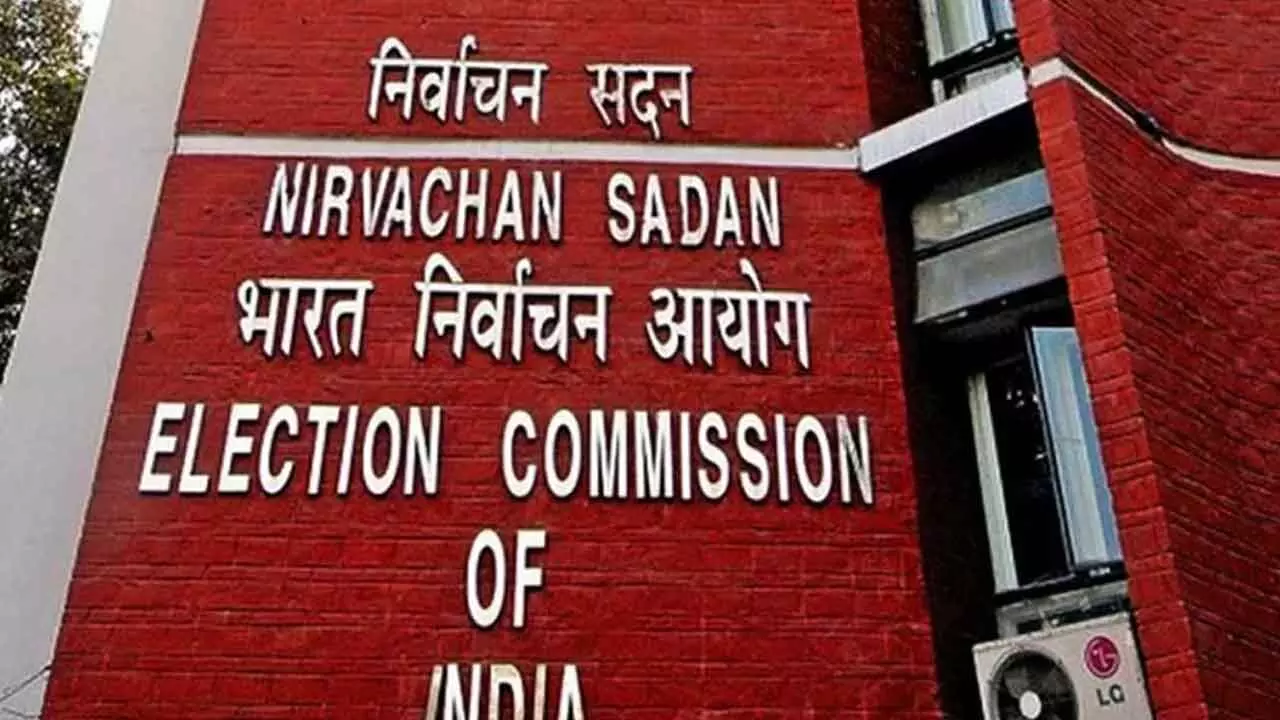
In the vibrant tapestry of Indian democracy, the Election Commission of India (ECI) stands as a cornerstone, entrusted with the solemn duty of ensuring free and fair elections. Established under Article 324 of the Constitution, the ECI has overseen more than 17 general elections and countless state polls since its inception in 1950, managing a voter base that now exceeds 968 million. Yet, recent allegations levelled by Leader of Opposition in the Lok Sabha Rahul Gandhi, accusing the ECI of facilitating “vote chori” through manipulated voter lists in constituencies like Karnataka’s Aland and Rajura, have cast a shadow over the institution, especially the integrity factor.
Such claims, presented with purported evidence of targeted deletions and additions to electoral rolls, risk eroding public trust in a body that has long been hailed for its impartiality. While constructive scrutiny is essential in a democracy, unsubstantiated attacks that question its neutrality without pursuing formal channels threaten the very foundations of electoral credibility. The poll body’s track-record is a testament to its resilience and commitment to democratic principles.
Over seven decades, it has navigated the complexities of India’s diverse electorate, from the first post-Independence polls in 1951-52 to the massive 2024 Lok Sabha elections, where over 642 million votes were cast amid logistical challenges spanning remote terrains and urban sprawls. As a multi-member constitutional body, the ECI operates independently, with mechanisms like the Model Code of Conduct (MCC) and voter verification processes designed to uphold transparency. International observers have often praised its efficiency; for instance, the Carter Center has noted India’s electoral system as a global model for large-scale democracy.
Minor administrative errors, such as discrepancies in voter lists due to migrations or data updates, are inevitable in such a colossal exercise. However, these are addressed through statutory provisions, including appeals to electoral officers and judicial review by high courts or the Supreme Court. Resorting to public campaigns that label the ECI as partisan, rather than utilizing these legal avenues, not only bypasses due process but also amplifies misinformation in an era of rapid social media dissemination.
Rahul Gandhi’s recent press conference, where he accused Chief Election Commissioner Gyanesh Kumar of shielding “vote thieves” and claimed evidence of large-scale fraud in Karnataka, exemplifies this approach. The ECI swiftly rebutted these charges, clarifying that voter roll revisions are transparent, with drafts published for public objections and political party involvement at every stage. It demanded an affidavit from the Congress leader to substantiate his claims or an apology, underscoring the need for accountability in public discourse.
This is not an isolated incident; outgoing CEC Rajiv Kumar earlier flagged a troubling trend of parties blaming the ECI post-defeat, warning that such rhetoric undermines institutional trust. If electoral manipulation were as pervasive as alleged, it would be implausible to account for the cyclical fortunes of political parties. The Congress itself has secured victories in Karnataka and Telangana (both 2023), even as it faced setbacks elsewhere. How, then, can the system be deemed “rigged” selectively?
This inconsistency highlights a deeper issue: the externalization of electoral failures onto neutral institutions rather than internal reflection on policy, outreach, and leadership. The pattern of post-poll blame is not unique to one party but reflects a broader malaise in Indian politics. For example, after the 2024 Maharashtra Assembly elections, opposition leaders accused the ECI of “match-fixing,” prompting the Commission to dismiss the claims as absurd and baseless. Similarly, in Haryana, allegations of voter suppression surfaced following losses, only for the ECI to reiterate its adherence to protocols.
Even the Bharatiya Janata Party (BJP) has faced criticism for questioning outcomes in the past, though recent responses from leaders like Ravi Shankar Prasad have labelled Gandhi’s accusations as attempts to mislead after defeats. This recurring cycle erodes faith in democracy, as noted by experts, who argue that while the ECI must remain open to scrutiny—such as demands for greater transparency in EVMs and voter data—it should not be scapegoated without evidence. The Supreme Court has repeatedly upheld the ECI’s autonomy, emphasizing that challenges must be evidence-based and channeled through courts, not media trials.
Further illustrating this disconnect is the outcome of elections beyond the ECI’s purview, which serve as independent indicators of public sentiment. The Delhi University Students’ Union (DUSU) elections, conducted independently by the university, saw the Akhil Bharatiya Vidyarthi Parishad (ABVP), affiliated to the BJP, secure three key posts—including the presidency won by Aryan Maan with a significant margin—while the Congress-backed National Students’ Union of India (NSUI) clinched only the vice-presidency. With over 2.75 lakh eligible voters, these results reflect youth preferences uninfluenced by alleged ECI biases, underscoring that electoral outcomes often stem from grassroots engagement rather than systemic flaws. Similarly, student elections at Jawaharlal Nehru University and other campuses have shown varied results, challenging narratives of uniform manipulation.
This trend of institutional maligning post-loss sets a perilous precedent, fostering cynicism among voters and weakening democratic norms. Political success is not an entitlement, but the result of resonant policies, effective communication, and voter connect. When mandates are elusive, parties must introspect: Why did certain demographics shift allegiance? What gaps exist in addressing issues like unemployment, inflation, or regional aspirations? The Congress, with its storied legacy from India’s freedom struggle to governance in multiple eras, risks diminishing its relevance by prioritizing confrontation over constructive opposition. As the ECI itself has debunked myths around processes like VVPAT handling and EVM security, emphasizing that no verified instance of widespread fraud has been upheld in courts, the onus lies on critics to engage substantively.
To preserve democracy’s vitality, criticism must be responsible, and evidence driven. The ECI, like any institution, is not infallible; reforms such as expedited voter list audits or enhanced digital transparency could bolster confidence. However, baseless assaults serve only to polarize, as seen in global contexts where eroded trust in electoral bodies has led to unrest. India’s democracy thrives on institutional strength; parties must recommit to upholding it, channeling grievances through law and focusing on voter-centric agendas. Only then can the nation ensure that the peaceful transfer of power, a hallmark since 1951, endures for generations together.
(The writer is a senior Advocate)