Listen or Die: The cost of not actively listening

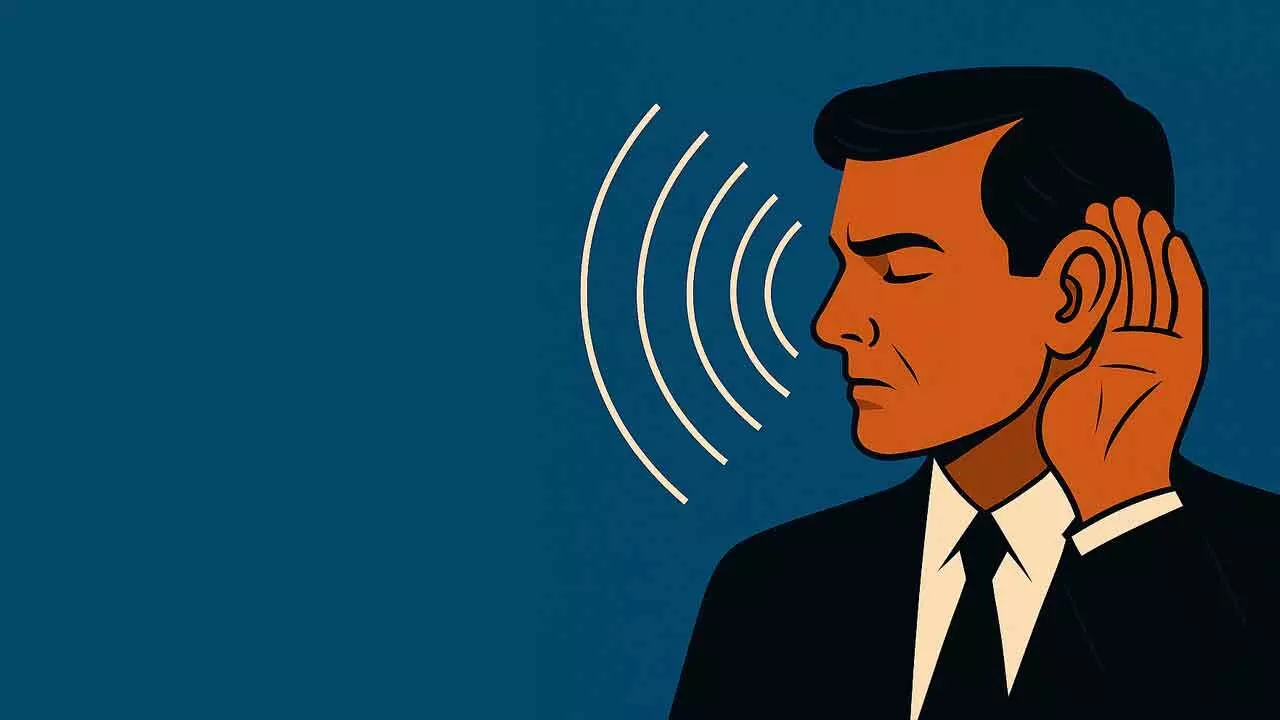
Let me begin with something fierce, something that may sound exaggerated, but trust me, it’s not. The title of this column isn’t a metaphor, it’s evolutionary reality. Listen or die. That’s how nature has worked, that’s how intelligence evolved, and that’s how civilizations have either progressed or perished.
We’ve come a long way as a species, from primitive dwellings to space stations, from grunting sounds to digital conversations with AI. And yet, with all our modern achievements, I believe we’re dangerously close to losing the one core human competence that made all this possible, our ability to ‘actively listen’. Not just hear but receive.
Why I call it ‘Receptive Intelligence’
I’ve spent over two decades studying human behaviour, emotional intelligence, and organizational dynamics. And there’s something I’ve come to realize more than ever, our ability to learn, adapt, grow, and lead is entirely dependent on how well we receive. Not how much we know, not how loudly we speak, but how deeply we listen.
This isn’t some abstract philosophical idea, it’s practical, it’s biological, and it’s increasingly rare. I call this fundamental human competence ‘Receptive Intelligence’, the ability to intentionally focus on reception from our immediate and remote environment, consciously cancelling all interference. The intelligence acquired through this deeply attentive reception is what I define as Receptive Intelligence.
This isn’t taught in schools, it’s rarely discussed in boardrooms, but it underpins everything, from our emotional well-being to our professional effectiveness. And sadly, we’re not cultivating it anymore.
The species that chose
to think
Let’s step back in time. Humans didn’t start off as the apex species. We weren’t always at the top of the food chain. What got us there wasn’t brawn, it was reception. Our early ancestors were feeling beings, driven by primal instincts. But over millennia, we made a subtle yet profound transition, we became a ‘thinking species’. We began receiving more from our environment than just survival cues. We listened, we observed, we processed. We started asking why, not just how. And that’s what propelled us from caves to skyscrapers, from tribes to nations, from myths to mathematics. But this evolution came with a price, it required attention, awareness, and an undistracted sensory field. It required what I now fear is becoming extinct, focused, undivided, active reception.
Coming full circle and falling
Today, I believe we’re coming full circle. Only this time, it’s in reverse. We are becoming less aware, more distracted, and dangerously passive. Despite our technological advancements, I believe we are regressing in our most essential evolutionary trait, ‘listening’.
Our senses are constantly overstimulated, yet undernourished. We are bombarded with information, but we retain very little of value. We’ve mastered the art of reaction but forgotten the virtue of reception.
I’ve had moments in my own journey where this realization hit me hard. I’ve sat in rooms filled with supposedly brilliant minds and found them unable to truly listen. Not because they’re incapable, but because they’re conditioned not to. They’re too busy waiting for their turn to speak, to pitch, to impress, to outdo. What we’re witnessing is the erosion of Receptive Intelligence, and with it, the slow decay of the very foundation of human excellence.
Active listening is not optional, it’s survival
Listening isn’t just a good leadership trait or a social nicety. It’s not about being polite in meetings or patient in relationships. It’s much bigger than that. It’s evolutionary. Those who listened well, through the ages, survived, adapted, and evolved. Those who didn’t, perished. It’s as simple as that.
Today, that survival isn’t about escaping predators. It’s about navigating complexity. Listening helps us handle uncertainty, spot opportunities, build meaningful relationships, and make decisions grounded in context.
Without it, we fall into chaos. We react instead of reflecting. We divide instead of understanding. We deteriorate, personally, socially, professionally, and as a species. Let’s bring this closer to home.
Ask yourself
u Are people around you truly listening anymore?
u In your family, how much listening actually happens?
u In society, is listening growing as a value or disappearing?
u And finally, how well are you listening?
If your answers are honest, they might alarm you.
Sensory deterioration - the invisible collapse
What we’re dealing with is not just a listening problem, it’s a sensory collapse. Modern life is increasingly corrosive to sensory focus. Loud cities, glowing screens, relentless notifications, algorithmic feeds, they hijack our senses and fragment our attention. Our ability to sit still, focus deeply, and receive fully is crumbling. That’s not poetic exaggeration; it’s a scientific concern.
There’s credible medical evidence now showing that sensory acuity, especially among young adults, is on the decline. We see it in education, in workplaces, and even in parenting. Children are growing up in environments that discourage silence, disincentivize patience, and reward reaction over reflection.
We’re losing something precious, ‘Natural Intelligence’. The very intelligence that made us who we are is withering, even as we build machines with artificial intelligence to do our thinking for us.
Here’s the paradox, while machines are becoming better at mimicking human cognition, humans are becoming worse at it. AI may soon write better code or perform surgeries. But what AI cannot do, and must not replace, is our ability to connect, comprehend, and empathize. And all of that begins with listening.
The human cost of poor reception
Let’s not kid ourselves. Poor listening doesn’t just impact businesses or productivity. It shatters human connection. I’ve seen marriages fall apart not due to infidelity or money, but because partners stopped listening to each other. I’ve seen teams disintegrate not because of incompetence, but because of unchecked assumptions. I’ve witnessed young professionals’ plateau not because they lacked talent, but because they were poor receivers of feedback. They seem to be ‘too distracted to listen to anyone’.
On a global level, many democracies suffer when politicians stop listening to their people. Institutions collapse when leaders close their eyes and ears and keep only their mouths open. You don’t need to look far. You can observe this breakdown in your community WhatsApp groups, in television debates, in boardroom discussions. People are loud, aggressive, opinionated, but rarely receptive.
This is what I mean when I say, ‘Listen or Die’. It’s not about literal death. It’s about the death of connection, the death of purpose, the death of social intelligence, and eventually, the death of a civilization.
Fear the future
Let me take a moment to paint a painful picture of where we’re headed if we don’t reclaim ‘Receptive Intelligence’.
u Marriages will become transactional. People will live together but barely connect.
u Families will function as logistical units. Conversations will fade, replaced by digital notifications.
u Friendships will be shallow, maintained through memes, not memories.
u Workplaces will reward noise over nuance. Decision-making will be impulsive, not inclusive.
u National discourse will turn into tribal warfare. Echo chambers will multiply, and dissent will be demonized.
u Spirituality will be commodified, not as a path to inner truth, but as a commodity.
This is not dystopian fiction. It’s already happening. Unless we course-correct.
So, what can be done?
Receptive Intelligence is not dead, it’s just neglected. It can be revived, personally, professionally, and collectively. But it starts with conscious, daily practice. Here’s what I’ve integrated into my own life and strategy consulting practice:
1. Cultivate the lost art of silence. Even 10 minutes a day. No inputs. Just presence. Train your senses to be still again.
2. Practice focused listening. Shut out distractions. Turn off the phone. Look into the eyes of the person speaking. Listen with your whole being.
3. Model it for others. As a parent, spouse, leader, friend, demonstrate what it means to be a great listener. It’s contagious.
4. Check your sensory health. Do a weekly audit of your noise exposure, screen time, and emotional bandwidth.
5. Encourage reflective spaces in teams and families. Make it okay to pause, to breathe, to contemplate before reacting.
6. Promote deep work. In your organization, reward focus and listening, not just hustle and volume.
7. Read slowly. Not everything must be consumed in speed mode. Savor some information. Let it marinate.
8. Ask better questions. Questions are keys. They open doors to better reception. “What do you mean?” is more powerful than “I disagree.”
Final reflection
We are not yet doomed, but we are drifting. Slowly, silently, and dangerously. We are forgetting what made us human. And in the process, we are risking the loss of something far greater than productivity or performance, we are risking the very meaning.
Listening is not a luxury. It’s not a soft skill. It’s not a bullet point on a résumé. It’s a species-level competence. We didn’t become great by speaking more. We became great by receiving deeply. From nature. From one another. From silence. From the unknown. If we forget to listen, we will lose not just the future, but ourselves. So yes, let me say it one more time, Listen or Die.
(The author is the Chief Spokesperson of BJP, Chairman of Nation Building Foundation and a Harvard Business School certified strategist)