Is General Munir the real ruler of Pakistan!?

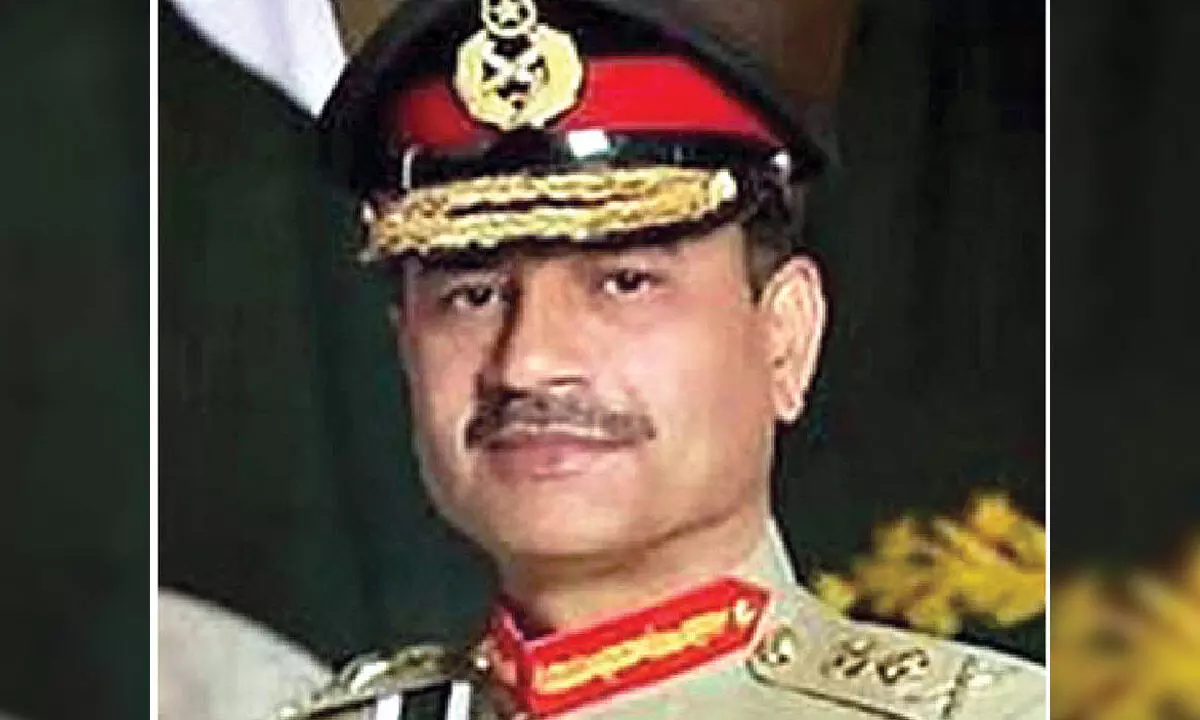
The recent power grab, which is effectively trying to make Field Marshal Syed Asim Munir Ahmed Shah an almost absolute ruler and cement his authority through law, is shocking democracies around the world. With its 27th amendment to Pakistan’s constitution on November 13, the judiciary and military command were reorganized and the army chief was made practically ‘supreme’
Some people glorify a nation’s history, while others denigrate it. A nation endures when its history becomes a source of pride. India and Pakistan gained independence at the same time, following partition. But within India’s democratic framework, people elect their representatives every five years, and whether at the Centre or in states, despite mistakes and crises, the country has continued to be governed by popularly elected governments.
In contrast, after gaining independence Pakistan has not truly embraced popular rule. Even if officials say it is a democracy in name, international analysts and media organisations see Pakistan as essentially unstable and dominated by military rule and authoritarian tendencies. Any internal problem in India tends to be used by Pakistan as an excuse to provoke trouble—raising the Kashmir issue has become almost a reflex. Taking advantage of timely support from other countries, it has repeatedly tried to lower India’s standing. But it seems like time is not on its side.
In border clashes with India, it has failed to gain the upper hand. After the recent Pahalgam incident and India’s subsequent Operation Sindoor, Pakistan suffered a humiliating setback. No matter how much China helps, without its own capability Pakistan has been unable to prove itself equal to India.
China is supplying weapons and newly manufactured combat aircraft to Pakistan and conducting trial runs to test their pilots’ skills, but it is unable to help Pakistan achieve full superiority. Noting Pakistan’s weakness, Beijing is gradually trying to rebuild the friendship it lost with India.
As usual, the U.S. is politically displaying double standards, reassuring Pakistan of support — especially under a potential second Trump term — while claiming to aid stability. The two countries might start a nuclear war and that its diplomacy is preventing that and preserving world peace, attempting to persuade other nations with those empty claims.
Against this backdrop, Pakistan — knowingly or unknowingly — is putting governance entirely into the hands of the army. In effect, the country’s politicians and parties are unable to establish a democratic system by conducting elections the way India has. Elections have become nominal. Prime ministers are being turned into puppets of the army chiefs.
The recent power grab, which is effectively trying to make Field Marshal Syed Asim Munir Ahmed Shah an almost absolute ruler and cement his authority through law, is shocking democracies around the world. With its 27th amendment to Pakistan’s constitution on November 13, the judiciary and military command were reorganized, and the army chief was made practically “supreme”. Under the guise of democracy, the military has been operating behind the scenes and, after the small-scale conflict with India in May, promoted General Munir to Field Marshal while reducing the Shehbaz Sharif government to a nominal role.
By amending Article 243 to create the “Chief of Defence Forces” poste, and establishing single authority over the army, navy, and air force, the military has consolidated total control. Bringing the National Strategic Command under this new office has elevated General Munir to a position from which he can exert influence both domestically and internationally. The amendment also grants General Munir and the president lifetime immunity from criminal proceedings.
The world cannot ignore his emergence as an unassailable leader in Pakistan. He has even risen to the point of dining alongside the US president as an equal — a level of recognition like how Donald Trump famously sidelined a prime minister and accorded equal protocol to an army chief — which can be seen as indicative of declining civilian politics.
Under Article 47, a five-star general is entitled to wear his uniform for life; removing such a status would require an impeachment-like process, which is presently unimaginable in Pakistan.
What it has done by proposing so many amendments to its constitution is in handing over complete authority to General Munir!
Moreover, with these new amendments the Supreme Court has lost the power to interpret the constitution. Instead, that authority will go to a newly created Constitutional Court, whose judges will be appointed by the government. Many judges resigned in protest over this amendment. It is notable that Imran Khan alone has vocally opposed these changes as a popular leader — and he has been in jail for two years. By sidelining the elected government, keeping the opposition leader imprisoned, and elevating General Munir as an unassailable leader backed by the strengthened constitution, the country is being steered like a pawn.
Historically, however, those who have seized power in this way in Pakistan have not remained for long. With rebellions steadily growing in the tribal areas of Balochistan, Pakistan is floundering and facing a crisis. People are depressed and demoralised across the country. Whether a nation progresses or collapses depends on its leaders. Only when people organize and prepare to overturn that situation can they truly act as citizens in any country.
Relations with India and Afghanistan remain merely functional. Imran Khan’s party, PTI, continues to challenge this misrule. The economic situation has plunged into dire straits. General Munir can topple the standing government with that power.
But history shows that no matter whether control is imposed by the army or by rulers, people eventually rise and reclaim the lost internal freedom. That is the lesson history teaches.
(The writer is a retired IPS officer, who has served as an Additional DGP of Andhra Pradesh)