India’s soft underbelly—its own society

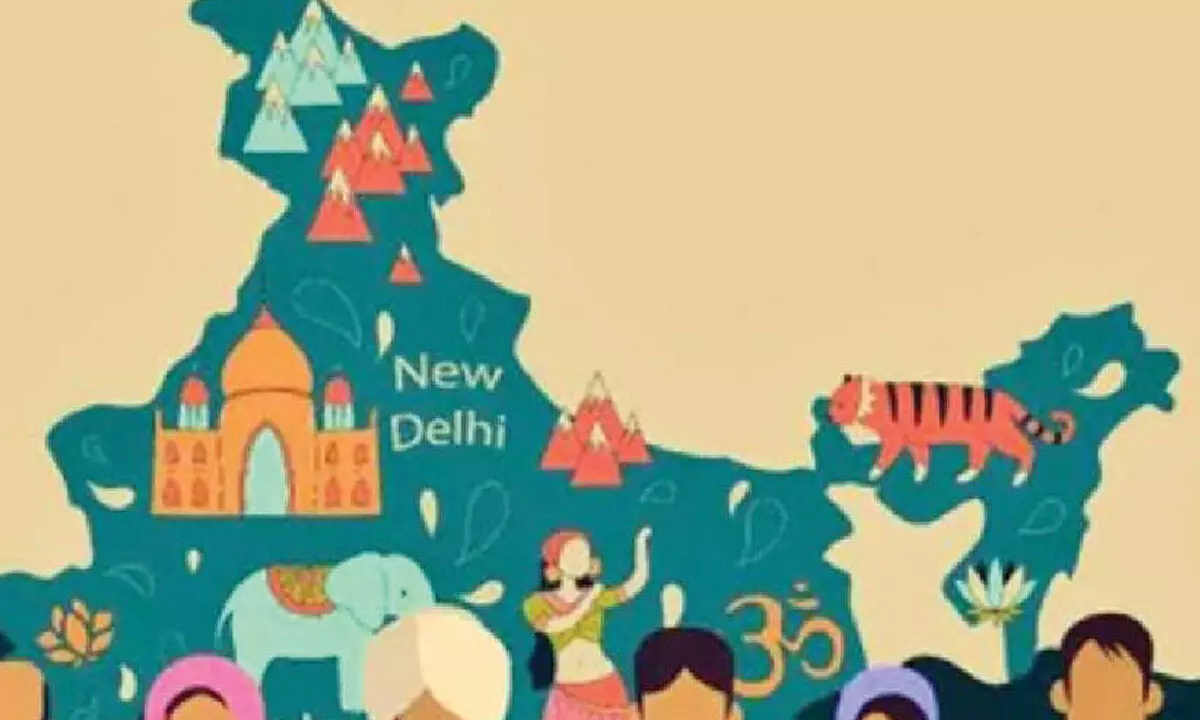
As India gears itself to go big to mark the shatabdhi of its swaraj, what is escaping notice is the elephant in the room: the sorry state of its society.
Right now, the State has all the levers of power in its hands. Multiple social and economic schemes have been launched with very little, if any, social inclusion. Outwardly, it seems strong, but the reality is that despite having some ‘strong’ prime ministers, the State has been ‘soft’, as defined by Gunnar Myrdal (1968). Their ‘strength’ has been no match to the strength of special interest groups and street power. Many of the factors that Myrdal identified for such characterisation are still topical: weak and wobbly enforcement of rule of law, inability to take and abide by challenging choices, collusion between public officials and powerful groups, and pervasive venality. The State has faltered, as Ambedkar feared, to safeguard the rights of the “many” from “the supremacy of the few”, and to ensure that the quest for liberty does not kill individual initiative. What are also missing in our society are essential features such as shared values, collective conscience, moral codes, trust, and, most meaningfully, what Ambedkar called the ‘sense of Indians being one people’. Most of us are Indians more by default than by default mode.
What is tragic is that this need not have been so, if only we had structured the relationship between State and society differently, in line with our own proven experiences. Our society was mostly pan-Indian, and it had fully functional autonomy while the Rajah still had the final say on all matters. Governance was rooted in endogenous values, customs, traditions, and norms rather than rigid laws and rules. That, in turn, enabled life to be led more holistically and empathetically with a reverential connection with nature. Under this unique modus vivendi, people felt proximate to power, no one felt left out of the loop, and power was visibly accountable. The ruler was wise enough to realise that it worked to his advantage by acting as a buffer between him and his subjects.
That kind of autonomy was robust enough not to be overwhelmed by exogenous influences. In Tagore’s words, “our rural society never depended on outside help, nor was the richness of structure ever impaired by aggression from outside”. It was lauded even by British bosses. One former Governor-General (Charles Metcalf) noted that “the village committees were little republics, having nearly everything they want within themselves… I dread everything that has a tendency to break them up.”
It was ironic that what Metcalf dreaded came true in the reign of his own successors. What was even worse was that the new rulers of free India continued the ‘break-up’. The primary reason was the fear that ‘little republics’ would become ‘little ghettos’, and prevent India from transiting to a modern Nation-State. Society lost not only its autonomy but its very raison d’être and became an ‘ephemeral union of autonomous individuals’, each trying to expand their autonomy over others. Catastrophically, that mindset derailed any meaningful devolution of political power beneath the federal and state levels. While Ambedkar stressed the need for India to become a ‘social democracy’ rather than just “political”, he himself was shy of including its sine que non—social self-rule. What also stands belied was the expectation that the twin processes of democracy and development would annul the entrenched caste and communal divides, and pave the way for an ‘emancipatory democracy’.
Another disconcerting denouement is the sweeping surge of moral decadence and mental mediocrity, tellingly in the land that was once revered for its dharma and renowned for its inventiveness. In a very elemental sense, this is the Mother of all crises that India is battling. There are no more moral red lines that one fears to tread. It is epitomized in multiple forms, including our equation of ‘social success’ with the ruthless rat race, and, à la Katha Upanishad, with a penchant for preyas over sreyas. As for mediocrity, a nation of 1.4 billion people produces few champions and pathbreakers. Our record with the Nobel Prize and the Olympics is shameful. Another manifest of mediocrity is the easy sufferance of subjugation and cozy cohabitation with cowardice. Indeed, that possibly was one reason why India was once dubbed the ‘invader’s paradise’, and colonial control lasted that long. And why Tolstoy (1906) said, “…not the English, but the Indians, have enslaved themselves.”
Conclusion
The constitutional subsumption of society by the State, and thus the disempowerment of social self-rule was, with hindsight, clearly a cardinal error. Astonishingly, until almost the time of the British Raj, India managed to have it both ways — a fully functional autonomous society, and a fully sovereign state. It brought direct democracy to the level at which all human activity occurs: the ground level. This was what Gandhi called Gram Swaraj; in his words, ‘independent of its neighbors for its own vital wants, and yet interdependent for many others’. Although still embyonic, many modern democracies are veering in this direction. What we must note is that it is a matter of good governance; for India, it was the only way it could become pan-Indian, given its kaleidoscopic, ethnic, linguistic and cultural texture and diversity. Abandoning it was what led to our greatest post-independence failure—inability to turn our eclectic plurality into social synergism. The hope that, over time, the idea of ‘one nation- one people’ will lead to syncretism became Micawberish. Instead, it became a society at war with itself.
Another tricky issue that is a kind of ticking time-bomb for our democracy is what the veteran politician Jaswant Singh called the ‘single greatest factor of damage to the integrity of the Indian nation’ and its ugly face—our political class. What makes it so consequential is that our public space is so comprehensively penetrated by politics, that society itself has become its doppelgänger, prompting the question: who is a more of a ‘moral scoundrel’, neta or janata? Which brings to mind Ambedkar’s (1949) warning that ‘if the parties place creed above country, our independence will be put in jeopardy a second time and probably be lost for ever’.
How close we are to this is anyone’s call, but it is close enough for intrepid reflection. Since politicians wield power through the State, one possible way out could be to diminish the State’s very role in civic life and empower the autonomous society to fill the void.
‘Reflection’ is also required on another dimension: our mistaken identification of ‘progress’ with, in the words of Christopher Lasch, as ‘the true andonly heaven’ , and ‘growth’ with economic expansion. Such an illusionary identification was alien to our ethos and was implicit in our dharmic way of life. In that way of life, while a sophisticated monetary system did exist it primarily supplemented, rather than supplanted, the non-monetary and semi-monetary systems like the barter system and commodity currencies. Although, as a society, we are obsessed with economic metrics like GDP, there are many in young India who are experiencing a kind of spiritual backlash, restless with what economic success entails and demands. They could constitute the critical mass we need for spreading non-monetary values in society. And also enable, India to, in the words of Vivekananda, ‘dispense life-giving waters’ to quench the ‘burning fire of materialism’, which is burning the core of the hearts of millions in other lands.
So, what next
What it all means is this. India will stagnate as a chronic ‘under-achiever’ unless and until its society’s mind-boggling multiplicity and multicentricity gets constitutionally reflected in the disposition and deployment of political power, and its governance becomes community-based, what we may describe as ‘shared self-rule’. How to bring it about is what those who love India should ponder over.
(The writer is a retired I.A.S officer and author)