Golkonda: Unifying Telangana’s capital region

Placenames reflect their historical and cultural identities, and Hyderabad, a dynamic metropolis in southern India, is no exception. Debates persist over its origins, particularly the narrative that Mohammad Quli Qutub Shah founded it in 1591 as Bhagyanagar after his alleged Hindu wife or courtesan, Bhagmati—a claim lacking historical evidence. This article examines Hyderabad’s nomenclature, challenges the Bhagyanagar story, and proposes renaming the urban agglomerate—encompassing Hyderabad, Secunderabad, and Cyberabad—as Golkonda to honour its Kakatiya and Golla (Yadav) heritage, fostering a unified regional identity.
Golkonda and the Kakatiya legacy:
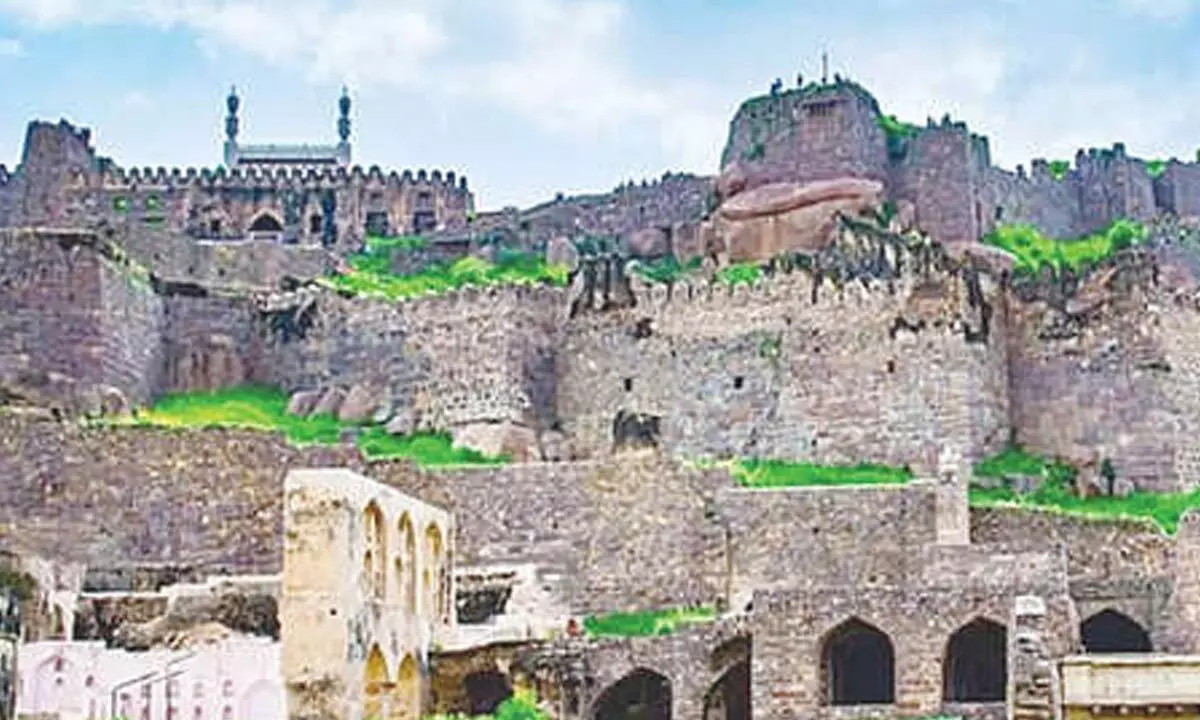
Golkonda Fort, founded by the Kakatiya dynasty in the 12th century as a strategic western outpost, became the cornerstone of Telangana’s capital region, shaping its political, historical, and cultural prominence. Renowned for their contributions to culture, architecture, economic prosperity, the Telugu language, and efficient governance, the Kakatiyas developed innovative tank irrigation systems for agriculture. Golkonda, a strategic western outpost, protected against invasions. Its name, from the Telugu words Golla (shepherd or Yadav) and Konda (hill), reflects the region’s pastoral heritage and the Golla community’s role as herders, farmers, and warriors.
The Kakatiya empire fell to Islamic invaders in the early 14th century, with the Delhi Sultanate, under Alauddin Khalji and Muhammad bin Tughlaq, annexing the Deccan. By the mid-14th century, Golkonda came under Bahmani Sultanate control. After its disintegration, the Qutub Shahi dynasty, founded by Sultan Quli Qutub Shah in 1518, made Golkonda its capital, leveraging its strategic location along the Musi River and natural defences.
In 1591, Mohammad Quli Qutub Shah, the fifth ruler, established Hyderabad, named after Ali, the fourth Caliph of Islam (with Hyder referring to Ali’s title, “Lion of God”), about eight kilometers east of Golkonda. With the iconic Charminar as its centrepiece, Hyderabad became the political and economic hub, while Golkonda remained a key military and cultural site.
The Bhagyanagar narrative-Fact or fiction?
The claim that Hyderabad was originally named Bhagyanagar after Bhagmati, lacks credible historical evidence. Primary Qutub Shahi sources, such as the Tarikh-i-Qutub Shahi and Tazkirat-ul-Muluk, make no mention of Bhagmati or Bhagyanagar, possibly due to a preference for Islamic nomenclature (Sherwani, 1974). However, 17th-century European accounts by travellers like Jean de Thévenot (Travels in India, 1687) occasionally refer to the city as “Baghnagar,” suggesting some basis for the oral tradition preserved among local Telugu communities.
Cultural improbability:
The Bhagyanagar narrative raises cultural questions. It is unlikely that a Muslim ruler would name his capital after a Hindu woman, whether a wife or courtesan. Islamic rulers typically chose Persian or Arabic names for their cities, reflecting their religious and cultural identities, as seen in Ahmedabad (named after Sultan Ahmad Shah) and Aurangabad (after Emperor Aurangzeb). Naming a city after a Hindu woman would have been an anomaly. Moreover, the claim that Mohammad Quli Qutub Shah married a Hindu woman named Bhagmati is questionable, as conversion to Islam was typically required for marriage (Nikah). Even if Bhagmati existed, naming a city after a courtesan would have been considereddishonourable in both Hindu and Muslim cultural contexts, further undermining the narrative’s credibility.
Alternative explanations for Bhagyanagar:
If the Bhagmati story is fictional, how did the name Bhagyanagar arise in the first place? One plausible hypothesis is that Hyderabad was built on a pre-existing village named Bhagyanagar, possibly named after a local deity or temple. The Bhagyalakshmi temple within the Charminar premises supports this theory.
Given the historical prevalence of Islamic iconoclastic destruction of Hindu temples, a temple dedicated to Goddess Bhagyalakshmi may have been demolished to construct the Charminar, explaining the site’s religious significance for local Hindus. The name Bhagyanagar, derived from Bhagya (fortune or prosperity) and Nagar (city), could have been a local name preserved in oral traditions but absent from official records.
Archaeological considerations:
Verifying the Bhagyanagar hypothesis requires archaeological excavations under and around the Charminar and other historical sites in Hyderabad. Such investigations could uncover evidence of pre-existing Hindu temples or settlements. However, excavations near the Charminar are impractical due to urban constraints and communal sensitivities. The Bhagyalakshmi temple’s location within the Charminar complex remains a tantalising clue, but without further evidence, the Bhagyanagar narrative remains speculative.
Cultural and political implications:
Even if the Bhagyanagar story were true, its implications for Hindu cultural identity are problematic. Naming a city after a Hindu woman associated with a Muslim ruler, whether as a wife or courtesan, could be perceived as undermining Hindu pride. Such relationships often symbolised conquest or subjugation and commemorating them through a city’s name would conflict with Hindu pride. Moreover, the lack of historical evidence for Bhagmati undermines the legitimacy of Bhagyanagar as Hyderabad’s original name. Thus, insisting on Bhagyanagar is problematic, and a more inclusive, historically accurate nomenclature is needed to honour the region’s indigenous heritage.
Golkonda-Etymology and cultural significance
The name Golkonda offers a compelling alternative for restoring the identity of Hyderabad’s urban agglomerate. Derived from the Telugu words Golla (shepherd or Yadav) and Konda (hill or mountain), Golkonda reflects the region’s pastoral and agrarian roots. The Golla community, traditionally cattle herders, played a vital role in Telangana’s economy and culture. Their association with Lord Krishna imbues Golkonda with spiritual significance, drawing parallels to Govardhan Parvat, the sacred hill lifted by Krishna in Hindu lore.
Golkonda Fort, established as a Kakatiya western garrison outpost, represents a tangible link to Telangana’s past. The Kakatiyas were champions of Telugu culture, constructing iconic monuments like the Warangal fort, Ramappa temple, and promoting literature, art, and architecture. Reviving the name Golkonda would pay homage to their legacy while fostering regional pride that transcends religious and communal divides.
Golkonda as the urban agglomerate’s name:
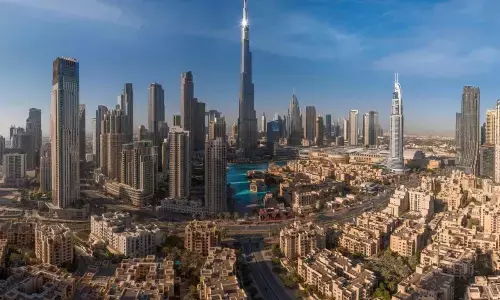
This sprawling urban agglomerate today comprises three distinct cities—Hyderabad, the historical and cultural core; Secunderabad, a colonial-era cantonment; and Cyberabad, a modern IT hub—along with several other suburban localities. Naming the entire urban agglomerate Golkonda would celebrate the Kakatiya dynasty as the founders of Telangana’s capital region, honouring their enduring legacy in shaping a unified identity that reflects the area’s historical continuity and cultural diversity. This approach mirrors New York City’s structure, which unifies its five distinct boroughs: the Bronx, Brooklyn, Manhattan, Queens, and Staten Island. Adopting Golkonda as the overarching name would honour the Golla community’s contributions, restore the region’s Kakatiya roots, and embrace its modern and Muslim heritage.
To begin, the Hyderabad Metropolitan Development Authority a(HMDA) and the Hyderabad Metropolitan Water Supply & Sewerage Board (HMWS&SB) could be renamed as the Golkonda Metropolitan Development Authority and the Golkonda Metropolitan Water Supply & Sewerage Board, respectively, as the jurisdiction of these entities encompasses areas beyond the Greater Hyderabad Municipal Corporation (GHMC) jurisdiction.
Benefits of the Golkonda nomenclature:
• Historical accuracy: Golkonda, unlike Bhagyanagar, is a documented name from the Kakatiya and Qutub Shahi eras, free from the speculative Bhagmati narrative.
• Cultural inclusivity: Golkonda honours the Golla (Yadav) community and Kakatiya legacy, appealing to locals while remaining religiously neutral.
• Regional unity: Golkonda unifies Hyderabad, Secunderabad, and Cyberabad under a shared identity.
• Global recognition: Golkonda’s historical significance and diamond trade legacy (e.g., Kohinoor, Hope diamonds) enhance the region’s cultural and economic brand.
Addressing potential concerns:
It may be argued that changing Hyderabad’s name could disrupt its established identity or create other challenges. However, this proposal does not advocate renaming Hyderabad itself but rather adopting Golkonda as an overarching name for Telangana’s capital region, similar to the Delhi-NCR model. This approach preserves the individual identities of Hyderabad, Secunderabad, and Cyberabad while providing a unifying framework.
The Bhagyanagar narrative, while popular among some Hindu groups, is divisive. By contrast, Golkonda is rooted in Telangana’s pre-Muslim history and avoids religious connotations, making it a more inclusive choice. Notably, the Qutub Shahi dynasty was also known as the Golkonda Nawabs, ensuring the name acknowledges their legacy as well.
Conclusion:
The debate over Hyderabad’s nomenclature reflects broader questions of history and identity. The Bhagyanagar narrative, though evocative, lacks evidence and carries divisive implications. Golkonda, rooted in indigenous heritage, offers a unifying and historically accurate alternative.
As Capital Region Golkonda, Telangana can celebrate its diverse past, foster regional unity, and inspire a future of shared pride and recognition.
(The author is a retired IPS officer, and a former Director, CBI. Views are personal)