Gen Z radicalism: Intolerance, hate & violence

It marks the arrival of a culture where listening is replaced with silencing, where the difference of opinion is treated as provocation, and where young radicals see violence as a legitimate form of punctuation. We are watching an age group that should have been the most connected and globally aware mutate into the most intolerant in its willingness to erase voices it dislikes. Gen Z radicalism is not a fringe trend. It is fast becoming a social sickness.
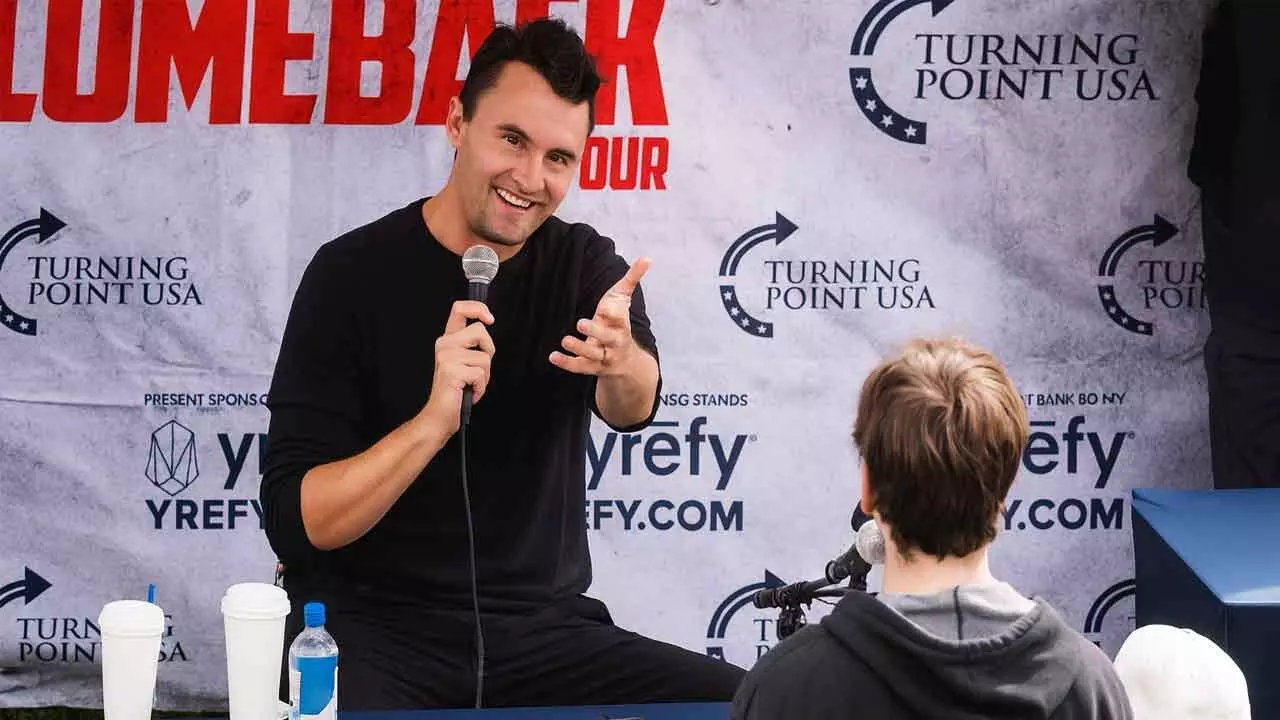
The world is no stranger to political assassinations, but the murder of Charlie Kirk in Utah earlier this month carries a disturbing symbolism. Here was a 22- year-old man, Tyler Robinson, perched on a rooftop, calmly aiming a rifle at a young conservative speaker addressing a university audience. Robinson reportedly texted his partner afterwards that he had “enough of Kirk’s hatred,” as though taking a human life was an acceptable answer to disagreeing with someone’s words.
This was not an act of rage in the heat of a scuffle. It was deliberate, calculated, ice-cold. Kirk was shot down not for a crime, not for corruption, not for violence of his own, but for speaking his mind in a democracy that promises freedom of speech.
That is what makes this assassination chilling beyond the personal tragedy. It marks the arrival of a culture where listening is replaced with silencing, where the difference of opinion is treated as provocation, and where young radicals see violence as a legitimate form of punctuation.
We are watching an age group that should have been the most connected and globally aware mutate into the most intolerant in its willingness to erase voices it dislikes. Gen Z radicalism is not a fringe trend. It is fast becoming a social sickness.
The erosion of listening: From debate to dehumanisation
Until recently, disagreement was the oxygen of democracy. It was the classroom debate, the spirited television panel, the noisy Parliament floor. Today, disagreement is a trigger for outrage. Social media has taught young people that engagement is not about listening but about dunking, ratioing, cancelling. The other side is no longer wrong, it is evil. And when you declare someone evil, you also declare them undeserving of rights, even the right to live.
This is where intolerance takes root. It does not shout, it sneers. It mocks before it engages. It silences before it reasons. University campuses, traditionally safe havens for dissent, now often resemble ideological fortresses. A single phrase can trigger mass outrage, a guest speaker can be mobbed into silence, a professor can be fired for expressing nuance. Intolerance begins with a refusal to hear. It ends with the belief that certain voices must be extinguished.
In the case of Charlie Kirk, the shooter acted out precisely that logic. He decided Kirk’s words were not to be debated or countered but annihilated. That is intolerance in its most extreme, lethal form.
Hate: When wokeism becomes a weapon
Wokeism began as awareness, a recognition of injustice, inequality, and historic wrongs. But in the hands of Gen Z radicalism, it has too often hardened into weaponised moral superiority. It divides the world into oppressors and victims, allies and enemies. It allows no room for complexity. It confuses disagreement with harm. What was once empathy-driven has curdled into vindictiveness.
We see it in the rush to cancel, the glee in public shaming, the delight in destroying reputations. One tweet, one misstep, one awkwardly phrased thought can become a lifelong scar. The culture rewards the loudest accuser, not the most thoughtful reformer. Young people police each other’s language with an unforgiving zeal. They learn that outrage equals virtue and that cruelty is excusable if performed in the name of justice.
This is how hate becomes sanctified. The assassin of Charlie Kirk justified his act as a stand against “hatred.” Yet he became the embodiment of the very hate he claimed to oppose. That is the paradox of woke radicalism - intolerance dressed as righteousness, hate disguised as justice. And when a generation begins to accept that logic, violence is not a shocking outcome. It is a predictable one.
Violence: The last refuge of radicalism
The progression from intolerance to hate ends, inevitably, in violence. Words sharpen into threats; threats mature into attacks. We have seen it across contexts from mob lynchings in few nations driven by WhatsApp rumours, to campus riots in Europe, to targeted killings in the United States. Political violence is no longer the monopoly
of extremist terror groups. It has seeped into the bloodstream of democratic societies, carried
by disillusioned young men and women convinced that silencing an opponent is an act of heroism.
Charlie Kirk’s assassination was broadcast in real time, clips circulating across social media before his body was cold. Reactions were just as revealing as the act itself. Some users celebrated his death openly. Others spread wild disinformation blaming Ukraine, Israel, or shadowy conspiracies. In each case, the humanity of a young man’s life was irrelevant.
His death was treated as fodder for outrage, memes, propaganda. The killer may have pulled the trigger, but the culture that normalised cruelty provided the ammunition. Violence has always existed in politics, but what is frightening today is how quickly it is rationalised. When young
people are conditioned to see opponents as existential threats, the moral barrier against
killing erodes. A gunshot becomes not murder but “justice.” That is how radicalism rots the human spirit.
The way back: Reclaiming humanity
If Gen Z radicalism is the sickness, then the cure cannot come from denial. We must name the problem: intolerance masquerading as activism, hate cloaked as justice, violence disguised as courage. We must also recognise that this is not the path all of Gen Z has chosen. Many among them are empathetic, open, creative, deeply committed to fairness. They are the hope of a fractured world. But they must be reminded and sometimes taught that justice without compassion becomes tyranny, that courage without restraint becomes cruelty.
The responsibility lies with more than just the young. Parents must model emotional maturity. Teachers must reward curiosity rather than conformity. Public figures must resist the temptation to exploit outrage for clout. Platforms must be held accountable for amplifying bile. Above all, individuals must rediscover the forgotten discipline of listening. To hear another person is not weakness, it is the essence of being human.
Charlie Kirk’s assassination is not just a tragedy for his family or his movement. It is a warning flare for every democracy. If a young man can be shot dead for his words, then words have lost their protective shield. If a generation believes silencing is nobler than speaking, then freedom itself is under siege. Gen Z still has a choice. They can inherit the future as architects of tolerance or as engineers of division. They can heal, or they can harm. What they choose will decide whether the next decade belongs to democracy or to despair.
Author is the Chairman of Nation Building Foundation, a BJP Leader and a Harvard Business School certified Strategist