Few Indians, shame all

I’ve witnessed this firsthand. You’ll find individuals who are courteous to their foreign employers but rude to their fellow Indians. You’ll find people who drive BMWs but throw trash from their car windows. You’ll find highly paid professionals who think cleaning up after themselves is beneath them. This entitlement is cultural, not financial. It is rooted in the false belief that education or wealth automatically translates to civility. Wealth without grace is vulgarity.
Every time I travel abroad, I am filled with both pride and concern. Pride because today India commands immense global respect. Our diaspora is thriving, our professionals are leading global corporations, and our students are excelling in world-class universities. But the concern creeps in when I see or hear about a few of our own behaving in ways that make me wince.
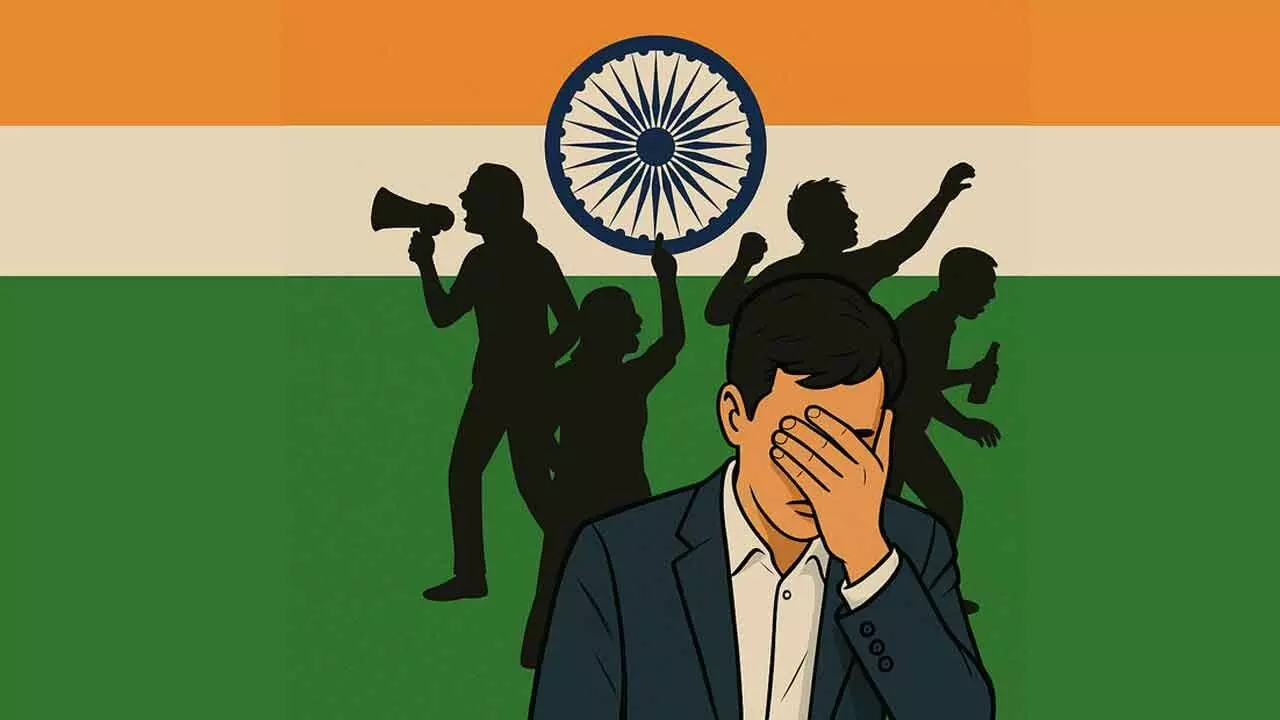
Increasing incidents are being reported from across the world about Indians abroad, from the United States to the United Kingdom, from Australia to the Middle East, behaving in ways that are shocking, inconsiderate, and often disgraceful. Immigration scams, financial fraud, shoplifting, traffic violations, property mismanagement, loud community disturbances, and even serious crimes like rape and murder. These are not isolated cases anymore. Each such episode chips away at the painstakingly built reputation of Indians being educated, disciplined, and peace-loving global citizens.
As someone who has represented India internationally and has coached leaders across cultures, I find this trend deeply disturbing. Because this is not about one or two errant individuals, it is about the collective shame they bring upon millions of Indians who live, work, and travel abroad with dignity and responsibility.
The shameful few:
Let’s be clear: A vast majority of Indians living abroad are law-abiding, hardworking, and socially responsible people. They are doctors, engineers, academics, business leaders, and professionals who have earned tremendous goodwill for our country. But, as it often happens, the reckless behaviour of a few drowns out the discipline of many. In recent months, videos have gone viral showing Indians shop lifting, Indian crowds yelling in movie theatres, trashing cinema halls, clogging public spaces, damaging properties of neighbours and violating local norms in ways that have provoked serious backlash from local communities.
During Diwali and Ganesh Chaturthi celebrations, there have been reports of chaos, loud music blaring late into the night, garbage strewn across streets, fireworks in public parks and aggressive reactions to police or neighbourhood requests for restraint.
Social media has made these images global in seconds. And unfortunately, they create a singular narrative - that Indians are unruly, loud, and lack civic sense. A handful of offenders are staining the image of an entire civilization that once taught the world about restraint, discipline, and harmony.
Why don’t some Indians change abroad?
The question that troubles me most is: why don’t these people change when they move abroad? Why do they carry the same bad habits, the same lack of civic sense, and the same disregard for public order, even after experiencing superior systems in developed nations?
The answer lies in conditioning. Behaviour doesn’t change with geography; it changes with upbringing and awareness. Many Indians, sadly, grow up in environments where public discipline is rarely enforced and personal responsibility is seldom internalised. When one grows up seeing littering, jumping traffic signals, bribing officials, and shouting in public as “normal,” the subconscious takes that as an acceptable behavioural template. So, when these individuals move abroad, they carry their internal code of conduct with them. The laws may be different, the streets may be cleaner, but the mindset remains the same. They have learned to adapt only superficially, not behaviourally.
Cultural adaptation requires humility and awareness, two qualities that are often underdeveloped when social systems back home tolerate indiscipline. Many Indians are brilliant professionals but socially tone-deaf. They succeed economically but fail culturally. They can ace exams but score zero in empathy.
Root of the problem lies at home:
The issue is not born in London, New York, or Sydney. It begins in Hyderabad, Mumbai, or Delhi. The problem starts when parents fail to teach their children about civic responsibility, when schools prioritise marks over manners, and when society glorifies success without demanding integrity.
Our cities run on chaos because we have normalised disorder. We honk without hesitation, litter without guilt, and break rules without fear. The idea of civic sense doesn’t even exist in many Indian households. We are taught to focus on personal achievement, not community well-being. As long as “my family” is fine, the world can go to dogs is the attitude.
This “me first” mindset, when exported abroad, becomes toxic. It collides with cultures that operate on social trust, discipline, and shared responsibility. The result? Friction, resentment, hate and embarrassment. The utter lack of consideration for others is core of all misbehaviour.
Until India creates a strong framework for civic education and moral conditioning, we will continue exporting unpolished citizens who represent us poorly on foreign soil. The lack of frameworks at home is creating disorder abroad.
The psychology of entitlement:
There’s another aspect to this behaviour, a dangerous sense of entitlement. Some Indians when abroad seem to believe that their hard-earned visa, job, or income gives them immunity from the need to adapt. They confuse material success with social superiority.
I’ve witnessed this firsthand. You’ll find individuals who are courteous to their foreign employers but rude to their fellow Indians. You’ll find people who drive BMWs but throw trash from their car windows. You’ll find highly paid professionals who think cleaning up after themselves is beneath them.
This entitlement is cultural, not financial. It is rooted in the false belief that education or wealth automatically translates to civility. But education without refinement is just literacy, and wealth without grace is vulgarity.
It’s tragic that some of us fail to understand that being abroad comes with a responsibility, to represent India with dignity, to uphold the image of our heritage, and to conduct ourselves as ambassadors of our nation.
The consequences of unruliness:
Let’s talk about the fallout. Every act of irresponsibility abroad, be it a traffic violation, a loud festival celebration, or an instance of crime, doesn’t just affect the individual. It affects the entire Indian community.
Local media in those countries report such incidents under one headline; “Indian man arrested,” “Indian group fined,” “Indian community clashes with locals.” The adjective “Indian” becomes a collective indictment.
The damage to reputation has real consequences. Indian professionals often face discrimination because of the actions of a few. Employers hesitate to hire.
Landlords refuse to rent. Neighbourhoods push back against Indian tenants. In universities, Indian students get stereotyped as loud, unclean or entitled.
All of this hurts the millions of honest, disciplined Indians who go abroad to study, work, and live peacefully. The irresponsible few are not only damaging India’s image but are also making life harder for their own community members.
Why it matters so deeply:
This is not merely a matter of image; it is a matter of identity. Indians abroad are seen as extensions of India itself. When they act with dignity, India’s image soars. When they act without it, India’s reputation bleeds.
Reputation, once lost, takes generations to rebuild. And in the age of social media, one viral video of a chaotic Indian crowd abroad can undo years of goodwill.
We must realise that every act, no matter how small, represents more than the individual. It represents 1.4 billion people, a civilization, and a nation striving for global respect.
How do we fix this?
We cannot just keep blaming individuals. We must fix the ecosystem that produces them. That means addressing both root causes and immediate behaviour.
1. Civic education in schools: The country urgently needs a national curriculum on civic behaviour and global citizenship. Children must be taught not just history and math, but also empathy, etiquette, and environmental awareness. They must learn how to live as responsible citizens, not just as competitive students.
2. Cultural orientation for outbound Indians: Before traveling abroad for work or study, Indians should undergo a short cultural orientation course, a “Global Conduct 101.” This can be done by embassies, educational institutions, or private organizations. It can teach them about local laws, social expectations, and civic norms. If corporations can conduct compliance training, the nation can surely conduct civility training.
3. Community responsibility abroad: Indian associations abroad must take a stronger stand. They should not merely organize festivals but also set codes of conduct. They should encourage responsible celebrations, community clean-ups, and open dialogues on integration and harmony. Self-regulation is far more powerful than external policing.
4. Social shaming of misbehaviour: We must stop defending bad behaviour out of misplaced nationalism. When an Indian commits a crime abroad, we must condemn it, not rationalize it. National pride should not blind us to moral accountability. True patriotism means wanting fellow Indians to represent our country better, not excusing their misconduct.
5. Cultural refinement through leadership:
Influential community leaders, business heads, and diaspora representatives must model refined behaviour. Leadership by example works better than laws. When young Indians abroad see success combined with humility and discipline, they will emulate it.
A mirror to ourselves: It’s easy to point fingers at those abroad, but then they are our own reflections. The same lack of civic sense that embarrasses us in foreign lands is visible in our own homes, streets, schools, and public offices.
If we truly wish to change how Indians behave abroad, we must first transform how the countrymen behave at home. Civic discipline should begin at the traffic light, at the garbage bin, at the neighbourhood park. The world will only respect us as much as we respect ourselves.
I strongly believe emotional intelligence is the missing ingredient in our social fabric. We have become a nation of achievers without empathy, of professionals without politeness, of citizens without civic pride.
We need to rebuild that emotional and cultural foundation if we wish to be truly respected globally.
(The author is Chairman of Nation Building Foundation, a BJP Leader and an expert in Emotional Intelligence)