Credibility increases when government’s vision enables change

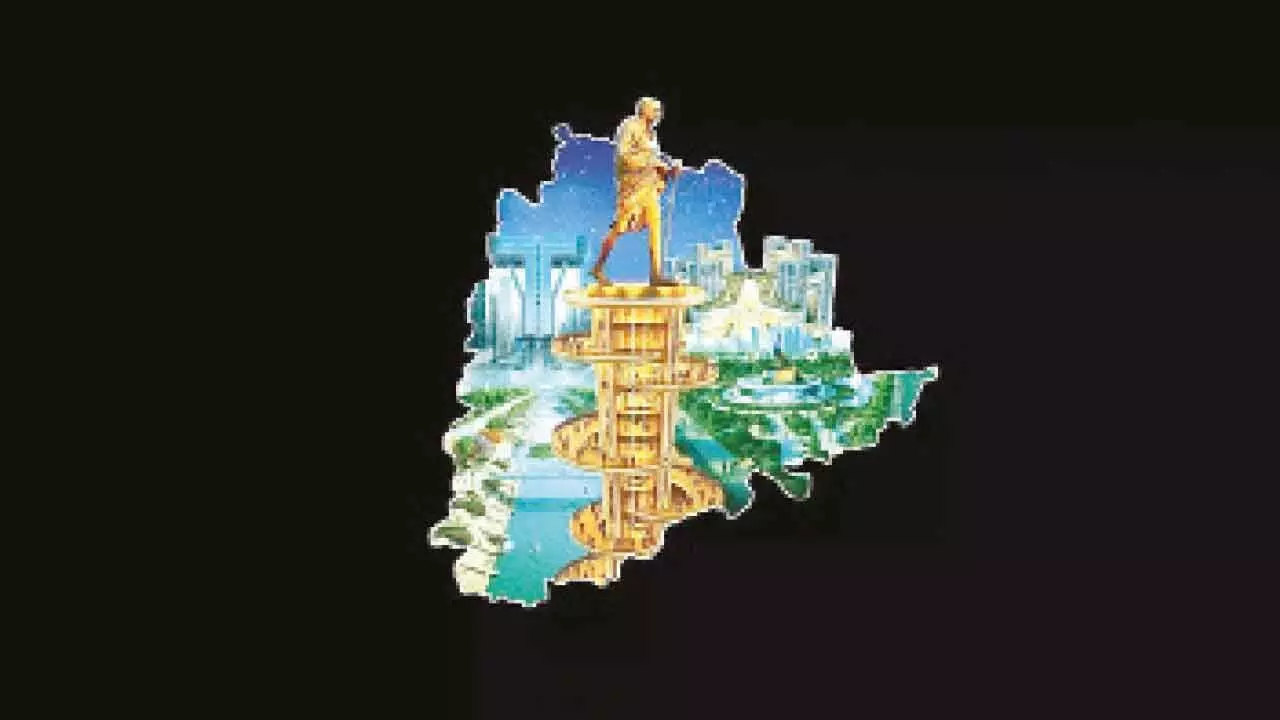
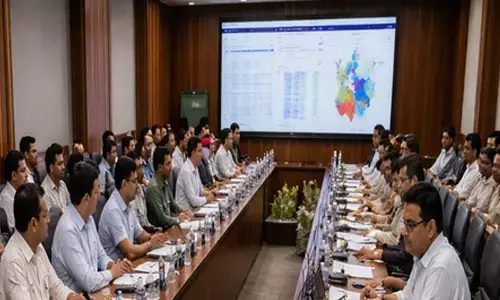
The Telangana Rising Global Summit took place on December 8–9 at Bharat Future City in Hyderabad. Participants developed and debated a future roadmap on many topics. But when you assemble a vision on education, health, food and housing, if the results are not delivered equally to everyone, the vision remains only on paper. People need to know how successful this global summit has been in meeting its goals
Advance plans are like checklists. They assess whether comprehensive development has taken place across all sectors and provide facilitation plans to support areas that need it. The Five-Year Plans introduced after Jawaharlal Nehru led India’s progress and helped national development. The reason leftist parties and countries like the United States did not pay much attention to India’s nonaligned policy and Five-Year Plans is that, ideologically, they were not inclined to encourage India to chart an independent course internationally.
Now, as some states in India are unveiling plans that aim at holistic development, an analysis of these plans is timely. It must be said that two Telugu states are ahead in formulating visions. The Vision 2020 that emerged in united Andhra Pradesh and, after the split, Vision 2047 in Telangana belong to that legacy. Andhra Pradesh Vision 2020 identified 11 goals to eradicate poverty. Notably, among those goals was care for senior citizens as well as support for people with chronic illnesses and disabilities.
The 2047 plan was created with the goal of taking the entire state forward on a development path that benefits everyone equally, alongside the wealthy. Reviewing these two vision documents shows they were drafted with the aim of advancing economic growth, environmental development, and social welfare through different approaches.
Although Telangana is smaller than Andhra Pradesh, it is trying to achieve more with its population and resource advantages. The issue of urban poverty that exists worldwide is mentioned many times in the 2047 Telangana document; it is also referenced in the Andhra Pradesh Vision 2020 document. Both the AP and Telangana documents recognize the role of women.
Each state’s vision document also makes specific proposals regarding industry. Any development or welfare program will yield the expected results only if implemented through a proper method and plan. These days, politicians take the word “vision” lightly. We often see prominent political leaders casually “refer” to Vision 2020 or Vision 2047 at political gatherings, boasting about them — and that is not helpful. When chief ministers or prime ministers are shaping future plans, they should not speak of them casually.
The central government has a vision: Bharat 2047 — a “Viksit Bharat” (Developed India)! This vision was created to advance India into the ranks of developed nations. Since 2047 will mark the 100th anniversary of independence, NITI Aayog, the Government of India, and economic planners have crafted this plan aiming for a $30 trillion economy. It’s built around new approaches and sustainable, good governance practices, with guiding principles to empower youth, women, farmers and the poor.
The Vision 2047 government portal is designed for citizen participation. With global recognition and self-reliance, this plan aims to raise the prosperity of India’s people. Economic growth, an Atmanirbhar Bharat (self-reliant India), inclusive progress (plans to ensure youth, women and the poor advance on equal footing), technology — these are some of Vision 2047’s key goals. Whether for states or the nation, setting goals is a good thing. It’s also commendable to set time limits to achieve them.
Deadlines can sometimes be an obstacle to achieving certain targets, but they shouldn’t cause us to step back from pursuing goals. If the pursuit of these targets becomes subject to political influence, even the best strategic thinking and planning risk being derailed. Vision architects may set timelines precisely to force such obstacles to be overcome.
Even if such plans are conceived by prime ministers or chief ministers, implementation falls to officials and representatives of the ruling party who are part of governance. At the local level, any “vision” can be distorted by vested interests. We have seen failures in the implementation of five-year plans in our states and in the country.
Whether at the state level or at the Centre, people commonly wonder: is a vision guiding action, or are schemes just paper plans? That doubt is real for ordinary citizens — and for some tech experts, too. If visions and government programs are designed in different ways, they will be implemented by different routes, and that is precisely what leads to deception. Right now the Telangana Rising 2047 global summit is getting wide media attention.
The Telangana Rising Global Summit took place on December 8–9 at Bharat Future City in Hyderabad. Participants developed and debated a future roadmap on many topics: green mobility and bringing vehicle emissions to zero; Tech Telangana 2047 with semiconductors and frontier technologies; positioning Telangana as a global education hub; advancing aerospace and defence to high levels; enabling talent mobility; providing equitable healthcare access; and expanding trade and strategic partnerships.
But when you assemble a vision on education, health, food and housing, if the results are not delivered equally to everyone, the vision remains only on paper. People need to know how successful this global summit has been in meeting its goals. If the government communicates the targets it has set and the milestones it intends to achieve within specified timeframes, people will gain confidence and be willing to move forward with hope — believing the vision is lighting the way.
To build trust in governments, the outcomes and achievements of different visions at the local level should be made public regularly. Failures must be disclosed as well, along with the roadmaps for how they will be overcome. Writing a vision is easy; citizens need to see the vision actually bringing light. Only then will it win broad acceptance.
(The writer is a retired IPS officer, who has served as an Additional DGP of Andhra Pradesh)