Change is inevitable even in technological usage

Wehave reached the end of 2025. In this quarter century, the world has seen technology move at such a speed that human life has had to keep up with it. By the year 2000, the word ‘future’ seemed a bit like science fiction. Watching videos on phones, managing office from home and transferring money, was perhaps foreseen by only a few. But as it turns out this has become commonplace in our daily lives.
These 25 years have not only been a period of technological advancement, but also a period of great change that has transformed human habits, relationships, work patterns, thoughts, and beliefs about the future.
The Internet brought the world together in one room!
In 2000, the internet existed, but the speed was slow and the usage was limited. But with the advent of smartphones and mobile internet between 2010 and 2020, life changed at an alarming speed.
Following the advent of 4G and the data revolution, the internet became not just a convenience for every Indian but a part of life. The way we read news changed. The way we get information has changed. Jobs, skills, and opportunities have all revolved around the internet. The entire world that was not available in our village has now become easily accessible. We, who once sought out cyber cafes for using the internet, have now reached a point where we cannot go a day without the internet.
Smartphone has swallowed everything:
The phone was once meant only for talking. But after the arrival of the smartphone, it has become multipurpose-a camera, clock, radio, notebook, dictionary, map, calculator and a music system. In a nutshell, a single device now handles 20 of our daily necessities. It’s not just a machine. It’s our personal world.
The phone camera has instilled the habit of documenting our daily lives. Social media has become a platform to express our feelings to the world. WhatsApp has brought family ties together in new ways, while video calls have reduced distances.
This device has transformed us to the point where it is difficult to work, make payments, and even communicate without a smartphone.
Digital payments-Money is not paper:
The UPI changed the way money is exchanged. We have reached a point where we can scan and pay even a rupee. From a small tiffin shop to a big mall…… everything is cashless, bank lines have reduced, financial transparency has increased
Opinions, arts and feelings are all on a new page, thanks to the advent of social media, which has given everyone the power to take the world forward, whether it’s a photo, video, art, or review. This has resulted in the birth of new writers; new filmmakers and growth of small businesses, while politics is social media driven.
Streaming:
Once upon a time, there was no other way to watch a movie than going to the theatre. But with the advent of OTTs in the last ten years:
-Stories have crossed the world and entered our homes
-Our tastes have expanded with world cinema, web series and documentaries
The platform for talent has grown and this has completely changed our entertainment habits.
Children raised with technology:
All those born in the 2000s are now adults. Their childhood was spent with mobile phones. They grew up closer to screens than books. Is this good or bad? It is still a big debate. But change has inevitably happened.
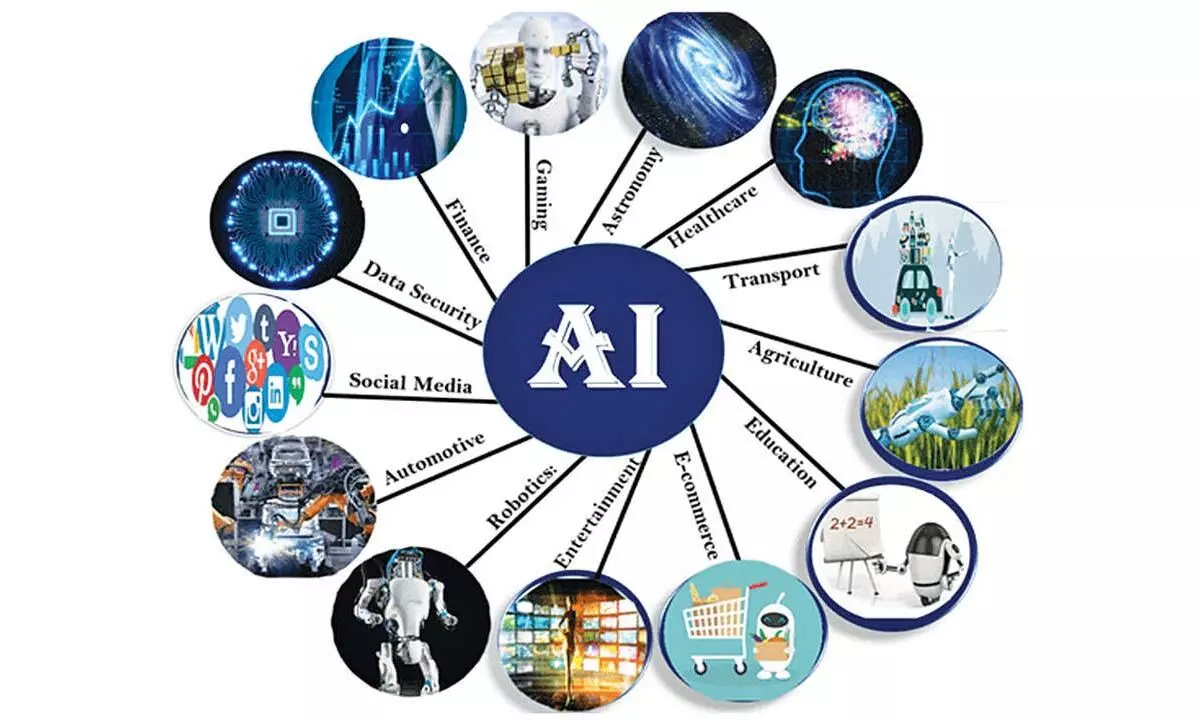
Now, the turning point of the next 25 years is the AI era!
The last 25 years have been the era of the internet, mobile, and digitalisation. And the next 25 years will be the era of artificial intelligence (AI).
What we are experiencing about AI right now are just small waves. In the future, these are going to become big waves.
Jobs change and so do skills:
On the one hand, AI will reduce old jobs, but on the other, it will also create new ones. With diagnostic systems that detect diseases early, treatment based on personal medical profiles, virtual doctors from home, health is shifting to a preventive model. Schools, coaching, lectures are all being redesigned to keep pace with the changing equations.
Human-machine collaboration will become essential in some tasks, such as household chores, factory work, and deliveries. Arts, music, film, and writing will advance faster and with greater diversity with the help of AI tools.
The changes that have come from 2000 to 2025 have come at the hands of man. There has been a revolution in every field, in housing, in banking, in communication and in entertainment.
The next 25 years? Well!!!