Bharath’s rural soul can once again start shaping global commerce

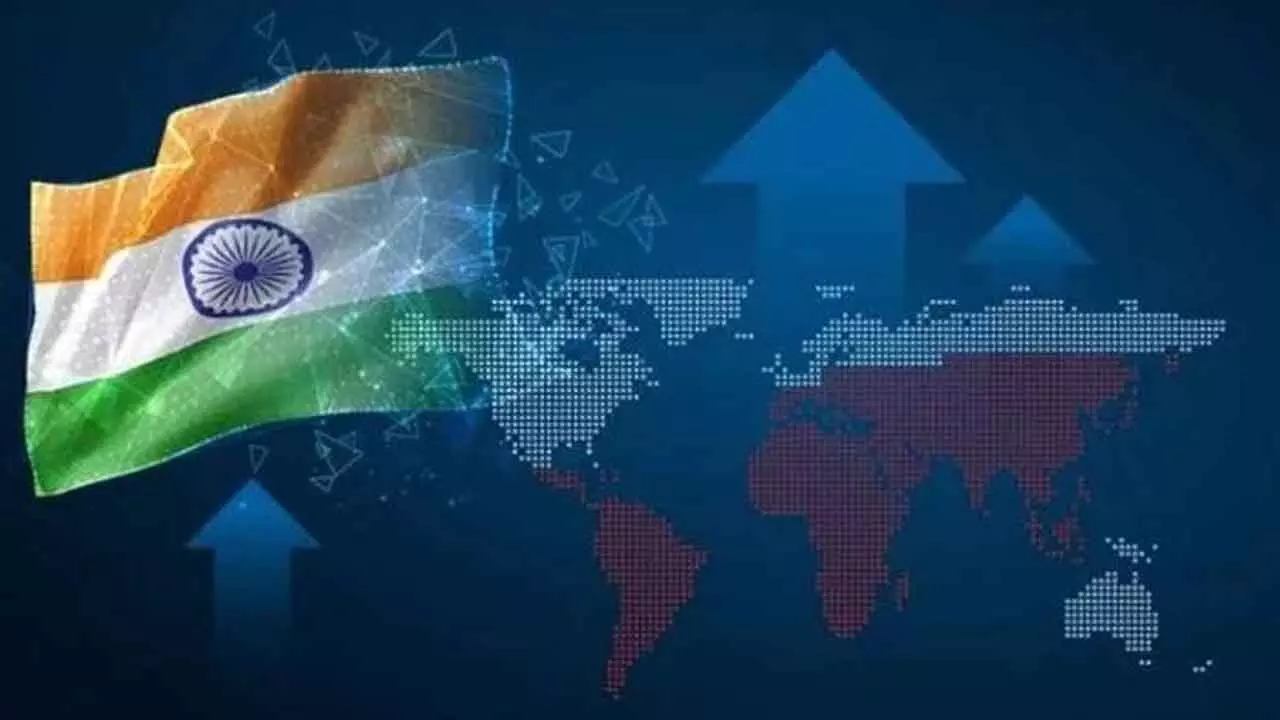
When we speak of Bharath today, it is often described as a developing nation finding its place in global markets. Yet history tells a different and far richer story.
There was a time when Bharath was not merely participating in world trade but shaping it. Long before modern economic rankings and industrial metrics, this land stood as the economic heartbeat of the world. Around 1700 CE, Bharath accounted for nearly one-fourth of global GDP, making it one of the largest economies of that era.
This prosperity did not emerge from massive factories or centralised production. It was built on a vibrant, decentralised system rooted in villages. Bharath’s textiles travelled from Bengal to Europe, its spices transformed cuisines across continents, and its steel, crafts and traditional medicines earned global respect. From the fine muslins of Bengal and the spices of Malabar to the silks of Kanchipuram and the crafts of Rajasthan, villages were not passive settlements. They were active centres of innovation, production and trade. Commerce was not merely an exchange of goods; it also marked movement of culture, knowledge and civilisational values.
From prosperity to disruption:
The decline of this flourishing system did not occur due to any lack of skill or enterprise among Bharatiyas. It followed colonial interventions that systematically dismantled indigenous industries. Artisans were pushed into poverty, village economies were weakened, and Bharath was reduced from a producer of finished goods to a supplier of raw materials. The most damaging loss was structural: the organic link between village production and global trade was severed. At Independence, Bharath inherited not its historic prosperity, but an economy shaped by distortion and deprivation.
The mother of all trades:
Today, the global economy faces fragile supply chains, environmental stress, rising unemployment and cultural uniformity. Ironically, many solutions now being discussed worldwide have long existed in Bharath’s villages. This integrated rural economic model can be called the “Mother of All Trades”. It encompasses agriculture linked with local food processing, handlooms blending culture with ethical fashion, traditional medicine aligned with global wellness, village crafts supporting sustainable lifestyles, and millets and natural foods reaching health-conscious consumers worldwide.
This model is labour-intensive without being exploitative, productive without harming the environment, and deeply local while remaining globally relevant. It balances growth with dignity and efficiency with sustainability.
Why it works:
At its core, this trade philosophy places the human being at the centre of economic activity. Every product carry’s identity, heritage and skill of its maker. It respects ecological balance and builds economic strength from the village upward. In today’s digital age, technology allows even small producers to access international markets directly, recreating, in a modern form, the connectivity once provided by ancient trade routes.
On the global stage:
As Bharath deepens its global engagement, trade must be measured not only in volumes but in values. Demand for ethical and sustainable products is growing in the United States and Europe. Japan places high value on craftsmanship and authenticity. Africa and Southeast Asia offer opportunities to revive historic trade links and support decentralized development.
Bharath’s export future cannot depend solely on software and services. The next wave must include handlooms, millets, Ayurveda, natural fibres, forest produce, rural tourism and artisanal industries—areas where Bharath has both heritage and global credibility.
History reminds us that this connectivity once thrived across regions such as coastal Andhra. Machilipatnam, the historic port town, was a major trading centre in the 17th century, exporting textiles and spices to Persia, Southeast Asia and Europe. It was among the earliest locations where European trading companies connected local producers to global markets.
Leadership that
understands the world:
Leadership plays a decisive role in shaping trade direction. Prime Minister Narendra Modi’s foreign diplomacy reflects a clear understanding that each country operates within its own economic and civilisational framework. He engages confidently with capitalist economies like the United States while safeguarding Bharath’s developmental priorities. Whether through technology partnerships with the US, manufacturing cooperation with Japan, energy ties with the Middle East or development partnerships with Africa, the guiding principle has been mutual benefit without dependency and engagement without compromising national interest. This approach has helped reposition Bharath from a passive market to a respected global partner.
The Bharatiya perspective:
Without turning trade into ideology, the country can still offer direction rooted in its civilizational wisdom. Bharatiya traditions emphasise balance—between individual prosperity and social good, consumption and conservation, markets and morality. Applied to trade, this means growth that uplifts the smallest producer, exports that protect the environment, and business models that strengthen communities. Globalisation is not rejected; it is humanised.
National reconstruction:
Reviving rural trade is not nostalgia; it is strategy. Strong village production reduces distress migration, increases women’s participation, encourages entrepreneurship, diversifies exports and builds cultural confidence. This is more than economic development. It is national reconstruction grounded in economic self-belief.
The future rises from the roots:
Bharath does not need to replicate the industrial excesses of the last century. The world is now searching for sustainable, humane and culturally rooted economic models. The country’s rural trade ecosystem offers exactly that. When villages prosper, Bharath becomes stable. When Bharath is stable, it becomes a trusted global partner. And when trade is guided by human values, prosperity is shared rather than concentrated.
That is how Bharath can once again lead the world—not through dominance, but through example.
When its villages connect to the world, trade becomes more than commerce; Bharath becomes a bridge between livelihoods, culture and global prosperity.
(The writer is BJP National Council member and spokesperson)