




- Kiren Rijiju, Arjun Ram Meghwal, Pralhad Joshi participate in 'Swachhata Hi Seva' campaign
- Anne Hathaway says during her pregnancy she could ‘smell time’
- Gold rates today in Delhi, Mumbai, and Kolkata slashes, check the prices on 1 Oct 2026
- Petrol and diesel prices today in Hyderabad, Delhi, Chennai and Mumbai on 1 October 2026
- Gold rates today in Bengaluru and Chennai slashes, check the prices on 1 October, 2026
- TN cybercrime police caution public against online scam offers
- Piyush Goyal, US Trade Representative Greer discuss India-US interim trade pact
- Lies, hatred and abuse have replaced governance, alleges former minister Puvvada Ajay Kumar
Be it ever so humble, there’s no place like home
In Short
Whilemany things are needed for people to lead happy and contented lives, food, shelter, and clothing are universally accepted as the basic minimum requirements of human beings.

Share :
Be it ever so humble, there’s no place like home
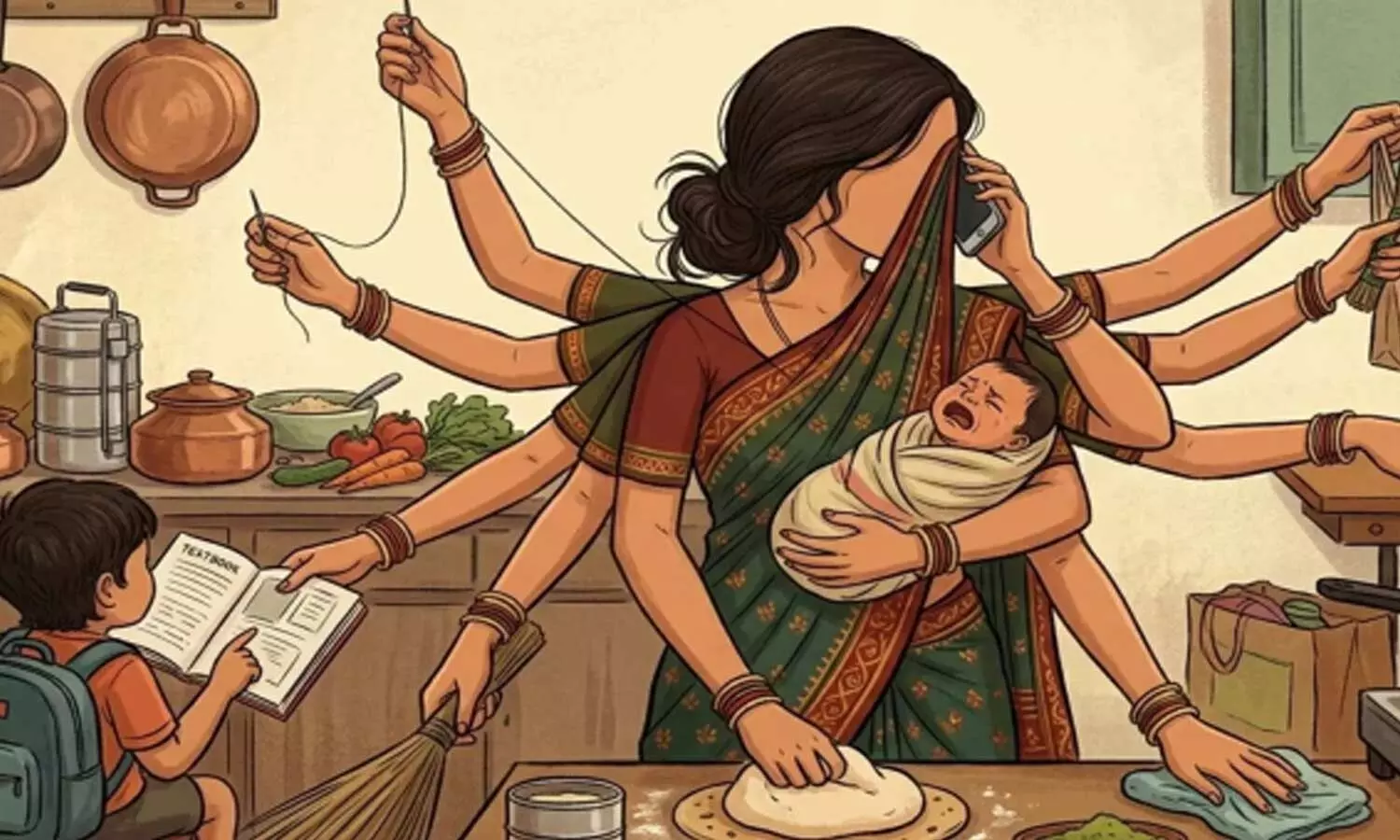
Homemakers are people who manage a household and care for a family as their main daily occupation instead of working for external income. Their responsibilities include raising children, supporting family members, and acting as primary care givers. They also take care of cooking meals, cleaning, organizing spaces, and handling day-to-day operations.
Whilemany things are needed for people to lead happy and contented lives, food, shelter, and clothing are universally accepted as the basic minimum requirements of human beings. There is in fact this adage in Telugu, which says that to have a home of one’s own and to perform a marriage in the family are the most important challenges in an individual’s life. In what follows, an attempt has been made to understand the role played by a shelter.
A shelter protects living beings from rain, strong winds, extreme climatic conditions, predators, and environmental dangers.
A home, on the other hand, is much more than a mere shelter, It is vital because it provides physical safety, emotional comfort, and a stable foundation for personal and family life. It is also a place of love, acceptance, and deep emotional support and offers a secure environment for all living beings. A home also serves as a central gathering place that binds family members together.
Organisations like Habitat for Humanity work globally to help families secure all lasting benefits in one’s house.
Primitive shelters have evolved into modern homes through major shifts in materials, permanence, and technology driven by human civilization. Prehistoric humans used natural geological formations, while nomadic groups built lightweight temporary huts using wood branches, animal hides, bones, and grass that were easy to assemble and dismantle. Once humans mastered the art of creating fire, some 400,000 years ago internal hearths transformed shelters into social hubs for cooking, warmth, and art.
After farming led to permanent settlements around 10,000 to 12,000 years ago, communities began to use sunbaked mud bricks, clay, and stone to build stronger walls, multi-room layouts, and courtyards for privacy.
In the medieval ages, engineering led to innovations and complex multi-storied concrete structures came up with piped water, and civic planning. Housing later diversified into peasant cottages, urban timber-framed townhouses, and fortified stone castles.
The advent of the industrial and modern eras, marked by industrial mass production, steel, iron, mass-produced brick, and glass was marked by high-density urban housing and skyscrapers.
Functional planning led to the contemporary smart and sustainable homes.
Modern residences use smart technology and green architecture, informed by climate automation, energy management, and high-speed connectivity, with eco-friendly designs using solar power, sustainable composite materials, and green roofs to fight climate change.
Providing concessional housing loans from banking and financial institutions besides providing subsidised homes for the poor are now important socio-economic priorities for the central and state governments.
The word ‘home’, by itself, or in conjunction with other words, is also used to stand for several other things in different contexts and situations. For example, the stadium where a local, or ‘home’, team plays its matches is known as the ‘home-ground’. Also, idiomatically, an area, environment, or topic that people know very well is called the ‘home’ ground, as they feel secure and in control because they understand the surroundings or the topic. A ‘home run’ in softball is another similar term.
An ‘At Home’ invitation stands for a highly traditional, formal style of invitation used to indicate that the host is holding a social gathering. Historically popular in 19th and 20th century high society, the format has evolved over time. The President of India and the Governors of States traditionally host an At Home, every year on Republic Day.
That expression, incidentally, triggers a somewhat unhappy though amusing memory. It was the 1976Republic Day, and I was the Secretary to the Governor of Andhra Pradesh, Sharda Mukherjee. She was very protocol conscious and fastidious about things needing to look absolutely spic and span on such occasions. Elaborate arrangements were in place for the garden party.
It was time for the Chief Minister to arrive and be received by the Governor, a sudden downpour happened, bringing with it absolute disaster. All the invitees had to rush into Raj Bhavan’s Durbar Hall. Alternative arrangements were made hastily,which, by no means, were up to the standards the Governor had expected. And, the Chief Minister, a person given to wry satire and known never to lose an opportunity to have a dig at others, sarcastically complimented me for lacking the quality of anticipation!
In a similar manner, to be ‘homely’ means to look plain or unattractive in the United States, although it refers to being cozy, comfortable, and unpretentious in the UK. The expression ‘homing instinct’ stands for an animal’s natural, built-in ability to find its way back to its home, nest, or breeding ground after traveling a long distance away.
Animals do not need a map or prior training, as they possess the innate ability to know how to return to their homes, using natural tools such as the sun, stars, the Earth’s magnetic field, smells, and visual memory, to navigate. Pigeons, for instance, are famous for flying hundreds of miles back to their exact loft, as are salmon fish, which swim across vast oceans and find the exact freshwater stream where they were born. Domesticated cats and dogs are also known to travel considerable distances across unfamiliar places to return to their owners. Yet another example is that of migratory birds, such as swallows and geese, which return to the same nests year after year.
An example of the word ‘home’ being used in conjunction with other words is ’homework’, which is a set of academic tasks assigned to students by their teachers to be completed outside of regular class hours. And ‘homemade’ refers to anything made at home, on the premises, or through your own personal efforts rather than being mass-produced in a factory or bought from a store.
Homemakers are people who manage a household and care for a family as their main daily occupation instead of working for external income. Their responsibilities include raising children, supporting family members, and acting as primary caregivers. They also take care of cooking meals, cleaning, organizing spaces, and handling day-to-day operations. In addition, they attend to housekeeping chores, such as shopping for household needs, budgeting, and maintaining the home environment.
In India, the Union ‘Home’ Ministry is a government department responsible for a country’s internal security, domestic law and order, and public safety.
The virtues of a home have often been a favourite subject matter for authors and composers. ‘Home Sweet Home’, for example, is an expression used when someone returns home after being away to show that they are happy to be back. The expression “Be it ever so humble, there’s no place like home”, is another example, which originates from the song “Home, Sweet Home!”, written for an opera.
The reference I made earlier in this article to the homing instinct, makes me recall an incident which caused me acute embarrassment when I was on a visit to the wonderful city of Kiel in Germany years ago, in connection with a lecture to be delivered in the University there. I have been blessed with the great virtue of being able to lose my way home, even within the colony where we reside in Hyderabad. And the city of Kiel afforded me a great opportunity to test the power of that trait of mine. In the four days that I spent there, not even on one occasion, out of a hundred or so, did I fail to break out into a nervous sweat, out of fear that I would never find my way back to the hotel where I was staying.
Each time, invariably, I just managed to return to it, having desperately sought directions from at least a dozen passersby!
(The writer was formerly Chief Secretary, Government of Andhra Pradesh)
Upasana Singh says Poonam Dhillon issued her show-cause notice for supporting Ranveer Singh amid Don 3 row
Kiren Rijiju, Arjun Ram Meghwal, Pralhad Joshi participate in 'Swachhata Hi Seva' campaign
Anne Hathaway says during her pregnancy she could ‘smell time’
Raj administration agrees to Beniwal's demands after massive protest in Sri Ganganagar
KCR family amassed Rs 1L-cr wealth: Revanth Reddy
Will complete 36 irrigation projects in 3 years: Naidu
CM Naidu calls for continuous skill training of govt staff
Job creation coalition govt’s only agenda: Lokesh
CM Vijay accuses AIADMK of aligning with DMK during Dharapuram campaign
Green energy scheme ‘big push’ towards achieving 900 GW non-fossil capacity by 2035: PM Modi


