AP and Telangana must house world-class public libraries

A strong public library system is not a luxury—it is an investment in human capital
A reader lives a thousand lives before he dies. The man who never reads lives only one – George R R Martin
Public libraries are more than spaces filled with books; they are gateways of opportunity, hubs of knowledge, and centres of community life. Sadly, both Andhra Pradesh and Telangana lag behind in nurturing such world-class public libraries.
In Andhra Pradesh, the absence of a significant library in the capital city of Amaravati highlights a cultural void. Though Hyderabad, as Telangana’s capital, boasts of the City Central Library and State Central Library, their infrastructure has not evolved to match international standards.
The closure of the British Library in Hyderabad, established in 1979, initially located on Secretariat Road, was subsequently moved to a new location in Jubilee Hills in April 2016. It has since shifted to a digital-only model, with its physical space on Road No. 36, which was closed in 2020 due to Covid pandemic. The library now offers online resources but there have been no further efforts to reopen the library.
The closure of the once-prestigious British Library in Hyderabad contrasts our scenario with internationally acclaimed libraries such as the Boston Public Library, New York Public Library, and Cumberland Public Library in Rhode Island, which I had the good fortune to visit.
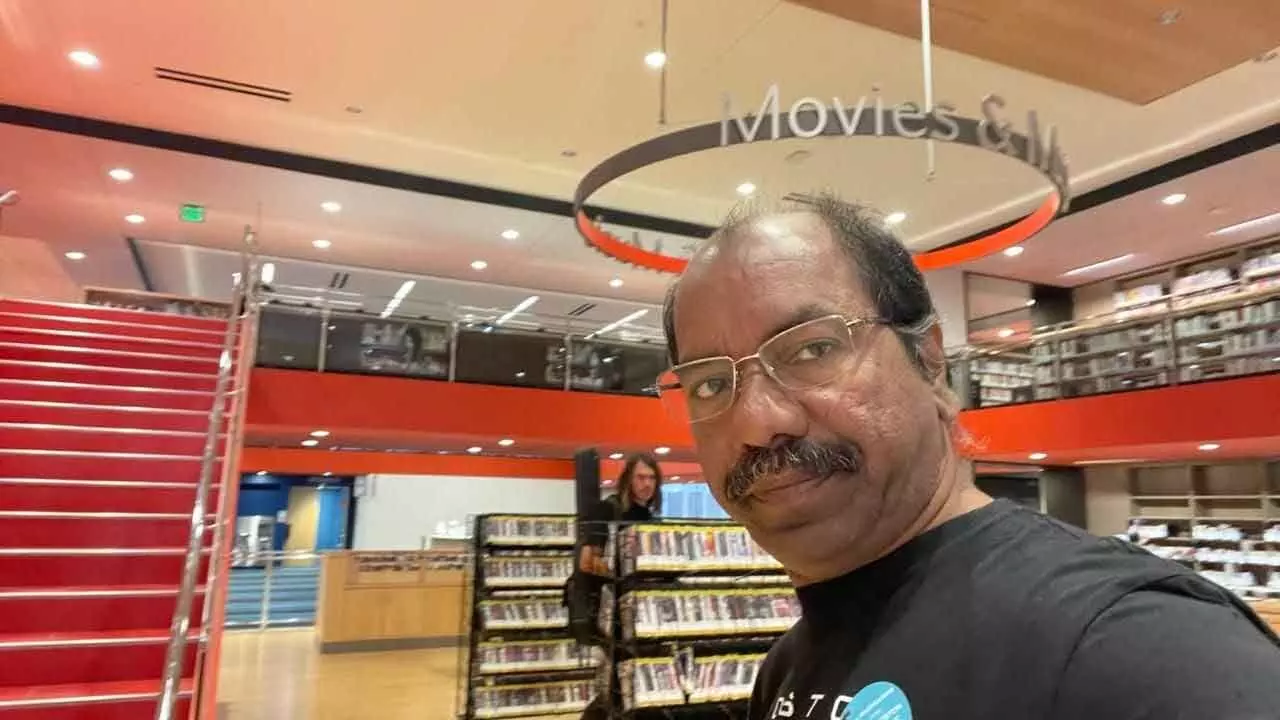
During my travels abroad, I witnessed what libraries can truly become. I spent memorable days at the Boston Public Library, the New York Public Library, and the Cumberland Public Library in Rhode Island. These institutions are vast, welcoming, and dynamic, offering not just access to books but also to seminars, workshops, and cultural exchanges. They allow borrowing without restrictions, host weekend programs for all ages, and provide facilities like coffee houses and relaxation spaces. They are places where learning blends seamlessly with leisure.
I would often travel by Amtrak from Providence to Boston and New York simply to spend entire days immersed in these libraries, returning home close to midnight. For me, it was nothing short of a pilgrimage—proof that libraries can transform lives and communities.
Back home, steps are being taken, though on a modest note. The recently opened Coforge Public Library in Hyderabad’s Kondapur IT corridor, with 15,000 books, is a welcome initiative. Yet, for a city of Hyderabad’s stature, much more is needed. Likewise, in Andhra Pradesh, the announcement by HRD Minister Nara Lokesh about establishing the biggest library in Visakhapatnam is encouraging. If realised, it could mark a turning point in the State’s intellectual and cultural landscape.
But announcements alone are not enough. We need libraries that are open round-the-clock, foster international partnerships, and evolve into vibrant public spaces. They should be designed to cater to children, youth, professionals, and senior citizens in equal measure, ensuring inclusivity at every level.
At a time when digital distractions dominate our lives, libraries remain one of the few public institutions where people of all backgrounds can gather for free, seeking both solitude and community. A strong public library system is not a luxury—it is an investment in human capital. The Telugu states now stand at the crossroads: either to allow libraries to fade into irrelevance or to reimagine them as the cultural and intellectual anchors of society. The choice should be clear.
It is time policymakers, philanthropists, and society realise that world-class libraries are the foundations of enlightened communities.
Libraries are not a luxury, but one of the necessities of life – Henry Ward Beecher.
(The writer is former OSD to former Union Civil Aviation Minister)