Connecting Research and SDGs: How Interdisciplinary Research Can Accelerate Global Development Goals

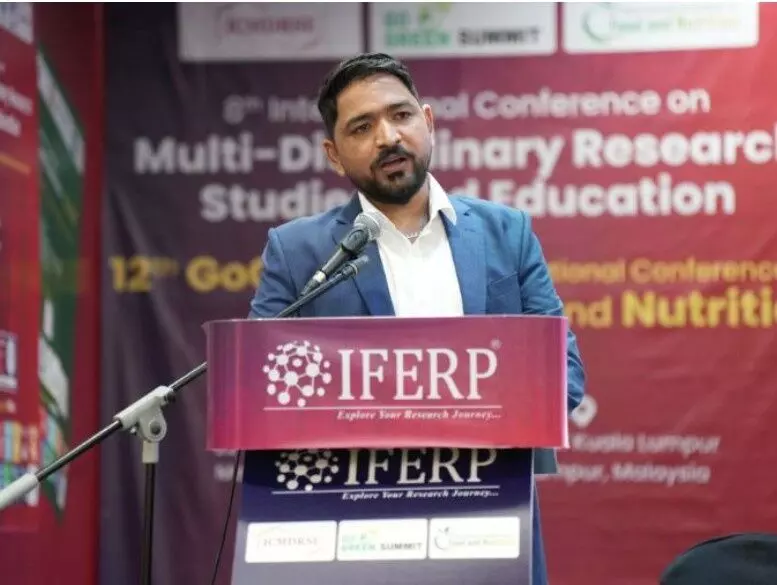
By Mr. Siddth Kumar Chajjer, Managing Director & Founder, IFERP, Technoarete Group
Chennai (Tamil Nadu) [India], February 17: As we tackle the world’s most critical challenges, from climate change and inequality to public health and education gaps, I have come to realize that no single discipline alone can deliver meaningful, lasting change. The SDGs provide a powerful shared agenda, but to truly advance these goals we need research that is collaborative, cross-disciplinary, and purpose-driven.
The SDGs are inherently interconnected. Progress on one goal often depends on progress in another. When we work on quality education, we uplift communities, empower women, enhance economic participation, and ultimately improve health outcomes. When we pursue sustainable energy, we reduce poverty, protect the environment, and create resilient infrastructure. In my view, this is the essence of interdisciplinary Research, bringing together expertise from science, technology, education, policy, and industry to address complex problems holistically.
In traditional research models, scholars often work within their own disciplinary boundaries. While this produces valuable insights, it can limit the broader impact of research on society. That is why interdisciplinary research must be the norm rather than the exception if we truly want to make progress toward the SDGs.
At IFERP (Institute for Educational Research and Publication), this belief underpins everything we do. From the moment we established IFERP, our mission has been to upskill the global knowledge community through innovation, collaboration, and excellence . We facilitate platforms that bring researchers from diverse backgrounds together to share ideas, challenge assumptions, and co-create solutions that matter.
One of our most impactful contributions is our international conferences, such as the 8th International Conference on Multidisciplinary and Current Educational Research (ICMCER-2026) in Bangkok, where scholars will explore how interdisciplinary insights can shape sustainable societies . These events create environments where educators, scientists, policy-makers, and industry professionals engage in rich dialogue beyond their individual disciplines. When engineers exchange ideas with educators, and environmental scientists connect with social innovators, innovation happens.
Beyond conferences, IFERP supports researchers through author services, training, and academic resources that strengthen research quality. Through editorial support, journal publication assistance, conference presentations, and workshops, we help researchers turn rigorous research into real impact . Our platforms also provide access to indexed publications, mentorship programs, and avenues that elevate research visibility globally.
To create a research ecosystem aligned with the SDGs, we need frameworks that encourage collaboration by design. Practical approaches that I advocate includes:
- Collaborative research clusters that combine experts from multiple fields
- Problem-first research design that begins with societal needs instead of academic silos
- Industry-academia partnerships that translate research into implementable solutions
- Global knowledge networks that continuously share best practices
- Implementing these approaches means research becomes more than academic publishing, it becomes a force for positive societal transformation.
Across the global research community, I have seen inspiring examples of SDG-aligned interdisciplinary work. Projects integrating educational technology with pedagogy are enhancing access to quality education in underserved regions. Sustainable engineering research is enabling cleaner energy solutions. Social science research is supporting inclusive policy frameworks for vulnerable communities. These efforts directly contribute to multiple SDGs and prove that research, when purposefully aligned, can generate tangible impact.
However, meaningful interdisciplinary research also requires strong policy and institutional support. Governments and academic institutions must invest in interdisciplinary funding, reward collaborative efforts, and integrate research outcomes with policy design. Without such support, valuable insights risk remaining confined to academic journals rather than shaping real world solutions.
To the research community, especially early-career scholars, I encourage you to see the SDGs not as abstracts, but as actionable frameworks that can guide meaningful inquiry. Through IFERP’s ecosystem of conferences, author services, global collaborations, and academic communities, we are committed to empowering researchers whose work strives towards the betterment of society.
Interdisciplinary research is not a trend; it is a necessity for global progress. When we connect knowledge across disciplines and align research with sustainable development goals, we unlock the potential to create a more just, equitable, and sustainable world.
Authored By Mr. Siddth Kumar Chajjer, Managing Director & Founder, IFERP, Technoarete Group