Conclave on 'Spotlighting Decision Intelligence in the Age of Intelligent Enterprises' held

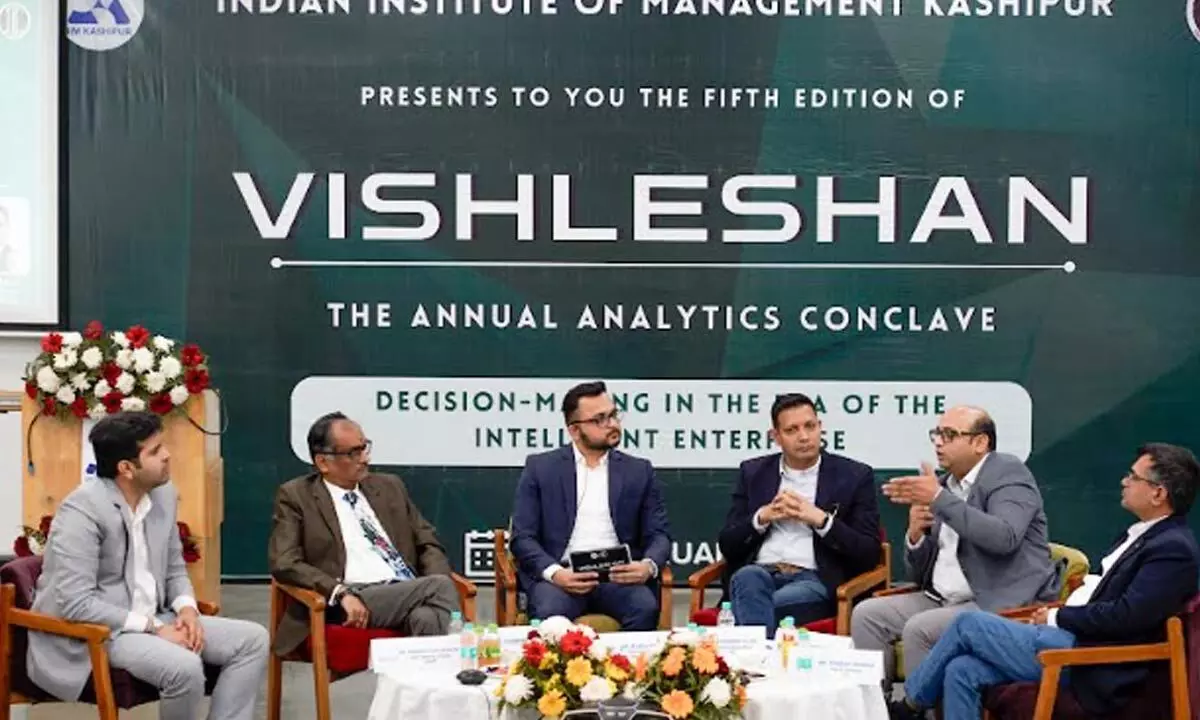
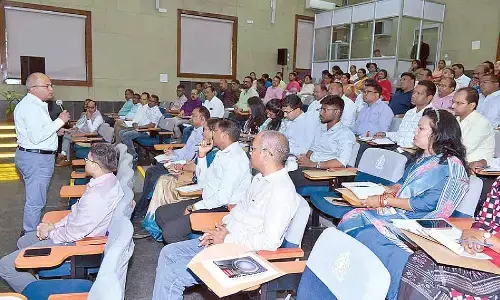
The Indian Institute of Management Kashipur successfully organised Vishleshan – The Annual Analytics Conclave, themed “Decision Making in the Era of the Intelligent Enterprise.” The event brought together distinguished industry leaders, data practitioners, and technology experts to explore how organisations can transform data into enterprise-wide decision intelligence.
The conclave served as a dynamic platform for thought leadership and dialogue, focusing on the evolving intersection of analytics, governance, artificial intelligence, and business value creation.
Abhinav Vijayvargiya, CFO, Scaler, highlighted that strong data management and analytical tools are critical for effective decision-making. He noted that personalisation models used by platforms like Netflix demonstrate how data can shape consumer behaviour, while the speed of data collection determines ownership and accountability.
Anand Aggarwal, Group CTO, Bennett Coleman & Co. Ltd (The Times Group), stated that data has no value without integration. He emphasised that as AI advances, decision intelligence preferences are evolving rapidly, and organisational resistance to change remains the biggest barrier to impact—advocating a “fail fast, recover fast” mindset.
Chandan Vijay, Global Chief Data Officer, ABB Energy Industries, stressed the importance of embedding feedback loops in data-driven decisions. He underscored governance as the foundation of enterprises and highlighted that true value creation lies in enabling smarter decisions, not just financial outcomes.
Devroop Bhattacharya, Director – Data & Analytics, PwC India, spoke about the rise of precision-driven organisations. He noted that while data exists in multiple forms today, the real challenge is consolidating it and extracting relevant, business-aligned insights.
Gaurav Sharma, Head of Technology – Fresh Foods Business, ITC Limited, emphasised understanding data sources and empowering the right stakeholders. He added that ROI from analytics should be measured not only in financial terms but also through throughput and KPI improvements.
The session was moderated by Rahul Birari, Product Manager, Orient Electric Ltd, alumnus of IIM Kashipur who guided discussions on execution speed, governance adoption, AI management priorities, and defining the key pillars of ROI.
Speaking on the pace of change in the digital era, Chirag Suresh Mehta, Chief Data and Analytics Officer, Star Health and Allied Insurance Co. Ltd., noted that with rapid technological evolution, individuals are proactively upskilling themselves to remain relevant and competitive.
Highlighting the need for responsible adoption, Deepak Kulkarni, Associate Director, IBM, emphasised that while AI can greatly improve efficiency, organisations must carefully consider regulatory and compliance requirements. He stressed the importance of establishing clear guardrails to ensure ethical and sustainable implementation.
Sharing a people-centric perspective, Rishi Seth, Senior Director, Fractal, stated that organisations should rely on human judgment for decision-making, using artificial intelligence as a support system rather than a replacement.
Nilotpal Das, Director of Solution Delivery, Novartis, advised organisations to clearly identify the core problem, understand who it impacts, and determine how it can be meaningfully addressed to drive effective outcomes.
Moderating the discussion, Subhadev Pal, Product Manager, Zeta, alumnus of IIM Kashipur guided the conversation toward practical applications of intelligence-driven systems in complex business environments.
Supporting the agenda of the conclave, Indian Institute of Management Kashipur faculty members Prof Utkarsh, Prof Deepak, and Prof Kunal Ganguly, were present at the event.Through platforms such as Vishleshan, IIM Kashipur continues to strengthen industry–academia collaboration, fostering responsible adoption of analytics and preparing future leaders to drive intelligent, data-led decision-making across enterprises.