Breaking office politics: New book exposes hidden power games stifling india's corporate talent

Former IIM Ahmedabad classmates draw on industry experience to analyse merit, power, and workplace dynamics in Indian corporations
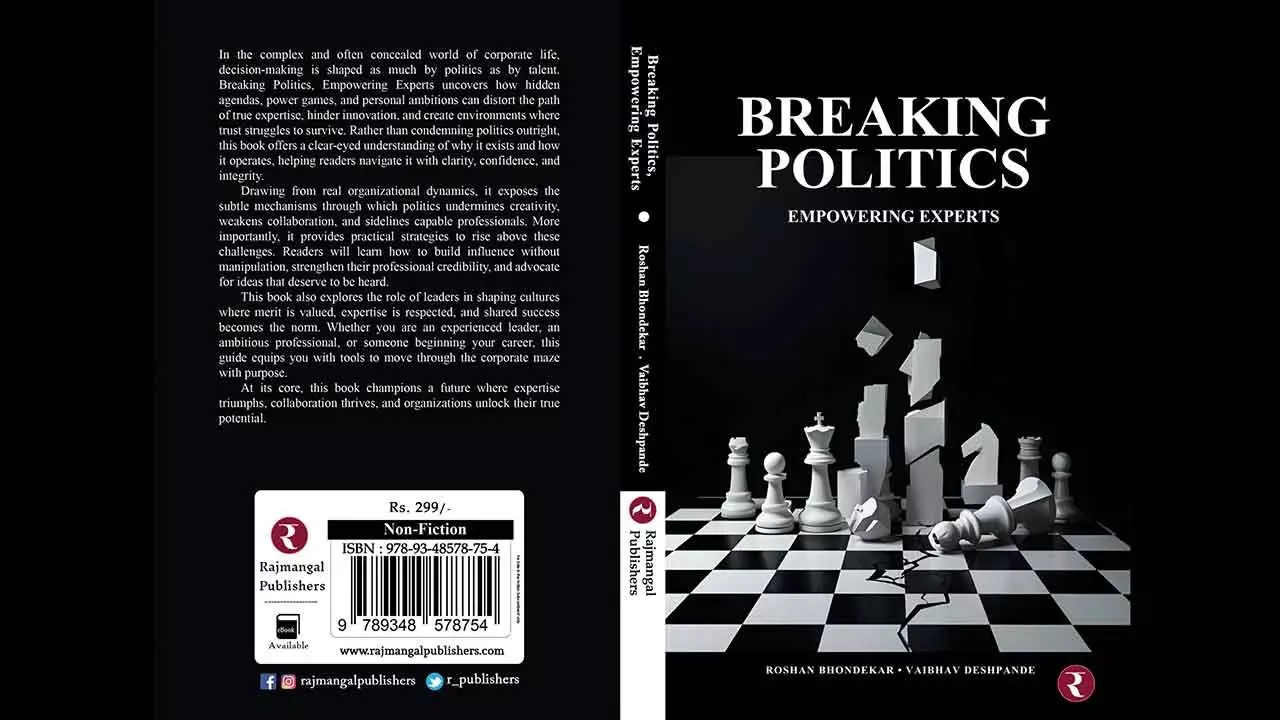
A forthcoming nonfiction title by two senior Indian technology leaders is set to spark conversation around an issue many professionals experience but rarely discuss openly: corporate politics. Breaking Politics – Empowering Experts, co-authored by Vaibhav Deshpande and Roshan Bhondekar, is scheduled for release on January 26, 2026, a date deliberately chosen to coincide with India’s Republic Day. Published by Rajmangal Publishers, Aligarh, the book takes a close look at how informal power dynamics often outweigh merit, skill, and performance in modern organizations.
Drawing from decades of leadership experience across technology, manufacturing, finance, healthcare, and services, the authors argue that decision-making in many companies is driven less by measurable outcomes and more by alliances, perception management, and internal rivalries. Rather than presenting personal grievances, the book adopts an analytical tone, identifying recurring patterns that transcend industries and geographies.
Both Deshpande and Bhondekar are alumni of the 2012 Management Development Programme at IIM Ahmedabad. Deshpande, currently the Chief Information Officer at AIT Global India in Pune, brings over 20 years of experience in steering large-scale digital transformation initiatives across sectors such as telecom, banking, pharmaceuticals, and logistics. Bhondekar, an Indian-Spanish entrepreneur with more than 17 years of experience, blends insights from IT consulting, strategic advisory roles, and creative pursuits including filmmaking. Together, they examine how narratives, visibility, and perception frequently shape authority within corporate hierarchies.
The book traces the roots of workplace politics to factors such as rigid hierarchies, limited leadership roles, unclear accountability, and reward systems that prioritize visibility over delivery. It cautions that even organizations claiming to be merit-driven often expect employees to develop political skills to advance, a reality that has become more pronounced amid India’s rapid economic growth and competitive professional environment.
Structured around different career stages, the book explores how early-career professionals struggle to identify biased feedback, how mid-level experts juggle technical excellence with relationship management, and how senior leaders attempt to balance fairness amid competing interests. Importantly, Breaking Politics – Empowering Experts goes beyond diagnosis, offering practical strategies to navigate organizations without engaging in toxic behavior. These include identifying informal power networks, rigorously documenting contributions, building credibility through consistent delivery, and aligning efforts with organizational priorities.
The authors also call for leadership reforms that emphasize transparency, clarify decision-making processes, and reward collaboration and expertise. Rajmangal Publishers, traditionally known for Hindi literature and socially driven titles, views this English-language release as a timely reflection of India’s evolving professional landscape, particularly in light of rising concerns around favoritism, burnout, and attrition in the IT and services sectors.
Adding a philanthropic dimension, Deshpande and Bhondekar have pledged to donate all proceeds from the book to orphan support initiatives. While not central to the book’s thesis, the gesture underscores a growing trend among Indian professionals to link career success with social responsibility.
As conversations around workplace culture intensify, Breaking Politics – Empowering Experts positions itself as a measured and thoughtful contribution to the ongoing debate on restoring merit, ethics, and trust in corporate environments.