Artificial Intelligence, Social Media Blamed for Rising Psychological Distress

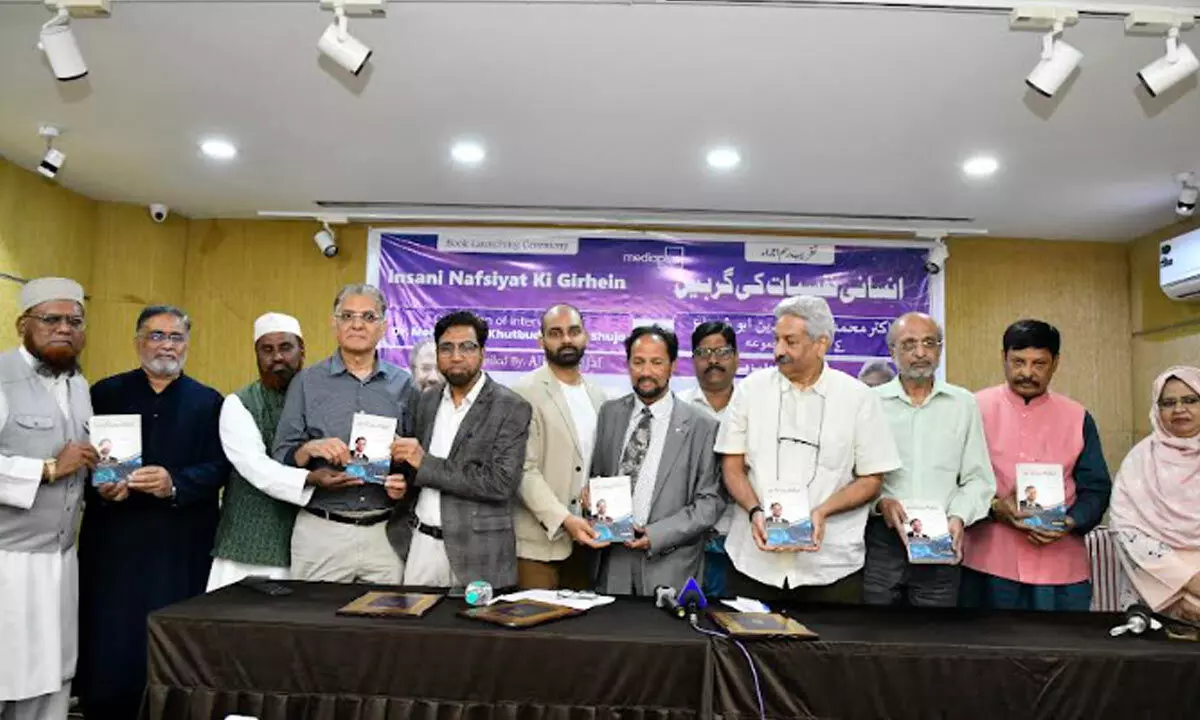
Hyderabad: Concerns over the psychological consequences of growing dependence on artificial intelligence, social media culture, and declining human interaction dominated discussions at the release of Insani Nafsiyaat Ki Girehen in Hyderabad on Monday.
The book, featuring interviews with Indian-American psychiatrist Dr. Mohammed Khutbuddin and authored in Urdu by UK-based psychiatrist Dr. Alizeh Najaf, was released at the Media Plus Auditorium in a programme organised by Media Plus Foundation. The event brought together medical professionals, academics, media representatives, and members of civil society to examine the growing mental-health challenges facing modern society.
Speaking on the occasion, Dr. Khutbuddin emphasised that the increasing prevalence of psychiatric disorders is closely linked to technology-driven lifestyles. He noted that excessive reliance on artificial intelligence and digital platforms risks weakening independent thinking, emotional resilience, and reflective habits. According to him, social media trends promoting glamour, comparison, and consumerism are contributing to emotional dissatisfaction and strained interpersonal relationships.
He stressed that the absence of empathy, compassion, and meaningful social bonds lies at the core of many psychological issues, urging individuals to maintain balance through moderation, introspection, and deeper personal connections. Sustainable mental well-being, he said, depends not only on clinical treatment but also on strengthening emotional and spiritual awareness.
Former Director General of Police Syed Anwar-ul-Huda highlighted the growing paradox of emotional isolation despite technological connectivity, observing that individuals may have extensive online networks yet lack genuine human support. He emphasised the importance of resilience, community engagement, and emotional support systems to address stress and anxiety.
Former Doordarshan Director Dr. Shujath Ali Sufi described loneliness as a major contributor to depression and urged early psychiatric consultation to prevent long-term psychological complications affecting individuals and families.
Presenting an academic perspective, scholar Dr. Rafia Nousheen noted that a large segment of the population experiences varying degrees of mental stress, underscoring the need for awareness, counselling access, and structured support systems to address emerging mental-health concerns.
The programme was moderated by Dr. Fazil Hussain Parvez, while Syed Khaled Shahbaaz welcomed the gathering and delivered the vote of thanks.
Speakers collectively concluded that while technological progress has transformed daily life, maintaining mental health requires conscious efforts to preserve empathy, social interaction, and reflective living. The discussions underscored that balanced use of technology, coupled with compassion and community engagement, remains essential to counter rising psychological distress in the digital era.