




- 3,100 pregnant women shifted to hospitals
- 26 counters set up at ANU
- YSRCP seeks strong security for civic polls in Tirupati
- TTD officials inspect water reservoirs in Tirumala
- Tirupati gears up for Mayor election counting with tight security
- Over 1,500 police personnel to be deployed for poll security in Chittoor district
- TDP internal rifts may blunt NDA edge in Nellore local body polls
- Tirupati dist administration ready for local body elections
AI Is Changing the Teacher’s Role: From Source of Knowledge to Judge of Knowledge
In Short
For generations, teachers have been central sources of knowledge in the classroom.

Share :
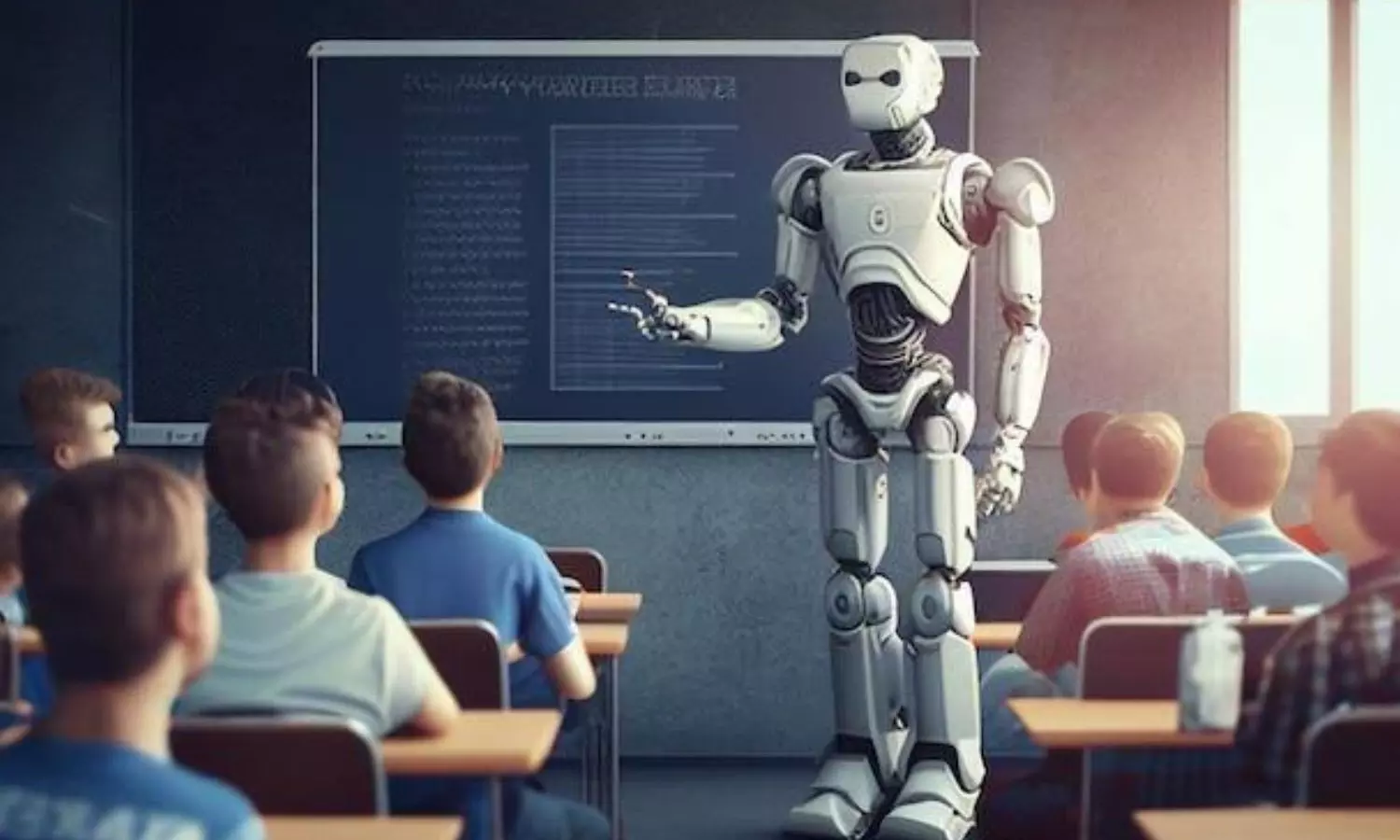
For generations, teachers have been central sources of knowledge in the classroom.
For generations, teachers have been central sources of knowledge in the classroom. They brought subject expertise, experience and carefully selected information to lessons, while students relied on them for explanations and guidance. Artificial intelligence (AI) is changing this dynamic by making information more readily accessible, prompting educators to reconsider how they teach and assess learning.
Deblina Chakraborty, Principal, Shiv Nadar School, Faridabad, on how artificial intelligence is reshaping teaching, assessment and the importance of independent thinking.
Today, students can use AI tools to generate detailed, well-structured answers within seconds. However, fluent responses are not necessarily accurate or complete. They may contain errors, reflect bias or overlook important context. As a result, the teacher’s role increasingly involves helping students evaluate information, question claims and determine what deserves further investigation.
Consider a student researching climate change. Reports, opinion pieces, videos, datasets and AI-generated summaries may offer different explanations. The challenge is not simply finding information but assessing its credibility. Who produced it? What evidence supports the claim? Is the information current, and does it present different perspectives fairly? These questions are becoming essential to everyday learning.
AI literacy must therefore extend beyond knowing how to operate digital tools. Students need to learn how to verify information, recognise potential bias and take responsibility for the material they use. They should also understand how the questions they ask influence the responses they receive. Revising prompts, exploring alternative perspectives and asking for supporting evidence can help them engage more critically with AI-generated content.
Transparency is equally important. When students use AI for assignments, they should be able to explain what the tool contributed, which information they verified, what they rejected and how their own thinking shaped the final work. This makes the learning process more visible and encourages students to take ownership of their decisions.
These changes also raise questions about assessment. Traditional examinations often measure students’ ability to recall and apply knowledge within a limited period. While these skills remain important, AI can now generate responses to many structured questions. Educators may therefore need to place greater emphasis on how students reach conclusions, justify their reasoning and respond to new evidence.
Assignments could ask students to defend a position, compare conflicting accounts, explain how their understanding developed or revise an argument after receiving additional information. Such approaches can help teachers assess not only the final answer but also the reasoning behind it.
Yet technology cannot replace the human relationships at the heart of education. Teachers can recognise when a student is struggling, respond to emotional needs and bring ethical considerations into classroom discussions. They can also draw on lived experience to help students understand that knowledge involves judgement, responsibility and context, not simply the collection of facts.
Preparing students for this environment requires teachers to model intellectual humility. Questioning sources, acknowledging uncertainty and revising an opinion when evidence changes are habits students can learn by observing adults practise them.
The question is not whether students will use AI, but whether they can use it without surrendering their independent judgement. As access to information becomes easier, education must continue to develop students’ ability to think critically, assess evidence and make informed decisions. The challenge for schools is to ensure that polished answers are not mistaken for genuine understanding, and that technology strengthens rather than replaces the process of learning.
Naidu puts preliminary cyclone loss at Rs 4,600 cr
Double Trouble: Fresh system in Bay of Bengal threatens AP with heavy rain
Cabinet nod for Rs 3,125-cr payout to farmers today
Post devastation by Arnab: Vizag limps back to normal in 48 hours!
5.42 lakh farmers hit, losses put at Rs 177 cr
Hyderabad staring at summer water crisis


