AgriTech Hackathon 2025–26 bridges gap between farmers and engineers

Mumbai: At a time when Indian agriculture faces mounting challenges from erratic weather, shrinking water resources and declining soil health, Somaiya Vidyavihar University is reshaping engineering education to respond directly to farmers’ needs. The AgriTech Hackathon 2025–26 demonstrated this shift by encouraging students to move beyond theory and engage with cultivators on the ground before building technology solutions.
Led by the K J Somaiya School of Engineering and organised by its Department of Electronics and Computer Engineering in collaboration with the K J Somaiya Institute of Applied Agricultural Research (KIAAR), Karnataka, the two-phase national initiative sought to build a meaningful bridge between Kisan (farmer) and Vigyan (technology).
The first phase of the hackathon was held at KIAAR in Karnataka, where more than 40 student teams stepped into the fields instead of classrooms. They interacted with over 300 farmers, agricultural scientists and industry experts to understand pressing concerns — from soil conservation and irrigation efficiency to crop disease management, nutrient optimisation, yield forecasting and sustainable farming practices.
These conversations resulted in 26 problem statements grounded in real, everyday agricultural challenges.
The event also saw participation from Dr P L Patil, Vice Chancellor of the University of Agricultural Sciences, Dharwad, alongside representatives from leading agricultural universities, Godavari Biorefineries Limited, research institutes and the farming community.
Dr Nandkumar Kunchge, Director at KIAAR, said the collaborative model ensured that innovation remained closely aligned with actual agricultural needs. By involving farmers, researchers and students throughout the process, he noted, the likelihood of developing practical and sustainable solutions increased significantly.
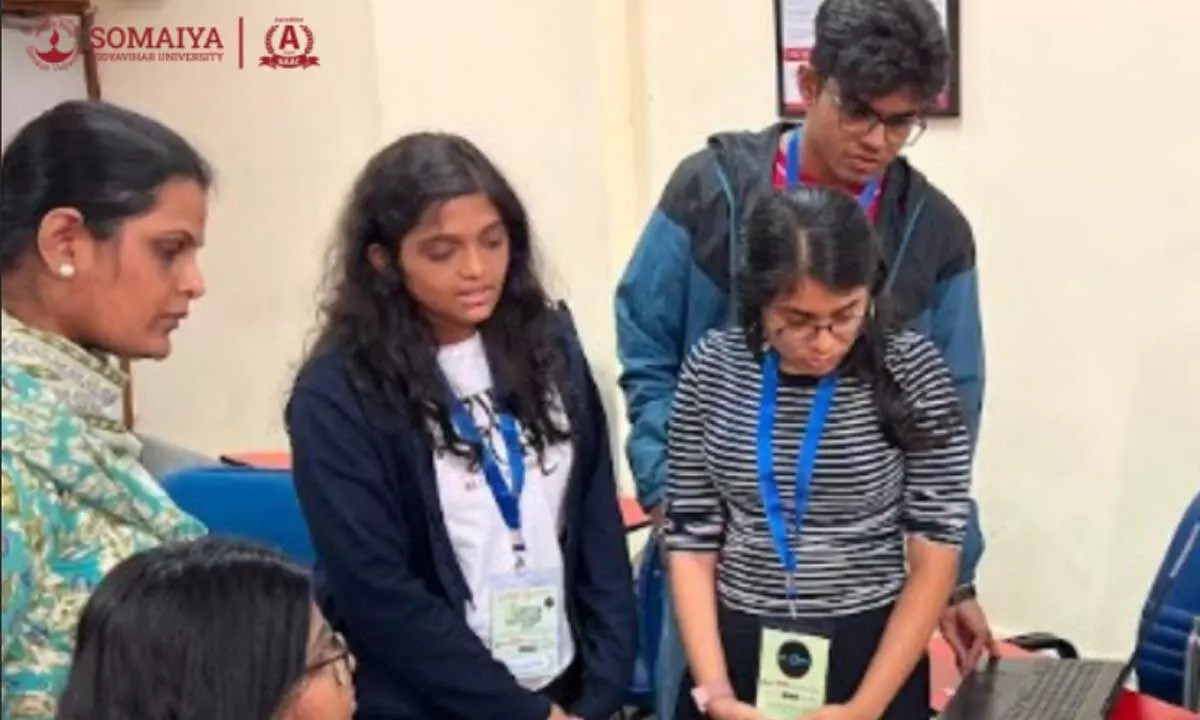
The second phase took place at the Mumbai campus of Somaiya Vidyavihar University. Drawing from their field observations, student teams from across India worked intensively over 24 hours to design agri-tech solutions addressing irrigation systems, disease detection, nutrient management, yield prediction, sensor-based applications and sustainable farming techniques.
Working within real-world constraints, participants refined prototypes aimed at delivering measurable, long-term impact for farming communities.
The hackathon culminated with an address by chief guest Rahibai Soma Popere, recipient of the Padma Shri and the Nari Shakti Puraskar. Widely known as the “Seed Mother of India,” she shared her journey of conserving indigenous seed varieties and emphasised the importance of soil health and sustainable practices.
Her message — “If we protect the soil, agriculture will survive; and if agriculture is saved, the next generation will thrive” — resonated strongly with students, reinforcing the idea that technology must respect and work alongside nature.