Six yards, infinite possibilities: The saree’s enduring appeal in a changing world

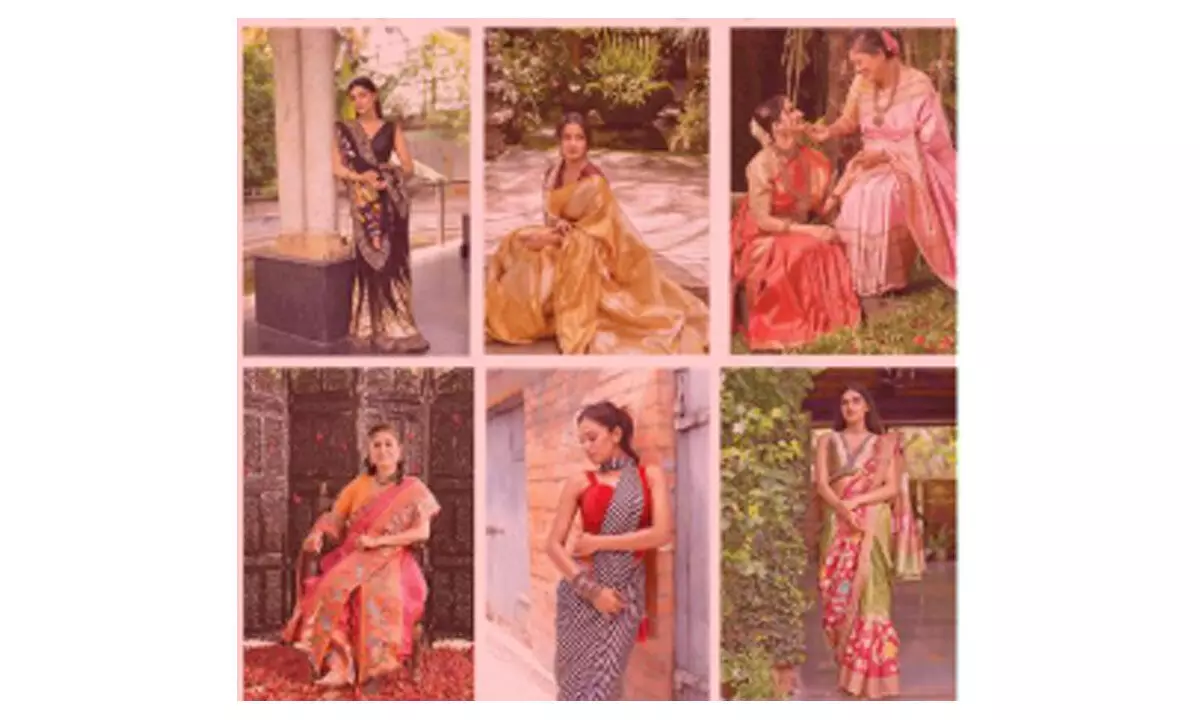
Fluid, graceful, and endlessly adaptable, the saree is not just a garment but an expression of India’s living heritage. Woven with history and artistry, it carries the spirit of generations while evolving with time. In its six yards lie stories of identity, resilience, and timeless beauty
A saree, India’s most fluid and enduring garment, is more than just six yards of fabric. It is a living language of identity, evolution, and artistry that continues to reinvent itself while staying rooted in tradition. Woven into its folds are centuries of craftsmanship, cultural memory, and the quiet power of continuity.
The saree’s origins stretch back thousands of years, to a time when fabric was not just worn but lived in - when every weave, motif, and drape spoke of geography and community. From the regal Kanjeevarams of Tamil Nadu to the intricate Banarasis of Varanasi and the delicate Chanderis of Madhya Pradesh, every style tells a story of its land and people. Together, they form a textile map of India - diverse yet connected, evolving yet eternal.
Over centuries, this unstitched fabric has witnessed history unfold. The saree has draped freedom fighters, royalty, artists, and everyday women alike. It has symbolised both defiance and decorum as much an emblem of quiet resistance as of elegance and grace. The duality of the saree defines its enduring charm: traditional yet modern, modest yet bold, understated yet powerful.
Each generation has reinterpreted the saree in conversation with its time. The early 20th century saw the rise of the tailored blouse and petticoat, transforming the way the saree was worn. Post-Independence, it became a symbol of empowerment - of Indian women stepping into public life while holding on to their cultural identity. In today’s globalised world, it has found new expressions through experimental fabrics, fusion drapes, and contemporary styling. Designers pair it with belts, shirts, or jackets, while influencers across platforms reinterpret drapes to suit their individuality. The saree moves effortlessly between tradition and trend, proving its relevance in every era.
Its journey, however, isn’t limited to India’s borders. As the Indian diaspora travelled across the globe, the saree travelled with them - folded carefully into suitcases, unpacked in new cities, and reimagined in new contexts. It is now both a symbol of heritage and an evolving fashion statement. For many, it carries the comfort of nostalgia; for others, it represents a bridge between cultures, a garment that belongs everywhere.
The global stage has only amplified this appeal. Cinema, pop culture, and social media have further expanded its influence. Bollywood continues to immortalise the saree on screen, while global runways showcase it as couture. It has become a garment that transcends borders and speaks a visual language of its own. Once seen as exclusively traditional, it is now embraced by a generation that values authenticity, craftsmanship, and individuality.
In an age of fast fashion, this timelessness feels especially relevant. The saree stands apart as a form of sustainable luxury - each piece designed to last, to be re-styled, re-purposed, and passed down as an heirloom. Long before the phrase “circular fashion” entered the lexicon, the saree embodied the principle of timeless wear. Every thread, every weave, carries within it the memory of those who wore it before, and the promise of those who will wear it next.
Perhaps that is the saree’s greatest strength - its infinite possibilities, its ability to transform with time, person, and purpose. Whether draped in the classical Nivi style or reimagined as a pant-saree or gown, it remains unmistakably itself: elegant without effort, timeless without trying. More than a garment, it is a thread that binds generations - a living legacy of grace, resilience, and imagination.
In a changing world, few garments manage to be both timeless and transformative. The saree is one of them - six yards that hold infinite stories, infinite beauty, and infinite possibilities.
(The writer is a Co-founder, Mysore Saree Udyog)