Rural women power industrial change

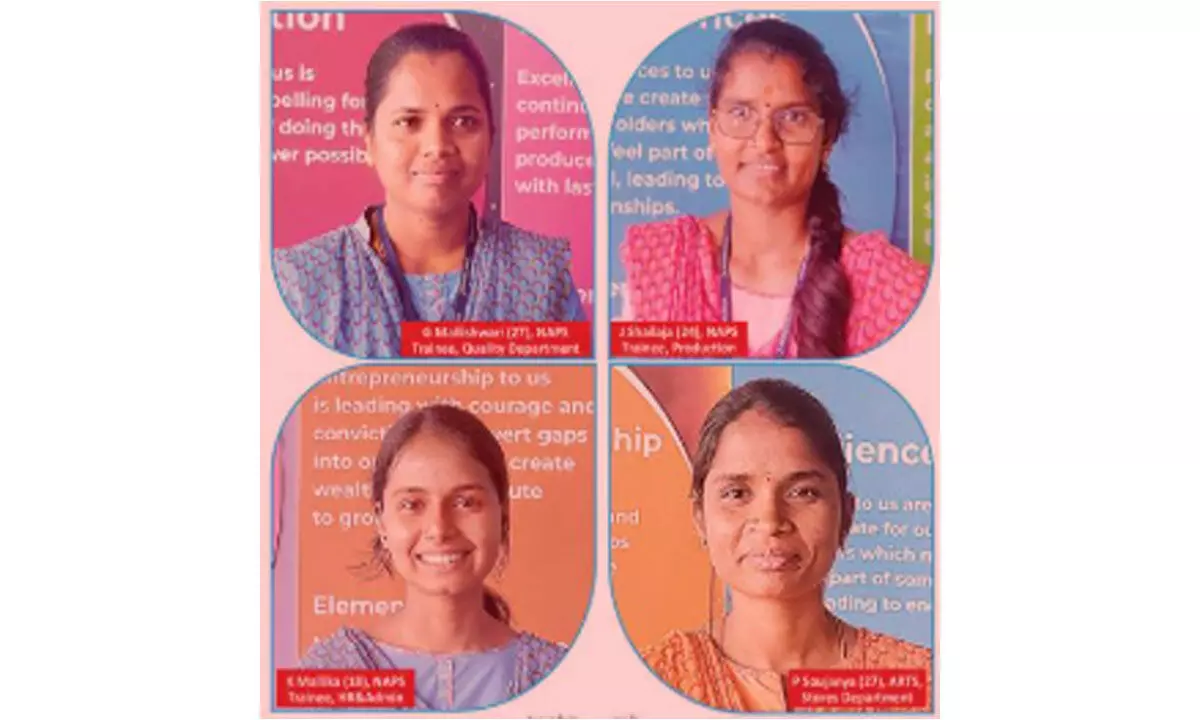
In a quiet Telangana village, a new industrial revolution is taking shape. Local women are stepping into roles once considered off-limits like manufacturing. With skill, confidence, and purpose, they are leading the change from the grassroots
In the quiet village of Divitipally, Telangana, a silent revolution is unfolding. At Amara Raja’s cutting-edge Gigafactory, hundreds of rural women are not just assembling battery packs—they’re building new lives, breaking social barriers, and leading India’s manufacturing transformation. This women-led plant is an inspiring example of how inclusive employment can empower individuals and uplift entire communities.
A Legacy of Women Empowerment
Amara Raja’s journey with women empowerment dates back to the late 1990s, when it began employing local women in its electronics unit in Chittoor.
Carrying that legacy forward, the newly established Gigafactory in Divitipally was designed with the intention of creating non-migratory job opportunities for local women.
“In our village, job opportunities were few and far between, especially for women,” shared Saujanya, an operator at the plant. “Working in agriculture was seasonal and uncertain. But this job changed everything for me.”
Uplifting Rural Women from the Margins
Most women at the Divitipally plant come from Below Poverty Line (BPL) households and lacked prior technical training. “Before this job, I earned a few hundred rupees a day doing field work—if work was even available,” Saujanya recalled. “Now, I earn a steady income and I can support my children’s education.”
What started as a hesitant step into an unfamiliar world soon became a powerful stride toward independence. “Initially, my family was unsure if it was safe for me to work in a factory,” said Malleswari, who now handles quality control. “But once they saw other women thriving, they started believing in me too.”
Skills, Confidence, and Control
Amara Raja has set up a training ecosystem tailored to women with no technical background. Recruits undergo a week of technical training followed by soft skills development and cultural orientation.
“We started with the basics—machine handling, safety, and assembly,” said Shailaja, who now manages dispatch operations. “They made sure we were comfortable before assigning us to production lines. It was empowering.”
Today, women at the plant manage operations across five key areas: raw material sorting, assembly, welding, testing, and dispatching—handling machines and making critical decisions with confidence.
Creating Pathways to Leadership
The transformation doesn’t stop at the shop floor. Women are being trained to take up supervisory and managerial roles. “I never imagined I could be responsible for a team,” said Shailaja. “But now I’ve been trained not just to operate, but to lead.”
With tailored mentorship and training, young women are placed as Graduate Engineering Trainees (GETs) and groomed for department-level responsibilities. “Being trusted with leadership has boosted our confidence. We feel respected and valued,” one GET shared proudly.
A Safe and Supportive Environment
Understanding the unique challenges women face, Amara Raja has created a workplace that prioritizes comfort and safety. Sanitary support, nutritious meals, reliable transport, and wellness programs ensure that women can focus on their work without compromising their dignity or health.
“These facilities show that they care about us not just as workers, but as women,” said Malleswari. “It makes a huge difference.”
Challenging Stereotypes, Shaping New Norms
Beyond providing employment, the plant is helping reshape gender norms in rural communities. “Earlier, people in my village thought factory work was only for men,” said Saujanya. “Now they see us doing this job, wearing uniforms, managing machines—they’re amazed.”
As women begin to contribute significantly to their household incomes, families are increasingly supportive. “My income has helped us pay off debts and plan better for the future. My family respects my opinion more now,” said Shailaja.
From Local Impact to Global Vision
With three production lines already operational and a fourth on the way, the female workforce at Divitipally is expected to grow to over 450 women by the end of 2025.
“The success here is just the beginning,” one of the women leaders said. “We hope other factories across India will follow this model. Women are ready—we just need the opportunity.”
Leading a New Industrial Era
The women of Amara Raja’s Gigafactory aren’t just part of an industrial process—they are pioneers of a new kind of workplace. Their stories show how skill, dignity, and opportunity can come together to drive both personal transformation and national progress.
As India’s industries gear up for a greener future, these women prove that true power lies not just in technology—but in empowerment.