‘Listening to Andal’s living voice
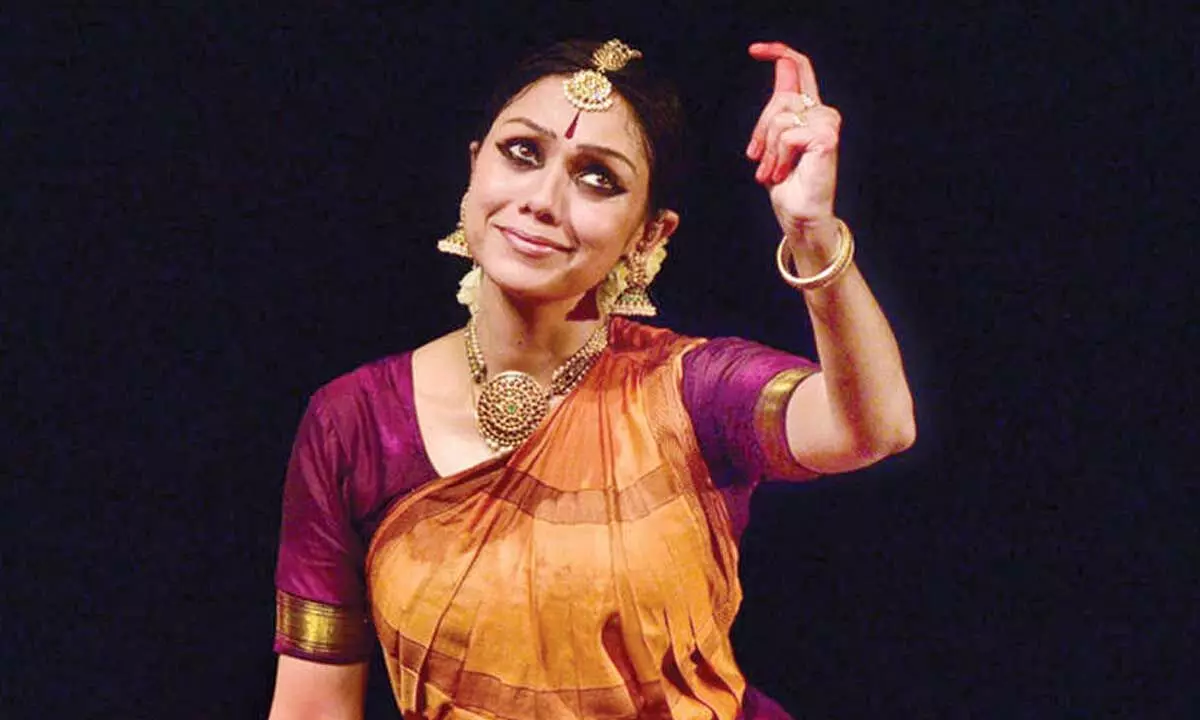
When celebrated Bharatanatyam artiste Rama Vaidyanathan speaks about ‘Maalyada – Andal’s Sacred Garland’, her voice carries the same stillness and intensity that mark her dance. The work, which she brings to Ravindra Bharati on January 18 as part of the ‘HCL Concert Series’, is inspired by Jeysundhar D’s book on the Tamil poet-saint Andal — but it resists turning Andal into a distant, untouchable icon.
“What moved me most was the intimacy with which Andal is approached,” Rama says. “She is not placed on a pedestal. We are allowed to sit beside her, to listen as she speaks with her friends, questions the world and expresses her longing for Krishna. That way of listening felt deeply connected to dance itself — before movement comes awareness.”
Although Andal’s Thiruppavai has been sung and danced for centuries, Rama believes every generation must rediscover how to hear it. “In ‘Maalyada’, the verses unfold through reflection rather than proclamation. The poetry is rooted in philosophy and scripture, but it is also startlingly personal. I wanted the dance to breathe in that space where devotion is quiet, searching and deeply human.”
The choreography is shaped by the framework of Nava Vidha Bhakti, the nine paths of devotion. Rama sees this not as an abstract concept, but as a map of Andal’s inner world. “Devotion is never instant. It moves through listening, remembrance, surrender, friendship and finally union. Andal embodies all of these with remarkable clarity. Structuring the work this way allowed the movement to gradually shed ornament and surface beauty until only essence remains.”
In ‘Maalyada’, Rama is not only the dancer but also the narrator, blurring the boundaries between word and movement. “I don’t see narration as something external to dance,” she explains. “When I speak, I am still dancing — just in another register. The real challenge is to let words guide the audience without disturbing the stillness that dance demands. Silence is as eloquent as movement.”
The production is carried by a close-knit group of collaborators who share this sensibility. Sudha Raghuraman’s singing gives voice to Andal’s emotion with restraint and devotion, while G. Raghuraman’s flute flows like breath between thought and feeling. Himanshu Srivastava’s nattuvangam and the mridangam of Sumod Sreedharan and Sannidhi Vaidyanathan anchor the dance with rhythmic clarity, and Surya Rao’s lighting quietly sculpts the spiritual atmosphere without drawing attention to itself.
Sharing the stage with Rama is a group of dancers who embody Andal’s world. “Andal never walks alone,” she says. “Her friends, her companions and her community are integral to her journey. Sometimes they are confidantes, sometimes mirrors, sometimes the collective voice of devotion itself.”
For Rama, the performance is less about interpretation and more about inward listening. “I hope audiences in Hyderabad don’t see Andal as a figure from the past, but as a living voice that still speaks to us. ‘Maalyada’ is not about answers. It is about the courage to seek, to question and to surrender with grace. If even a fragment of that inward stillness stays with the audience, the journey has been worthwhile.”