




Goddesses of India
In Short
Explore how major Indian cities like Mumbai, Kolkata, Patna, and Srinagar got their names from powerful female deities, reflecting deep-rooted cultural and spiritual unity.

Share :
Goddesses of India
Women goddesses have played a significant role in shaping India’s culture and tradition. Their presence is felt everywhere. To explain it in detail, let’s take an example of the popular cities in India. When we visit them, we often wonder about the reason behind their names; mostly, they are named after a historical incident or by the ruler who ruled that area. If this is the case, then there is no reason to write this article, but in India, the places are also named after the female deity who resides there.
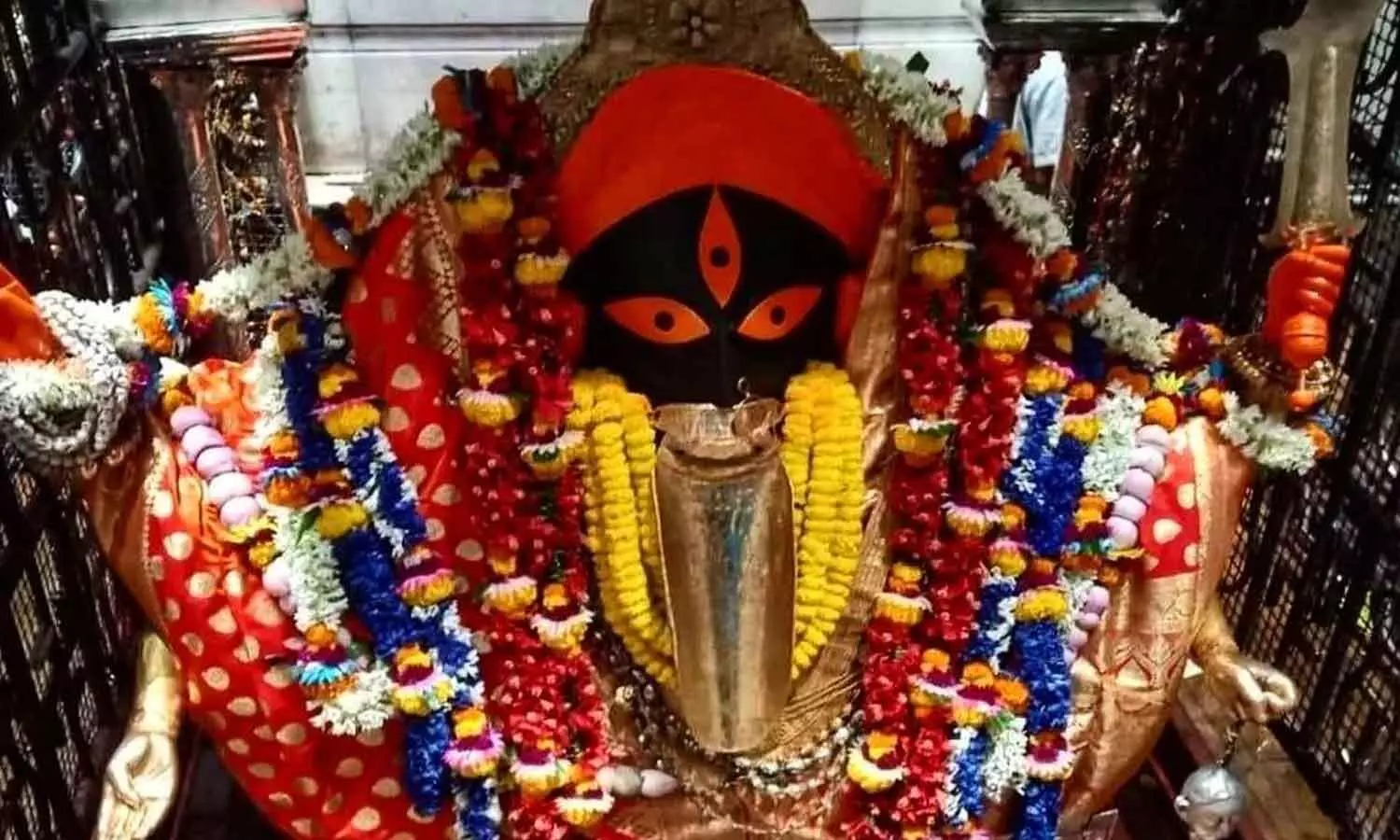
For example, the financial capital of India, i.e., Mumbai, was named after the local deity who was believed to have defeated a demon named Mumbaraka when he was troubling the fisher communities residing in the coastal area and upon the request of the demon, who was about to die, she assumed the name, Mumba Devi. Similarly, the name Kolkata was earlier called as Kalikata, later Kalikshetra, which indeed means the land of Goddess Kali.
The popular hill station, Nainital, got its name after the eyes of Sati Devi, which fell in that area. To mark this connection, the Naina Devi temple is also present in this region, which is also revered as one of the Shakthi Peethas. Chandigarh, which literally means the fortress of Chandi Devi, is another example of the same phenomenon, and we can still find an old temple of Chandi Maa located on the outskirts of the modern city.
Patna, the capital city of Bihar, which was once the capital city of many dynasties during ancient India, was named after Patan Devi (Twin Deities: Badi Patan Devi and Choti Patan Devi). After the demise of Goddess Sati, Lord Vishnu dismantled the corpse of Sati Devi, and it is popularly believed that her thigh part fell in this area; therefore, the temple is also a Shakti Peetha. The southernmost tip of mainland India is Kanyakumari, which was also named after the goddess Kanyakumari, who killed the Demon named Banasura. Shimla is named after Shyamala Devi and so on.
The women deities connecting south to the north:
The examples mentioned above are pretty much known to people, but many do not know the Social history behind the other popular cities, such as Srinagar. Even though the city has the word ‘Sri’ in it, which means Goddess Lakshmi, there is another, less popular story behind its name. The city is named after the goddess Sharika, who is an incarnation of Goddess Lalita Devi (Popular goddess from Dasha Mahavidhyas), who is quite well-known among the South Indians. It is often believed that the Lalita Devi travelled from South to North, and when she reached Srinagar, she was called as Sharika Devi.
The popular temple is seen in Srinagar. Here, the devi resided in the form of Shri Yantra/ Shri Chakra (One more similar feature which proves that the culture travelled from South to North) and is also called Chakreshwari Devi. The famous Dehjor (the sacred ornament worn by married Kashmiri Pandit Women) came from this Goddess only.
Apart from her, the Mangalore coastal city acquired its name from Mangala Devi, a princess of Malabar whose birth name was Premaladevi. She renounced everything to follow Saint Matsyendranath, the founder of the Nath Yogic Tradition. The Nath Sampradaya historically originated in Gorakhpur; the roots also lie in Bengal and Assam. Apart from all these cities, the state of Tripura is named after the Tripura Sundari Devi, who is also a manifestation of Goddess Lalita Devi. The Matabari temple in Tripura is where this goddess resides.
Shaktism, a major tradition in Hinduism, has given importance to the worship of women for a very long time. They are revered as the ones protecting the regions in which they reside. There are many folklore stories about the women who had strong personalities and who defended their region, commu nity, family, etc., and are later worshipped as deities. It is fascinating to understand that many cultural traits have been carried in this holy land for generations.
There are many more examples across India where we hear similar stories, thus signifying the cultural unity of the entire land of Bharath. Many studies across the Globe argue that the idea of India came only after the British rule. If this were the case, then these studies would even need to answer the questions related to the similarity in the cultural and traditional beliefs and practices across India.
(The author is an Assistant Professor, Central University of Jammu)
Govt opens doors to fee on large UPI payments
22-A controversy: CM Revanth to expose Dharani loopholes in Assembly
Local BRS leaders stalling re-entry of turncoat MLAs!
Vice-President to be chief guest at Hyd Liberation Day fete
Reading for pleasure is akin to unlocking a hidden treasure
Learn security lessons from Bolarum arms theft shocker


