Thailand’s bars, jungles, and jigsaw skeletons: ‘Toxic Spirits’ delivers a killer thriller

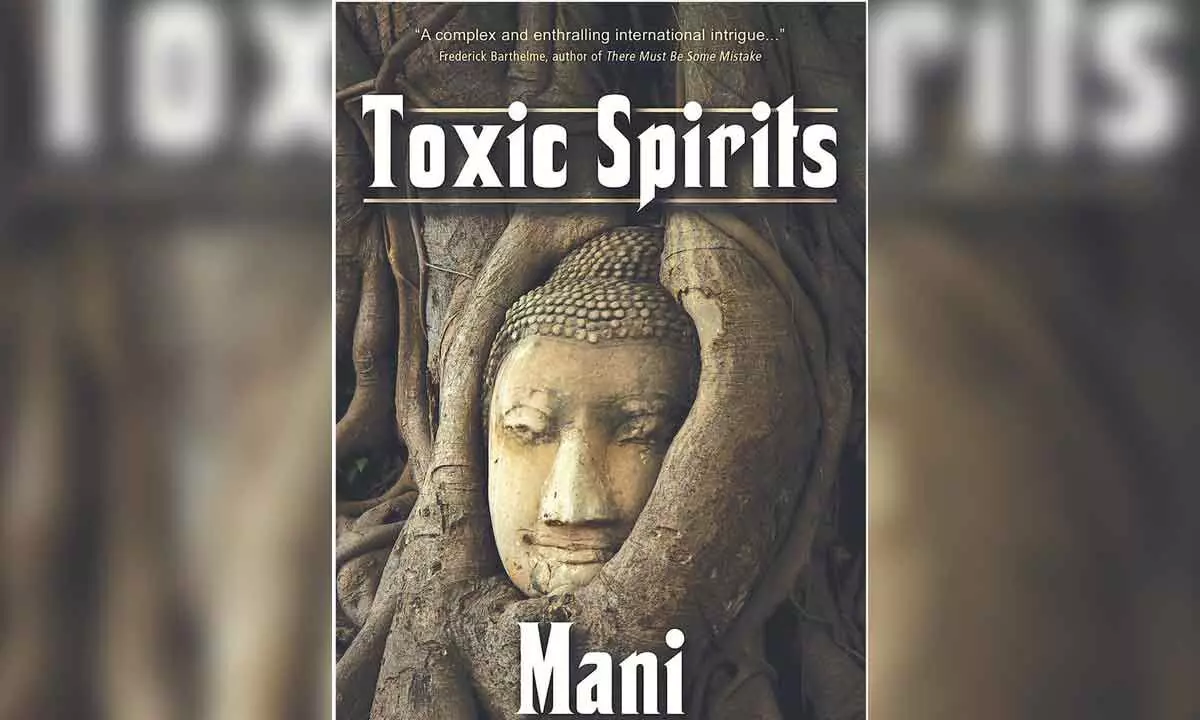
Inderjeet Mani’s ‘Toxic Spirits’ is a gripping thriller that blends biotech horror, expat drama, and dark humour with cinematic precision. Following Benton Sims, a retired intelligence analyst, the novel dives into genetic experiments, tribal exploitation, and a pandemic that threatens humanity itself. Mani’s richly detailed Thailand setting and fearless prose make this a haunting, unputdownable read
While many writers probe the cruelties and kindnesses of human nature, Inderjeet Mani digs even deeper into the body itself, peeling it apart layer by layer down to the DNA with terrifying precision. ‘Toxic Spirits’ has been compared by reviewers to John le Carré’s The Constant Gardener, but instead of spies and intrigue, it serves up a cocktail of expat drama, biotech run amok, and gleefully grotesque horror.
Its hero is Benton Sims, a widowed African-American ex–intelligence analyst retired in Thailand. Overweight, lonely, and self-deprecating, he calls himself “just another chickenshit foreigner” at a bar. There he stumbles into the orbit of a Big Pharma operation involving shady drug trials and the exploitation of tribal communities. The author spares no gore: there’s a bone jigsaw assembled from torture victims, a gruesome house fire involving a child, and a surgical scene so repellent you may rethink your next hospital visit.
Part of what makes the novel bite is Mani’s background. He’s an Indian-born American scientist and writer living in Thailand, who happens to have worked with U.S. defense agencies and volunteered among mountain tribes in the Golden Triangle. No wonder Benton feels caught between worlds: too American for Thailand, and too Black for the expat scene. Discussing his DNA test that reveals Malagasy, Gambian, Balinese, and European ancestry, Benton muses, “Under our skin, we’re nothing but a bunch of crazy mutts.” That line alone could serve as the book’s thesis on multiculturalism and identity.
Things turn dark quickly when Siri, a tribal bar singer who catches Benton’s eye, disappears after denouncing drug trials on her isolated hill-tribe. Their people’s immunity to cancer-causing plants has drawn the attention of Big Pharma, who plan to exploit their DNA for a miracle cure. Enter Pierre Bulsany, a suave and unhinged Indo-Cambodian doctor overseeing the experiments. Benton is pulled into the nightmare as an unwilling test subject, his body rejuvenated through genetic tampering. Amid the chaos, he falls for Mimi, a bold Thai-Australian whose love language is fast food, bling, and reckless passion. As the genetic contagion spirals into a species-wide pandemic, Benton and Mimi must face Bulsany in a battle to decide not just who, but what, will survive. The novel packs in two intertwined narratives, several backstories, and lots of characters. Mani sometimes stuffs in more science than a casual reader might digest. But the language, suspense, and immersive setting keep it compelling and practically cinematic throughout.
Blurb praise from well-known writers has been enthusiastic: Frederick Barthelme called it “enthralling,” Colin Cotterill admired how Mani “writes Thailand beautifully,” and Mark Wisniewski hailed it as “a striking debut.” Kirkus Reviews starred it for its “taut, highly descriptive prose.” Readers on online platforms praise the novel’s atmospheric setting, its exploration of Thai culture and biodiversity, its elegant prose and even its horror, while noting that its science can sometimes be a challenge to follow. A sequel is on its way, with a teaser provided at the end. Overall, ‘Toxic Spirits’ is a beautiful thriller that should in fact be recommended reading for anyone visiting Thailand, as it brings alive the sights, sounds, and smells of that country. But readers are advised to keep their seat belts fastened tight.