Signs of a good teacher

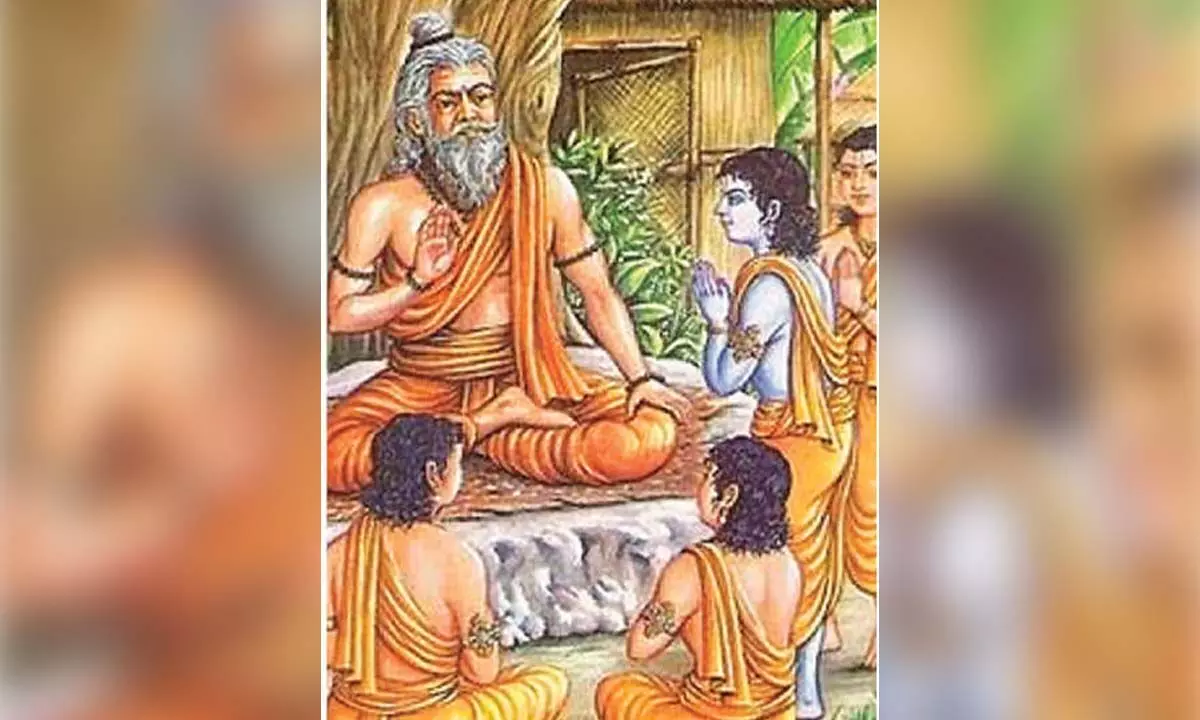
A teacher is not just a transmitter of knowledge but a guide who nurtures wisdom and values in the student. The Guru-Shishya tradition of India beautifully emphasises this sacred bond, where the Guru wishes for the student’s success and the student prays for the Guru’s victory. A good teacher balances love with discipline, clarity with confusion, and information with values to shape both character and intellect.
There is a unique concept associated with the teacher-student or Guru-Shishya tradition in India. The Guru or teacher always wishes for the student to succeed, and the student wishes for the teacher’s victory.
The student wishes for the victory of the big mind or the Guru. It is healthy because if the student feels that he knows more than the teacher, that would mean the learning has stopped, and that his arrogance has killed the wisdom.
The student knows that even if his or her small mind wins, it will lead to misery; but if the teacher wins, it is the victory of knowledge, which brings only good and joy to everyone. A great teacher understands where the student is coming from and how to guide them step by step.
For example, Lord Krishna was such an amazing teacher! He took Arjuna step by step to attain life’s final goal. Arjuna was initially very confused. When a student starts evolving, they often feel confused because they see their concepts breaking apart.
As a student, first, you learn that the sun rises in the east. Later, you are taught about the planets and their movements around the sun. So, your concepts break at each step as you grow. Great teachers know this. They do not let the student hold on to a particular concept because each concept is a step towards the ultimate goal. Concepts have to break to reach the next step. A good teacher helps students overcome their confusion, and sometimes, even creates more confusion when needed.
I remember in my childhood, we had a social science teacher who was very sweet, and everybody loved to be in her class, but students scored very low in her exams. In contrast, we had a very strict physics teacher, and students were terrified of him, but everyone scored very well in his exams. Great teachers know how to strike the right balance between being loving and being strict.
Some children are rebellious. They need more physical contact, encouragement, and pats on the back. They need to feel that they are loved, cared for, and that they belong. On the other hand, sometimes the teacher can act with a little firmness when dealing with timid children. The aim is to help them stand up and speak out. Often, the opposite is done. Teachers are strict with rebellious children and liberal with shy ones.
Then those behaviour patterns continue to remain. The teacher needs to be both tough and sweet; otherwise, they cannot guide the student to where they want to take them. Ultimately, the purpose of education is not to fill minds with information, but to enable the total development of the body and mind. Children also need to be taught values like sharing, caring, non-violence, and developing a sense of belongingness.
Teachers always have a very big role to play in shaping the country’s future. They must work together to bring peace and progress to our country. It was teachers who brought about a wave of change at the time of the country’s struggle for independence. They took the responsibility of inspiring the entire nation. Today, too, teachers must inspire children. Children are like empty, transparent vessels; whatever knowledge you fill them with, they will reflect and behave in that way. If you fill them with fear and wrong ideas, then they behave accordingly. But when you give them good ideals and noble virtues, they grow up to become ideal and responsible citizens. We can pass on ideals to others only if we ourselves have imbibed and demonstrated those virtues. It is thus very important for teachers to walk the talk in their daily lives.
(Writer is a is a globally renowned spiritual leader, humanitarian, and peacebuilder. He is also the founder of The Art of Living foundation, according to the Art of Living)