Rise of the Creator Economy: Policy, Content Ownership, and Grassroots Integration

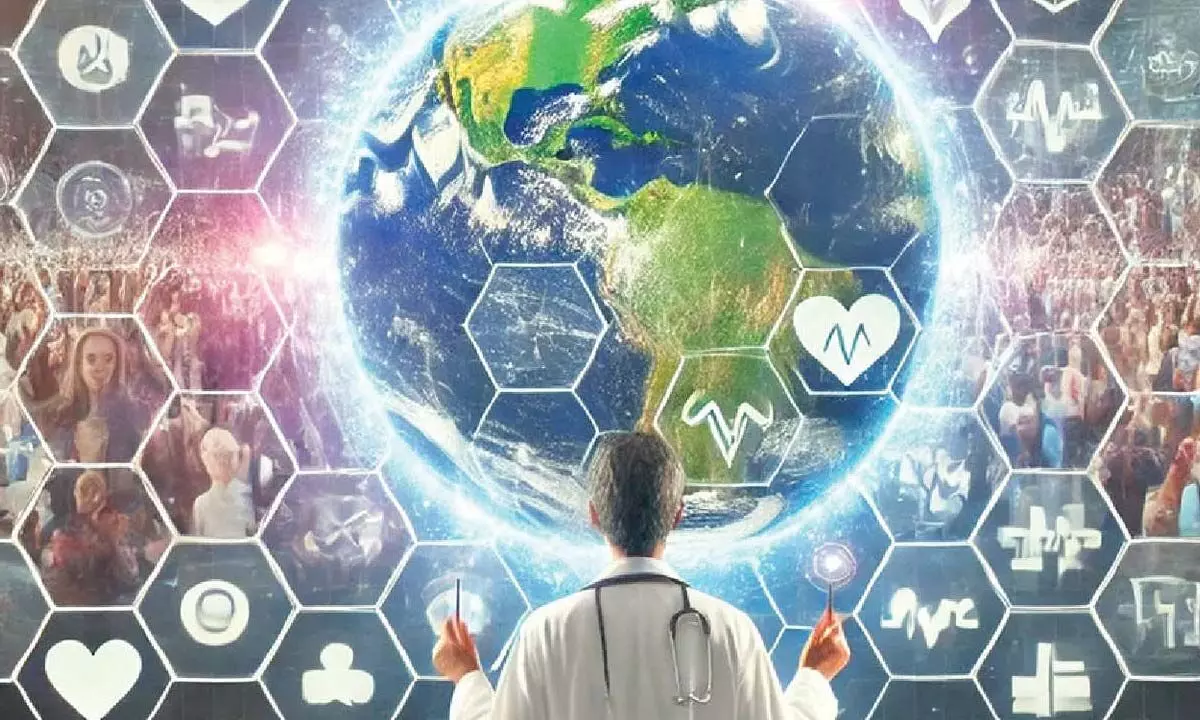
The creator economy is rapidly reshaping the digital landscape, with independent content creators driving economic growth. Addressing policy gaps in content ownership, grassroots integration, and fact-checking is essential for its sustainable development.
The creator economy is rapidly reshaping the digital landscape, with independent content creators driving economic growth. Addressing policy gaps in content ownership, grassroots integration, and fact-checking is essential for its sustainable development.
The creator economy, a significant part of the broader creative economy, includes independent content creators, influencers, and digital entrepreneurs who have emerged as a formidable force in the global digital ecosystem. Recognizing its potential, the Union Government has recently introduced several initiatives aimed at strengthening this sector. These initiatives focus on funding skill development, upgrading production quality, and expanding to global markets. However, critical elements such as content ownership policies, sustainable grassroots economic integration, privacy concerns, and ensuring factual accuracy in content creation remain unaddressed.
The Growth of the Creator Economy
According to research studies, the global creator economy is valued at $250 billion as of 2024, with projections suggesting it could reach $480 billion by 2027. With over 200 million active content creators worldwide, the digital landscape is diverse and dynamic. Revenue streams from tipping, subscriptions, and merchandising on social media are projected to reach $160 million, $270 million, and $450 million, respectively. Influencer marketing expenditure is expected to rise to $7 billion by 2024, marking a 17% increase over the previous year. Notably, 54.9% of creators identify as full-time, indicating a growing commitment to content creation as a primary income source. However, earnings distribution varies significantly, with only 9% of independent creators earning over $100,000 annually.
In a landmark move, the Union Government announced an allocation of a $1 billion fund dedicated to supporting the creator economy. This initiative aims to provide content creators with access to capital, enhance their skills, and facilitate expansion into global markets. Additionally, INR 391 crore has been allocated for the establishment of the Indian Institute of Creative Technologies in Mumbai, underscoring the commitment to nurturing talent in media and entertainment sectors.
These measures align with the country’s strengths in media and entertainment, drawing parallels to the global success of countries like South Korea and Spain. The initiative seeks to capitalize on the growth potential of user-generated content, which is expected to reach $1.1 billion by 2027.
Need for Key Policy Interventions
As the creator economy expands, critical questions surrounding content ownership and copyright have come to the forefront. Before addressing these concerns, it is essential to skill, upskill, and reskill content creators. Although Mumbai has traditionally been a hub for media and entertainment, the high cost of living makes it difficult for individuals from remote locations to establish themselves. Policy interventions should focus on reaching nano creators rather than existing mega influencers.
The existing copyright framework under the Copyright Act of 1957 grants creators exclusive rights over their original works, including literary, dramatic, musical, and artistic creations. Copyright protection is automatic upon the creation and fixation of a work in a tangible form, eliminating the need for formal registration. However, the rise of digital platforms and artificial intelligence (AI) has introduced complexities in content ownership. Traditional copyright laws are inherently tied to human authorship, leading to debates on whether AI-generated works qualify for copyright protection and who holds the rights in such scenarios.
Policymakers must revisit and potentially amend existing copyright laws to protect creators’ rights and foster innovation. Clarifying the legal status of AI-generated content and establishing guidelines for content ownership in the digital age are crucial. Additionally, prioritizing nano influencers with smaller yet highly engaged audiences will enhance grassroots digital presence, create employment opportunities, and ensure a fair distribution of economic benefits. A strict procedure for influencer empanelment should include transparent vetting, mandatory adherence to ethical content guidelines, and societal impact assessments. Furthermore, emphasizing individual responsibility in content creation and introducing a mandatory course on India’s heritage and cultural literacy for registered influencers will contribute to a deeper understanding of the country’s rich traditions and narratives.
Integrating with Grassroots Development
Beyond funding and policy reforms, integrating the creator economy with grassroots development is essential for sustainable economic growth. One avenue for achieving this is through the active involvement of local governance bodies, such as gram panchayats, in promoting and circulating digital content.
Gram panchayats, as foundational units of rural administration, can play a pivotal role in empowering local creators. By organizing workshops, providing infrastructure, and facilitating access to digital tools, these bodies can nurture local talent and ensure that the benefits of the creator economy permeate rural areas. Similarly, women’s self-help groups (SHGs) can be trained in digital content creation, further enhancing economic opportunities.
Moreover, collaborations between content creators and gram panchayats can lead to the production of region-specific content that resonates with local communities. Such initiatives not only preserve and promote local cultures but also create economic opportunities within villages, thereby reducing urban migration and contributing to the sustainability of rural economies.
Additionally, content creators should be required to contribute a portion of their profits to the gram panchayat if they use visuals representing local ambiance, rituals, people, art, craft, songs, or other cultural elements. This revenue can help nano creators within the village upgrade their facilities and further strengthen the rural creative ecosystem.
Need for Fact-Checking and Research Mechanisms
As digital content continues to shape public perception and cultural narratives, the importance of factual accuracy cannot be overstated. Content created in the digital age often promotes the identity of individuals, villages, and even nations. However, the rapid proliferation of misinformation and disinformation poses a significant challenge, underscoring the need for robust fact-checking mechanisms.
To ensure content credibility, measures such as access to verified data, fact-checking platforms, educational initiatives, AI-powered verification tools, and content review boards are necessary. Providing access to government databases, academic institutions, and credible research organizations is essential for content creators to source accurate information. Training programs should include modules on research methodologies, ethical content creation, and responsible digital media use. AI-powered verification tools can help detect misinformation and cross-check sources, while content review boards at the gram panchayat level can validate local content. These measures will strengthen the credibility of digital content and enhance India’s global standing in media and entertainment.
Several challenges must be addressed to fully realize the potential of the creator economy. These include effective policy implementation, skill development, updating copyright laws, providing reliable internet connectivity and digital infrastructure in rural areas, and establishing fair monetization models. By fostering an inclusive and well-regulated creator economy, India can leverage its rich cultural heritage and digital talent to position itself as a global leader in media and entertainment.
(The writer is an expert on the creative economy)