Revisiting the dramatic universe of Mahesh Dattani

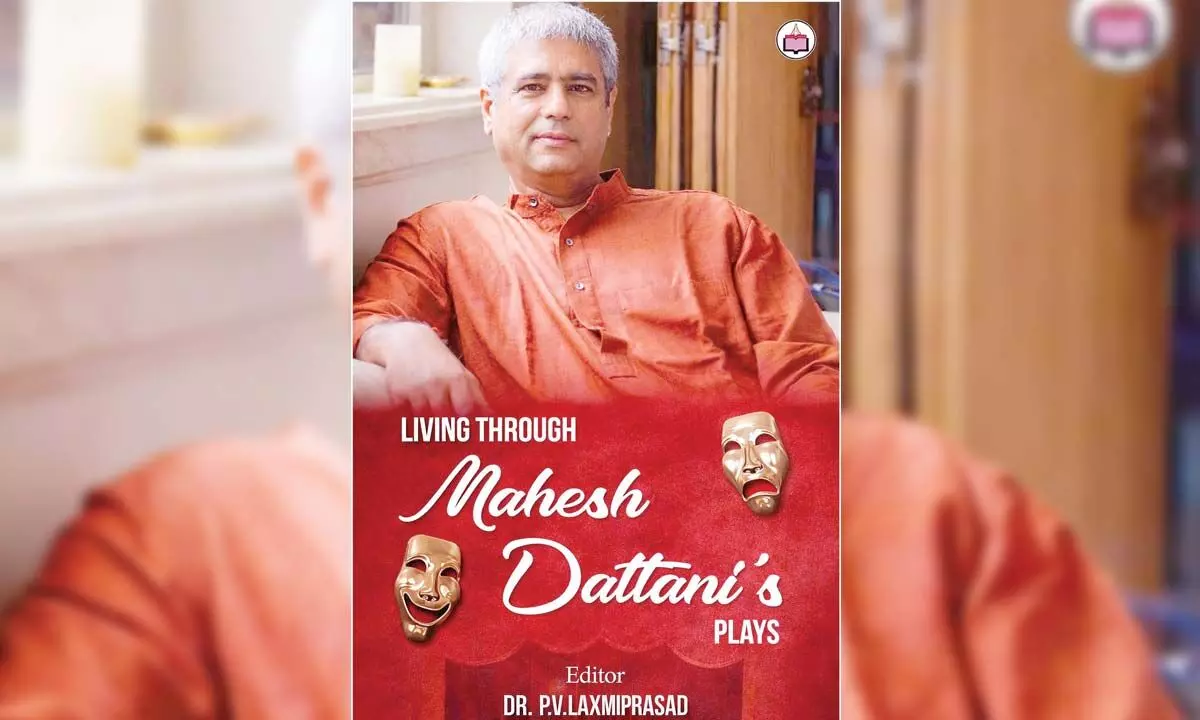
‘Living Through Mahesh Dattani’s Plays’, edited by P V Laxmiprasad, is a significant scholarly contribution that pays rich tribute to one of India’s most influential contemporary dramatists, Mahesh Dattani. Published by Authors Press, this volume brings together critical voices from across the country to examine the layered theatrical world of a playwright who has successfully bridged the gap between academia and the general audience.
Dr P V Laxmiprasad, well known for his sustained engagement with literature and criticism, has established himself as a prolific scholar and creative writer. With an impressive body of work that includes numerous research articles, poems, reviews, and books, his editorial vision in this volume reflects both academic rigor and aesthetic sensitivity. ‘Living Through Mahesh Dattani’s Plays’ stands as a carefully curated collection that underscores Dattani’s enduring relevance in Indian English drama.
Mahesh Dattani occupies a rare position in Indian theatre. Equally admired by scholars and theatre-goers, he is celebrated for his bold themes, precise characterization, and innovative dramaturgy. His plays delve into the hidden recesses of human emotion and social reality, exposing the anxieties, conflicts, and silences that shape modern Indian life. Dattani’s mastery lies in his ability to present complex social issues on stage without sacrificing dramatic intensity.
The volume consists of sixteen critical essays that explore diverse dimensions of Dattani’s plays. Together, they offer a comprehensive and insightful overview of his dramatic oeuvre and contribute meaningfully to Indian English literary criticism. The contributors, representing different regions and academic traditions, bring a multiplicity of perspectives that enrich the critical discourse surrounding Dattani. Several essays engage deeply with questions of gender and identity, recurring concerns in Dattani’s theatre. Psychological readings of ‘Bravely Fought the Queen’ highlight the playwright’s exploration of fragmented identities and suppressed emotions. Essays on ‘Tara’ foreground gender discrimination and social injustice, revealing how the play becomes a powerful voice of protest against entrenched patriarchal norms. The discussion of ‘Dance Like a Man’ raises fundamental questions about masculinity, femininity, and the cultural construction of gender roles.
Cultural and religious conflicts form another major thematic strand in the collection. Critical examinations of ‘Final Solutions’ analyse the play’s portrayal of communal tension, religious fanaticism, and political manipulation. Viewed through postcolonial and socio-political lenses, the play emerges as a bold critique of intolerance and divisive ideologies in contemporary India.
The volume also devotes attention to Dattani’s theatrical craftsmanship. Essays on stagecraft, narrative technique, humour, sarcasm, and the use of memory as a dramatic device reveal the playwright’s technical sophistication. These studies demonstrate how Dattani “decolonizes” the Indian stage by blending indigenous concerns with modern theatrical forms, thereby creating an unmistakably Indian yet globally resonant theatre.
Notably, the book expands its critical scope to include disability studies and transgender representation. Essays on ‘Tara and Seven Steps around the Fire’ bring new dimensions to Dattani’s work, emphasising his sensitivity towards marginalised identities and neglected social realities. These perspectives affirm Dattani’s commitment to giving voice to the silenced and the invisible.
Taken as a whole, ‘Living Through Mahesh Dattani’s Plays’ presents a holistic and nuanced portrait of a dramatist whose work continues to challenge, disturb, and inspire. The volume is an invaluable resource for researchers, teachers, students, and theatre practitioners. Dr P V Laxmiprasad deserves commendation for assembling a diverse and intellectually stimulating collection that deepens our understanding of Mahesh Dattani’s dramatic universe and reaffirms his place in Indian English literature.
(The writer is an internationally acclaimed literary critic and the founder of Authors Paradise Literary Group.)