Rediscovering meaning behind rituals

Bharat is often described as a land of rituals. From birth ceremonies to the final rites of life, every stage of human existence is marked by traditions that were designed to guide individuals toward ethical living and harmony with nature. But somewhere along the way, the spirit of these rituals has begun to fade. What remains is often the outward performance—sometimes stripped of its deeper meaning.
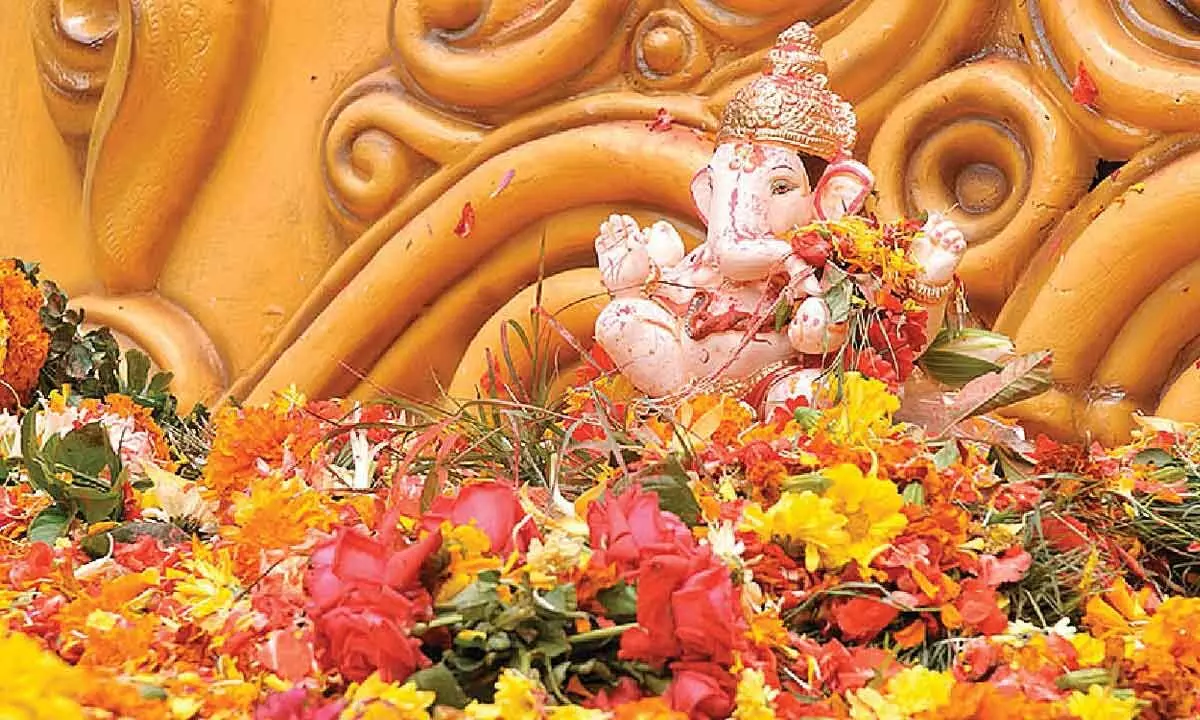
The result is a strange contradiction. Practices meant to honour nature are increasingly harming it. Take the simple act of offering flowers during worship. Traditionally, devotees offered seasonal flowers grown in their own gardens or gathered from nearby fields. These flowers were natural, fragrant and biodegradable. The act symbolised humility and gratitude.
Today the market tells a different story. The demand for perfect-looking flowers has encouraged the cultivation of hybrid varieties grown with chemical fertilisers and pesticides. Artificial perfumes are sometimes sprayed to enhance fragrance. Farmers are pushed toward faster flowering cycles to meet urban ritual demand. Ironically, flowers offered in devotion now contribute to soil degradation, water pollution and chemical farming. The ecological wisdom that once guided the practice has quietly disappeared.
Another example is the modern packaging of pooja materials. Walk into any religious goods shop and you will find packets of camphor, kumkum, incense sticks, sacred powders and cotton wicks—almost all wrapped in plastic. Many of these packets even carry printed images of gods and goddesses.
Once the ritual ends, these packets inevitably end up in garbage bins or landfills. The irony is difficult to miss: sacred images meant to inspire reverence are discarded along with plastic waste.
Traditionally, ritual materials were stored in cloth bags, brass containers or earthen vessels. Nothing was designed for single use. Everything returned safely to nature. The plasticisation of devotion is a distinctly modern problem.
Even funeral rituals are not untouched by commercialisation. In several places today, sandalwood sticks used in cremation rituals come individually wrapped in plastic packaging. The symbolic value of sandalwood—purity and fragrance in the final journey of life—remains meaningful. But the layers of packaging attached to the ritual reflect a growing culture of excess around even the most solemn traditions.
These examples point to a deeper issue. Rituals are being performed without understanding the philosophy behind them.
Historically, rituals were remarkably ecological. Cow dung was used to purify floors and courtyards. Ghee lamps provided natural lighting for worship. Herbal incense created fragrance without synthetic chemicals. Leaf plates and clay lamps ensured that nothing became permanent waste.
Behind many of these practices was a system rooted in the indigenous cow and the concept of Panchagavya—the five products derived from the cow: milk, curd, ghee, cow urine and cow dung. These were not merely ritual ingredients. They supported agriculture, sanitation, health practices and household life.
Cow dung served as natural fertiliser and fuel. Cow urine formed the basis of organic pest control. Panchagavya formulations enriched soil fertility. Ghee lamps and herbal dhoop created a clean ritual environment. In other words, devotion and sustainability once worked together.
Today, when climate change, soil degradation and plastic pollution dominate global conversations, this forgotten wisdom is beginning to attract renewed attention. Across parts of rural Bharat, Panchagavya-based enterprises are producing eco-friendly alternatives to modern ritual products—cow dung diyas, natural incense sticks, herbal disinfectants and organic farming inputs. Such products not only reduce environmental damage but also generate rural livelihoods.
Temple waste management offers another interesting possibility. Instead of dumping flower offerings into rivers, they can be composted using cow dung cultures and converted into organic manure. The ritual remains unchanged. Only its environmental footprint improves.
But perhaps the real challenge lies in how rituals are explained to the next generation. Young children today are often accused of drifting away from tradition. Yet the problem may not be faith itself—it may be the absence of meaning.
Consider how sacred texts are used. In many parts of the country, the Garuda Purana is recited after someone’s death. In several Southern parts of country, recordings of the Bhagavad Gita are played during the final rites. Both texts contain powerful guidance on how to live ethically and responsibly. Yet they are commonly heard only at the end of life.
Perhaps these teachings would serve society better if they were introduced at birth and studied throughout life.
Bharatiya rituals were never meant to be rigid ceremonies. They were designed as living practices connecting spirituality, ecology and community life. The challenge before us is not to abandon rituals but to rediscover their meaning.
When devotion returns to simplicity—natural materials, mindful practices and ecological awareness—rituals can once again become what they were originally intended to be: a path toward a sustainable and meaningful life.
(The writer is a Creative Economy Expert)