‘Randy O’ Dandy’: Revealing the concealed & suppressed literature

Dr Shadab Ahmed is an author, poet, and translator of ethnic poetry and cultural history of the Abrahamic as well as Non-Abrahamic, Central Asian, and Eastern empires, domains, provinces, commonwealths, and kingdoms. Renowned intercontinentally for his insightful writings on cultures, geopolitics, realpolitik, and their sociologic-ethnic renditions, his books blend sapient analytical rigor with ingenious poetic precision. His works explore the intersections of history, strategy, and identity, offering nuanced perspectives on diverse socio-political and cultural ideologies. His unique style of dispensing fusion literature and precision poetry has earned him critical adulation from readers across the globe. Besides being a trailblasing author, Dr Ahmed is also a professional Oral & Maxillofacial Surgeon, equally versatile and exact with both the proverbial knife and the pen. His articles, columns, paraphrases, and editorials, published both nationally and internationally, are thoroughly enjoyed by literary connoisseurs and cognoscenti.
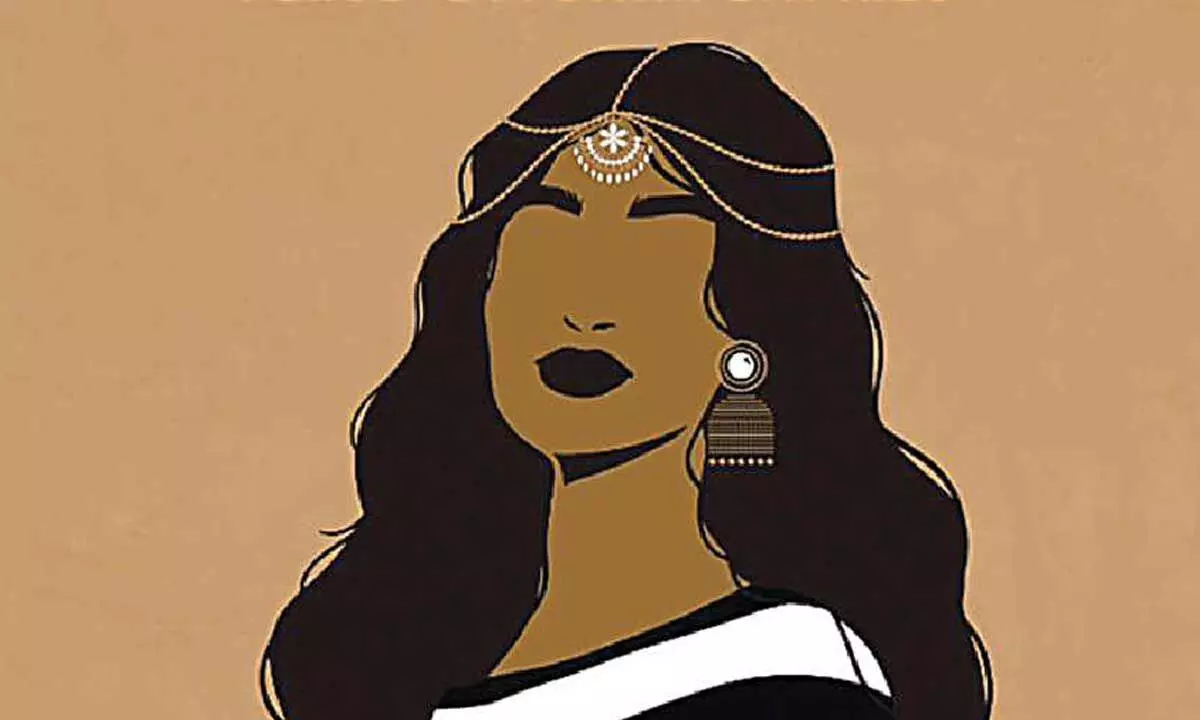
Today, we are going to review his buzzworthy book ‘Randy O’ Dandy’, which is a translated compilation of verses, sonnets, doggerels, epitaphs, ballads, sestinas, and couplets taken from the Indian, Persian, and Ottoman empires. The verses in the book are meticulously translated and spectacularly illustrated, successfully capturing the theme, motif, and essence the author wants to convey. One noteworthy feature of the book is the credentialing of the original material sources—historical texts composed and compiled directly by royal historians (shahi murakhins), royal writers (tarikh-navis), courtiers (darbari-navis), grand viziers (wazir-e-azams), nadims (companions), royal attendants (khidmat-gaars), news-writers (waqia-navis), and sahib al-barids (royal secretaries) of the kingdoms, dynasties, and empires. This enables the litterateur to directly peruse, apprehend, and comprehend the pretext and context of the verses and their cultural-sociologic significance. Several of the quoted books by the author fall under the category of rare manuscripts and suppressed literature, which are meticulously and comprehensively researched and accurately transmit the quintessence and abstract in which they are intended to be used. The shibboleth of “Ribald, Raunchy, and Salacious Verses” is superbly tagged to catch both the incurious and inquisitive attention of disparate readers. The language and parlance used in the translations often appear primal and lascivious in context, but they accurately convey the pristine sentiment of the troubadours and minstrels of bygone eras. Shedding important light on the suppressed carnalisation and concealed sexualisation prevalent in the Persian and Ottoman kingdoms, empires, and emirates, this book successfully crosses over three distinct and radical language systems of the world—Sanskrit, Persian, and Turkish.- Verses are taken from original texts catalogued and inscribed in Classical Sanskrit (the sacred language of Hindu mythology and philosophy), Epic Sanskrit (the Proto-Dravidian language influencing Sanskrit’s phonology and syntax), Buddhist Hybrid Sanskrit (from the Mahasamghika school of Buddhism), Prakrit (Ashokan, Gandhari & Maharashtrian), Pali (the sacred language of the Buddhist canon in the Theravada Buddhist tradition), Old Persian (from the Behistun inscriptions of the Achaemenian empire), Middle Persian (the literary language of the Sasanian empire and subsequently adopted by the Aramaic Neo-Assyrian empire after the Hellenization of Persian language), New Persian (emerging after the Muslim conquest of Persia by the Rashidun caliphate leading to the fall of the Sasanian empire), Arabic (the lingua franca of the Arabian world and liturgical language of Islam), Neo Arabic (Andalusian Arabic), and Ottoman Turkish. Obscene, ribald, and raunchy literature has always required exculpation and exoneration because of the moral questions it poses. ‘Randy O’ Dandy’ by Dr Shadab Ahmed stands out as a bold and steadfast endeavour by the author to bring out those repressed and stifled emotions for the academic and literary connoisseur as well as the extemporary reader. Overall, this book should be a must-read for intrigued scholars of suppressed literature, especially to be absorbed back into the enchanted Perso-Ottoman and Indian domains.