Monumental art shapes global identity
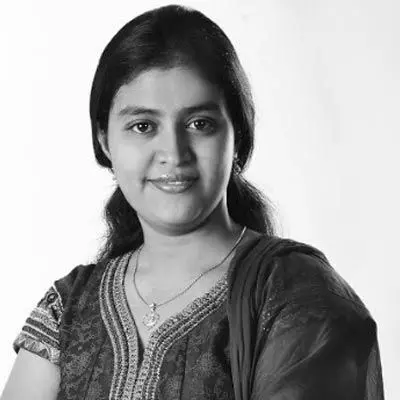

Naresh Kumar Kumawat, the internationally acclaimed sculptor behind the 369-ft ‘Statue of Belief’ in Nathdwara and the ‘Samudra Manthan’ mural at the new Parliament building, has once again etched history. His latest creation—a 51-ft ‘Shri Ram Murti’ in Mississauga—was designed in Gurugram with a steel frame built to last over a century. Its unveiling included a grand ‘shobha yatra’ and Vedic rituals, drawing thousands from the Indian diaspora. In this exclusive conversation, Kumawat reflects on his journey, challenges, and vision.
Growing up in a three-generation sculptor family, art was not a choice but a natural inheritance. “Sculpting tools were part of my environment,” he recalls. “You could say the art of sculpting embraced me before I embraced it. My father, Shri Matu Ram ji, deeply influenced me—especially after he created the iconic Shiva Murti in South Delhi, which transformed the very core of public art in India.”
Yet the journey was far from easy. “In the beginning, I didn’t have enough work projects. I remember feeling hopeless and even telling my father that sculpting was the worst decision of my life,” he admits. Perseverance and faith revived him. “On my father’s advice, I began reading ‘Sundarkand’. It taught me devotion and courage, which became my guiding principles.”
Among his many works, one remains especially close to his heart—the 80-ft-wide ‘Samudra Manthan’ mural at the new Parliament. “Unlike my other projects where I carved a few monumental figures, this one had 236 individual figurines. They had to be attached seamlessly to the background while maintaining the artistic flow. It was repetitive, demanding, and errors were almost unforgivable. Completing it brought me immense fulfilment, especially when the President of India himself complimented it.”
Balancing tradition with technology is central to his art. “I was born in the 90s, when India was rediscovering its roots while modernism was taking shape. Symbolism and cultural meaning continue to guide me, but tools like 3D scanning and metallurgical testing ensure durability and accuracy. Together, they allow me to create something future generations can admire.”
On working at monumental scales, he emphasizes soul over size: “Perfecting proportions is technical, but the soul lies in conceptualisation. I immerse myself in research to connect emotionally with the subject. It’s about storytelling—communicating fluid ideas with authenticity.”
Materials, too, hold profound significance. “Material is not just medium—it’s message,” Kumawat explains. “Panchdhatu, the sacred alloy of five metals, resonates deeply with me. Just as the human body is believed to be formed from five elements, sculpting in Panchdhatu becomes a spiritual act of balance. Stone offers permanence, fiber offers flexibility, but bronze and Panchdhatu carry timeless gravitas.”
His works reach audiences in over 80 countries, serving as bridges of cultural diplomacy. “My sculptures anchor Indians abroad while shaping global perceptions of India’s values. They embody not just our past glory but our aspirations for the future.”
For Kumawat, monuments are more than stone or bronze—they are vessels of memory. “They don’t just preserve the past; they reconstruct it in the present and shape a national identity for generations.” His vision for the ‘Matu Ram Art Centre’, founded by his father, reflects this conviction: “We aim to reinstate the power of art in shaping world perceptions and bringing meaningful change.”
Looking ahead, he is confident monuments will endure in a digital-first world. “Even in the metaverse age, monuments remain vast libraries of social memory. Their role in encoding collective memory is irreplaceable.”
On the legacy he hopes to leave, he concludes: “I want my works to enrich public knowledge. Like the statue of Dr. Ambedkar at the Supreme Court, which breaks stereotypes by showing him in his lawyer’s cloak, I hope my art sparks deeper understanding. Through them, I want the world to see the greatness of India’s contributions to global values.”