Magha in Bharat: Rituals, rivers, and responsibility

Magha, among Bharat’s most sacred months, aligns human life with the rhythms of the sun, rivers, and cosmic order through rituals of purification, charity, and discipline. It calls individuals and communities alike to live responsibly — honouring nature, ancestry, and dharma
The Bharatiya calendar is a living system that aligns time with nature, cosmos, and human life. It integrates solar and lunar movements, guiding agriculture, festivals, health practices, and social rituals. Months, tithis, nakshatras, and seasons help people choose the right time for sowing, fasting, worship, learning, and celebration.
Unlike a fixed date system, it respects natural rhythms, ensuring balance between body, society, and environment. By linking daily life with cosmic order, the calendar unites the country through a shared understanding of time as sacred and purposeful rather than mechanical.
Among the special months of the year, Magha month (January–February) holds one of the most sacred significance position after Karthika month (October- November).
Magha month marks spiritual discipline, purification, and charity. It coincides with the Sun’s steady presence in Makara (Capricorn) and moves to Northern hemisphere increasing the length of the day. The Magha month prepares one’s body and mind to effectively utilise the long days with discipline, duty focused, social order, and responsibility.
The Moon gains ritual importance through Magha Nakshatra with Ancestor reverence, lineage consciousness, continuity. And Saturn (Shani) is in Active influence (friend of Sun in dharmic action) with Austerity, karma correction, justice, restraint during the month.
Early-morning river baths (Magha Snan), fasting, and daana are central practices across the country in various traditions.
The month honours Surya, ancestors, knowledge, and renunciation through festivals like Magha Purnima, Gupt Navaratri, Shyamala Devi Navaratri, Vasant Panchami, Ratha Saptami, Bhishma Ekadashi and Ashtami, Maha Shivaratri. The four sundays have a special significance of performing prayers and rituals to Sun god. Magha teaches living in rhythm with nature, time, and dharma, uniting diverse regions through shared cosmic awareness.
This is why Magha emphasises snan (purification), daana (giving), vrata (discipline), and seva (service) across the country
Magha month related rituals are a living tradition across the country. Though the local name of celebrating varies but the rituals are unique and common in nature. In Uttar Pradesh, Magha Snan and Magha Mela at Prayagraj dominate spiritual life. Odisha and Andhra Pradesh celebrate Ratha Saptami with Surya worship, while Bihar observes Magha rituals linked with Chhath traditions. Gujarat and Rajasthan focus on charity and river or tank worship.
Tamil Nadu and Karnataka emphasise temple rituals and bhakti. In Kerala, Magha is marked by vratas, temple pujas, lamps, and seva. Festivals like Vasant Panchami, Bhishma Ashtami, and Maha Shivaratri spiritually bind the county.
The sun is welcomed and honoured during the month. The Sun temples are the monumental evidence of worshipping sun god across the country.
From the chariot-shaped Konark Sun Temple in Odisha to the geometrically precise Modhera Sun Temple, these shrines blend astronomy with architecture.
The grand ruins of Martand Sun Temple show northern legacy, while Arasavalli Sun Temple preserves living Surya worship in the south.
Typically east-facing and aligned with solar events, these temples unify the country through science, devotion, and rhythm of nature.
Maha Magha Mahotsavam
The Maha Magha Mahotsavam also known as Kerala’s own Kumbh Mela which was officially inauguratedon 19 January 2026 at Thirunavaya on the banks of the Bharathapuzha (also called the Nila).
The ceremony has revived after 250 years of pause.
The first holy dip (Magha snanam) was led by Mahamandaleshwar Swami Anandavanam Bharathi Maharaj near the Navamukunda temple, accompanied by traditional Vedic chanting and music.
Such occasions bring devotees together to pass on living traditions to the young generations. The Mahotsavam has reconnected Kerala’s heritage.
Significance of cow
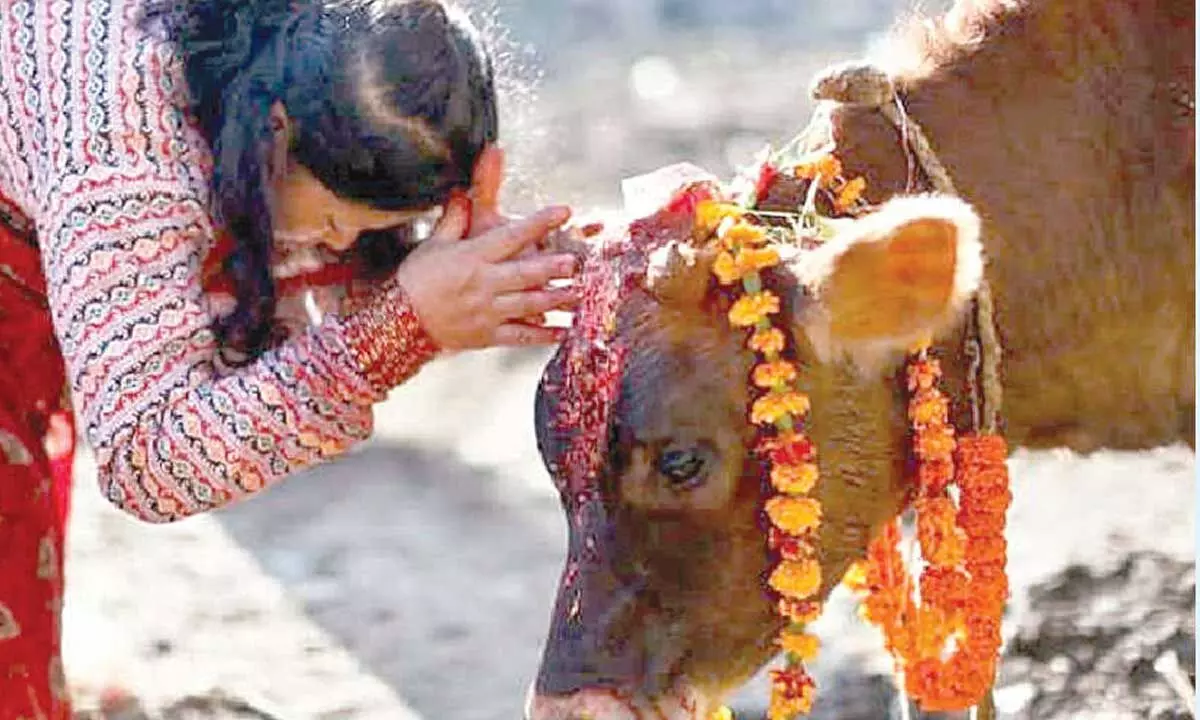
In Magha month, when austerity, purity, and charity guide spiritual life, the cow becomes central to ritual and ethical practice. Magha emphasises snan, daana, and vrata.
Among the daana, gau-seva is regarded as one of the highest forms. In winter, the cow sustains households through milk for nourishment, dung for sacred fires and sanitation, and urine for traditional healing.
Feeding cows, donating fodder, and maintaining goshalas are common Magha practices across the country.
Scripturally, serving the cow during Magha is believed to balance karma, support ancestors, and align humans with nature.
Usage of panchagavya based products for the ritual bath protects the river bodies and protects the environment.
Thus, the cow symbolises ecology, economy, compassion, and dharma—all core values of Magha.
(The writer is a Creative Economic Expert)