Grappling with the spirit of age

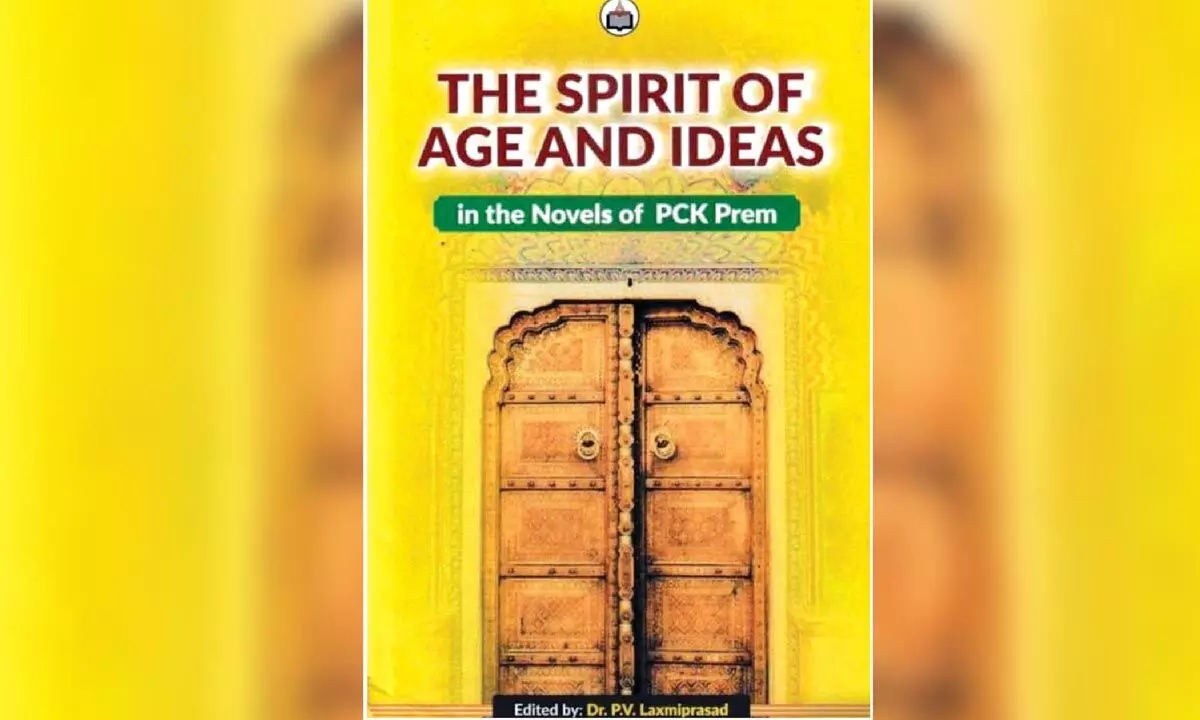
P V Laxmiprasad’s ‘The Spirit of the Age and Ideas in the Novels of PCK Prem’ offers deep literary insights. The book explores how Prem’s novels engage with India’s moral, cultural, and spiritual dilemmas in times of transition. Blending philosophy and literature, it positions fiction as a mirror of society’s ethical and ideological struggles
The book under review, ‘The Spirit of the Age and Ideas in the Novels of PCK Prem’, has been adroitly edited by noted Indian author and editor P V Laxmiprasad. PCK Prem is a poet, novelist, and short story writer in English whose works have garnered international acclaim.
PCK Prem’s novels have long been recognised for their engagement with the moral, cultural, and spiritual dilemmas of contemporary Indian society. ‘The Spirit of the Age and Ideas in the Novels of PCK Prem’ by P V Laxmiprasad offers a scholarly inquiry into these aspects, foregrounding the author’s vision of human struggle, social consciousness, and ethical renewal.
PCK Prem’s literary canvas has always reflected a rare fusion of philosophical inquiry, cultural rootedness, and social realism. In this critical volume, the author turns the gaze inward, presenting a study that is as much a dialogue with his own creative vision as it is with the socio-political realities of contemporary India. At its core, the book grapples with “the spirit of the age”—a concept that Prem interprets as the ever-changing interplay between history, society, and individual consciousness. The analysis positions his novels within a moral and philosophical framework, engaging with perennial questions of identity, justice, faith, and disillusionment. By connecting literary imagination with ethical concerns, the work succeeds in elevating fiction beyond storytelling into the realm of intellectual inquiry.
The strength of this study lies in its philosophical depth and thematic range. As Laxmiprasad observes, Prem brings together reflections on tradition, modernity, and spirituality in his novels, qualities that necessarily make him a novelist of modern times. Particularly striking is his ability to show how personal anguish becomes symbolic of collective unrest—a hallmark of serious literature. His treatment of marginality, corruption, and ethical disarray resonates with the Indian condition in transition.
Yet, while the book is rich in insight, it sometimes veers into abstraction. The density of philosophical musings, though intellectually rewarding, risks alienating the lay reader. At moments, one wishes for tighter structuring and sharper focus on narrative craft rather than extended metaphysical commentary. Moreover, the self-reflexive nature of the study—where the novelist doubles as his own interpreter—may invite questions of critical distance.
Nevertheless, the book remains a valuable contribution to contemporary Indian literary criticism. It bridges the gap between literature and philosophy, anchoring Prem’s novels in the moral crises of modern society. For scholars of Indian English fiction, it offers a thoughtful exploration of how fiction mirrors and critiques the “ideas of the age.” For general readers, it opens a window into the intellectual currents that shape Prem’s creative world, even if it demands patience and reflective engagement.
In conclusion, ‘The Spirit of the Age and Ideas in the Novels of PCK Prem’ is less a conventional critical monologue and more a philosophical companion to Prem’s oeuvre. It challenges readers not only to read novels but to wrestle with the moral and ideological tensions they embody—a task that ensures the work’s relevance to both literary and cultural discourse. The scholarly editorial prowess of P V Laxmiprasad shines through this critical volume, making it a resourceful book for research scholars.