Gemstones reflect integral heritage

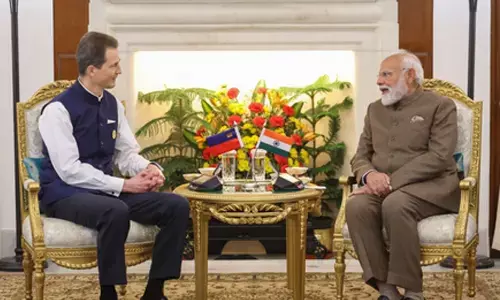
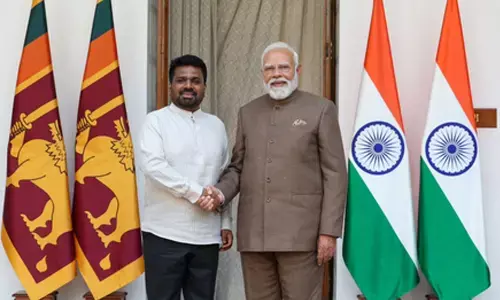
The recent visit of the Prime Minister of Bharat to Japan drew attention from art and culture enthusiasts. Among the gifts, a vintage moonstone bowl set with silver chopsticks stood out for its unique craftsmanship and cultural symbolism
The recent two-day visit of the Prime Minister of Bharat to Japan caught the eyes of art lovers. Among the two gifts given to the Japanese Prime Minister, the vintage precious stone bowls set with silver chopsticks has caught attention. What is the uniqueness of these bowls? The gift draws inspiration from Japan’s Donburi (rice bowl dish) and Soba (long and slender shape of noodles) rituals.
Donburi emphasises simplicity, freshness, and balance, which is a symbol of Japanese culture and cuisine. Soba is eaten on the occasion of the New Year as a gesture of longevity, prosperity, health, and protection against bad luck. So, what’s special about the bowl? The bowls are made with moonstone (Chandramani), which is sourced from Andhra Pradesh — more often referred to as the rice bowl of Bharat.
Andhra Pradesh has the Krishna–Godavari delta region, which is a significant contributor of about 6–12% of the country’s total rice.
Moonstone is among the semi-precious stones. It glows with adularescence and symbolises love, balance, and protection. The gifted bowls have a base in Makrana marble and are decorated in the traditional parchin kari style of Rajasthan. The unique blend of the country’s craft skills and Japanese culinary heritage is presented. The bowl set includes one large brown moonstone bowl complemented with four smaller bowls, accompanied by exquisitely crafted silver chopsticks.
Gemstones have been an integral part of Bharat’s heritage and culture over centuries. They symbolise growth, prosperity, and good fortune. Gemstones play a crucial role in astrology associated with the planets, zodiac signs, and deities. Gemstones have been used in intricate jewelry designs, sculptures, and architectural marvels since ancient times.
Bharat is endowed with significant mineral resources; among them are precious and semi-precious stones. The country holds the world’s third-largest rare earth element (REE) reserves, primarily found in Andhra Pradesh, Odisha, Kerala, and Tamil Nadu. The government has launched initiatives like the National Critical Minerals Mission to boost domestic extraction and processing.
Andhra Pradesh is known for its moonstone deposits, while other states likeRajasthan and Gujarat are famous for their marble and semi-precious stone reserves.
Bharat’s geological terrain makes mineral exploration and extraction challenging. The mining industry requires a robust regulatory framework to ensure sustainable and responsible mining practices to reduce environmental impact.
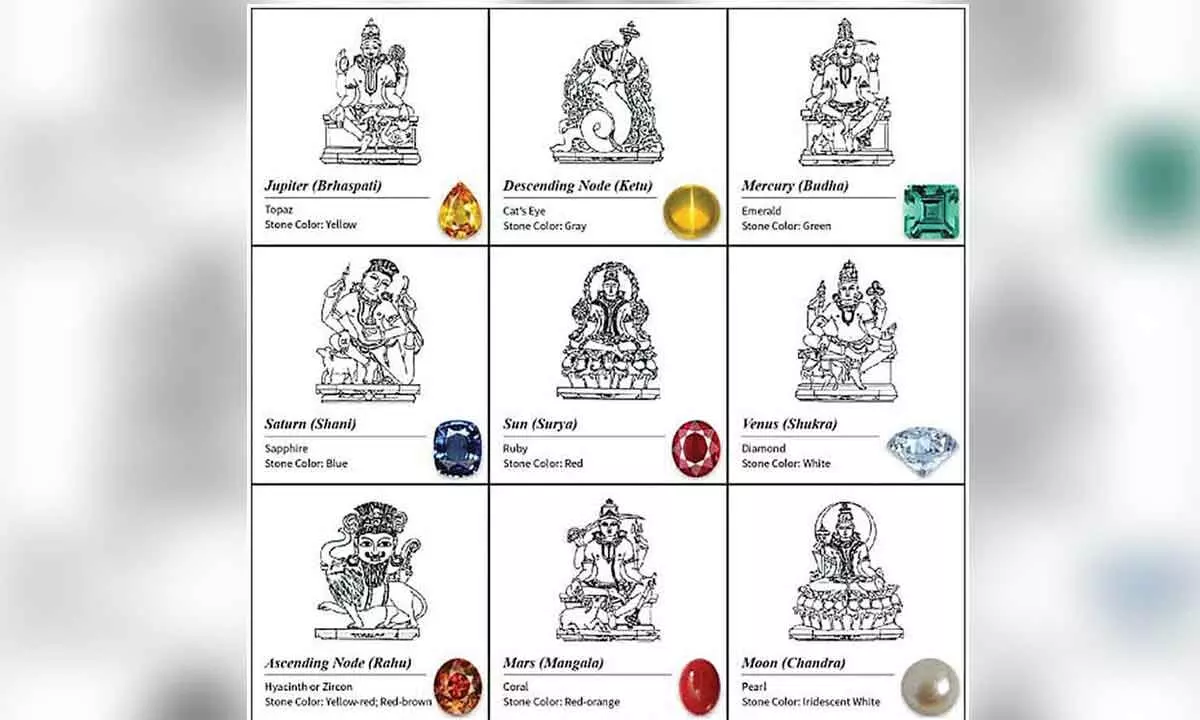
Among the precious stones, gemstones, also known as Navaratna (the nine gems), represent nine planets, which also indicate the personality of the planet and have an impact on human traits with their energy.
For instance, ruby represents the Sun, symbolising passion and leadership; pearl with the Moon, connected to purity and emotional balance; coral (Mars) is associated with energy and courage; emerald (Mercury) is linked with intellect and prosperity; yellow sapphire (Jupiter) symbolises wisdom and fortune; diamond (Venus); blue sapphire (Saturn); hessonite (Rahu); and cat’s eye (Ketu). The gemstones balance planetary influences, providing astrological remedies. They enhance personal strengths to overcome difficulties. The gemstones are worn during rituals, ceremonies, and traditional jewelry to mark important life events, bringing blessings, health, and harmony.
Moonstone belongs to the semi-precious stonescategory. They are mystical crystals belonging to the feldspar mineral group. Due to its mineral composition (sodium, potassium, and aluminium silicate), they appear translucent, opalescent, and the colors can range from white, grey, blue, green, peach, and rainbow. With a Mohs hardness of 6–6.5, moonstone is prone to scratches, making it less desirable for lasting use.
Due to its spiritual and emotional properties, it has high value in traditional and modern contexts. Moonstone is used in jewelry, meditative practices, and healing rituals across the country. Many ancient jewelry pieces with precious and semi-precious stones can be found in museums around the world.
The Gem and Jewellery Export Promotion Council facilitates entities in the gems and jewelry sector by providing benefits like export promotion and regulatory compliance support. Sellers trading on government procurement portals must register and comply with GST registration, tax compliances, and business licensing norms. The certification of gemstones from recognised labs such as GTL or IGI is encouraged for consumer trust, as there is no uniform mandatory government certification for all gemstones. The Indian Gemological Institute (IGI) tests diamonds and colored gemstones. The Gem Testing Laboratory is located in Kolkata and recognised by the Bureau of Indian Standards.
Now there are lab-grown gemstones, which are like real gems created in a controlled laboratory environment that replicates the natural conditions of gemstone formation using advanced technologies. These are eco-friendly and 20–40% less expensive than mined gemstones. The lab-grown gemstones are visually, chemically, and physically identical to mined ones. They undergo the same certification process for quality and grading. Lab-grown stones are an alternative to reduce ecological damage and carbon footprint. However, energy consumption remains a key area for continued improvement and innovation.
(The writer is a Creative Economy Expert)